
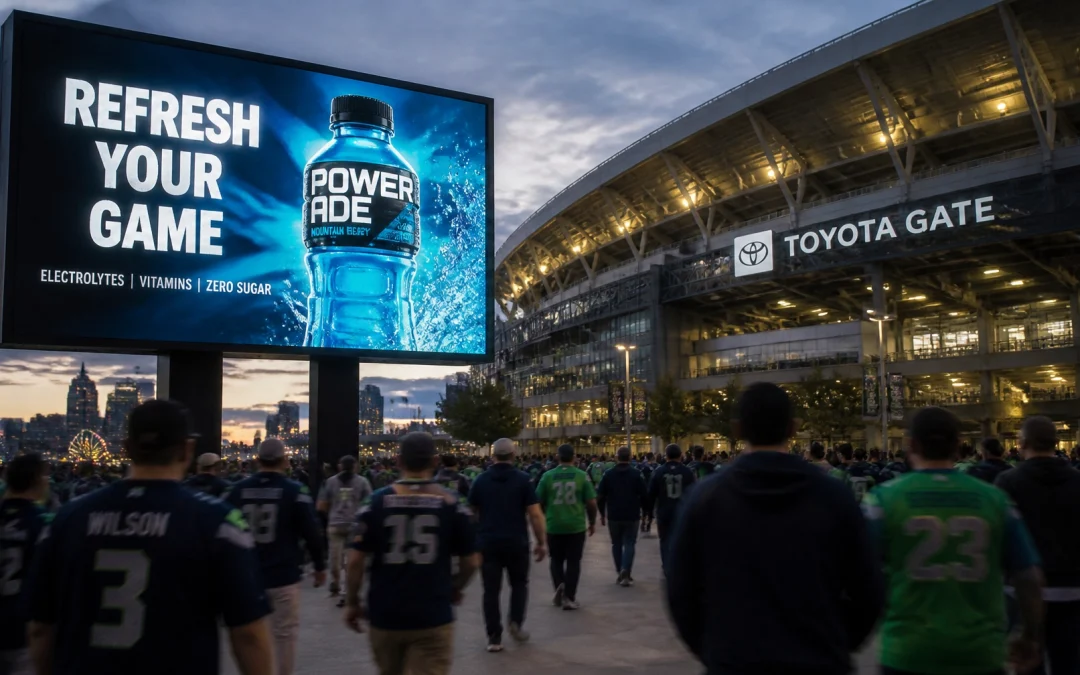
The landscape of sports marketing is undergoing a significant transformation as the OOH Sports Network continues its national expansion. By integrating high-impact digital out of home (DOOH) inventory with strategic geographical targeting, the network provides media buyers and brand managers with a precise tool for reaching passionate fans. This milestone in network growth marks a shift from isolated stadium placements to a comprehensive, ecosystem-wide approach that covers every step of the fan journey.
The expansion of this network is designed to address the increasing fragmentation of traditional media. As consumers move away from linear television and adopt ad-blocking technologies on personal devices, physical environments remain the last frontier for unmissable brand storytelling. OOH Sports has developed a methodology that captures attention where it is most concentrated, around the arenas and stadiums that serve as the epicenters of modern culture.
Objective and Strategy
The primary objective of the OOH Sports Network expansion is to establish a dominant presence across all major digital video advertising boards within a 10-mile radius of sports venues. This perimeter strategy is built on the understanding that the fan experience is not confined to the duration of a game. It begins hours before kickoff and continues long after the final whistle.
The strategy focuses on four distinct phases of the fan journey. First is the anticipation phase, where fans plan their trips and begin their commutes. Second is the arrival phase, characterized by high foot traffic in the immediate vicinity of the venue. Third is the in-game experience, and fourth is the post-game celebration or social phase. By securing inventory in every category of digital signage, including roadside billboards, transit hubs, and retail centers, the network ensures that a brand message is the constant companion to the fan experience.
This systematic approach allows media planners to achieve a "surround-sound" effect. Instead of a single touchpoint, brands can now execute a multi-exposure campaign that builds frequency and reinforces recall as fans move through the 10-mile ecosystem.

The 10-Mile Perimeter Dominance
The core differentiator for the OOH Sports Network is the 10-mile dominance model. Research into fan behavior indicates that the highest concentration of high-intent consumers exists within this specific radius during game days. This includes not only the ticket holders entering the stadium but also the millions of fans who gather in surrounding areas to participate in the atmosphere.
The network expansion includes a wide array of place-based assets. Sportrons plays a critical role here, reaching fans in sports bars, hotels, and high-traffic restaurants. These locations are where "magical moments of anticipation" occur, providing a contextually relevant backdrop for brand messaging. When a fan sees a brand on a large-format billboard during their commute and then encounters the same brand on a digital screen inside a local bar, the cumulative impact on brand preference is substantial.
This density of coverage is not accidental. It is a calculated effort to own the local ecosystem. For a CMO or creative director, this means the ability to "own" a city on game day without the wastage associated with broader, non-targeted media buys.
Technology Partners and Programmatic Integration
The effectiveness of a growing network is largely dependent on the technology that powers it. The OOH Sports Network is built for the programmatic age, allowing for seamless integration with major demand-side platforms (DSPs). By collaborating with specialists like the StackAdapt DSP, the network has simplified the buying process for agencies and brands.
Programmatic DOOH (pDOOH) offers several advantages that are central to this expansion:
- Real-Time Triggers: Campaigns can be activated based on live sports data, such as score changes, weather conditions, or specific game events.
- Dynamic Creative: Advertisers can swap out creative assets instantly to reflect the current state of a game or event.
- Precision Targeting: Using mobile device IDs and location data, brands can target specific audience segments that have been exposed to the screens, enabling retargeting across mobile and web channels.
- Efficiency: The automated nature of pDOOH reduces the manual overhead typically associated with traditional OOH, allowing for faster campaign launches and optimizations.
By making the inventory available through these advanced platforms, OOH Sports has bridged the gap between the physical world of sports and the data-driven world of digital advertising.

Measurable Results and Case Studies
The success of the OOH Sports Network expansion is validated by the performance data from various omnichannel campaigns. These results demonstrate that when DOOH is used as a core component of a sports marketing strategy, the impact on brand lift and purchase consideration is significant.
A notable example is the campaign executed for AB InBev’s Mike’s Hard Iced Tea. By utilizing the programmatic capabilities of the network, the brand achieved a 119% lift in positive brand image. The strategy involved placing creative in high-traffic areas where fans gather, ensuring that the brand remained top-of-mind during key social moments.
Similarly, White Claw leveraged the network for its vodka launch, resulting in a 74% lift in purchase consideration. The campaign benefited from the ability to reach a specific demographic in a context where they were already predisposed to beverage consumption.
Furthermore, the impact of DOOH on purchase intent is highlighted in the Sea-Doo case study, which reported a 144% increase in purchase consideration. These figures are not just isolated successes but are indicative of the network's ability to drive quantifiable business outcomes through strategic placement and high-frequency exposure.
Execution and Logistics
Managing a network of this scale requires a high level of operational precision. OOH Sports acts as a storyteller by coordinating the logistical aspects of campaign execution. This includes managing the technical specifications of varied digital boards, ensuring creative alignment across different screen formats, and providing detailed attribution reporting.
The network provides access to all digital video advertising boards within every category, from large-format LED displays to small-scale point-of-purchase screens. This variety allows for a tiered messaging approach. A brand can use high-impact, low-dwell-time boards for awareness and high-dwell-time, place-based screens for deeper engagement and call-to-action messaging.
The process of launching a campaign is streamlined to meet the fast-paced needs of the sports industry. With the infrastructure in place, brands can go from planning to live activation in remarkably short timeframes, allowing them to capitalize on trending sports stories or sudden shifts in team performance.

Conclusion
The expansion of the OOH Sports Network represents a new standard in sports media. By focusing on the 10-mile perimeter and integrating with programmatic technology, the network has created a way for brands to connect with fans that is as dynamic as the sports themselves. The transition toward a more integrated and data-driven DOOH environment ensures that advertisers can achieve the "smooove" execution necessary for complex, high-stakes campaigns.
As the network continues to add new venues and partners across America, the opportunity for brands to own the fan journey will only increase. For media buyers and brand managers, the growing OOH Sports Network is not just an advertising platform but a strategic asset in the competitive world of sports marketing.