
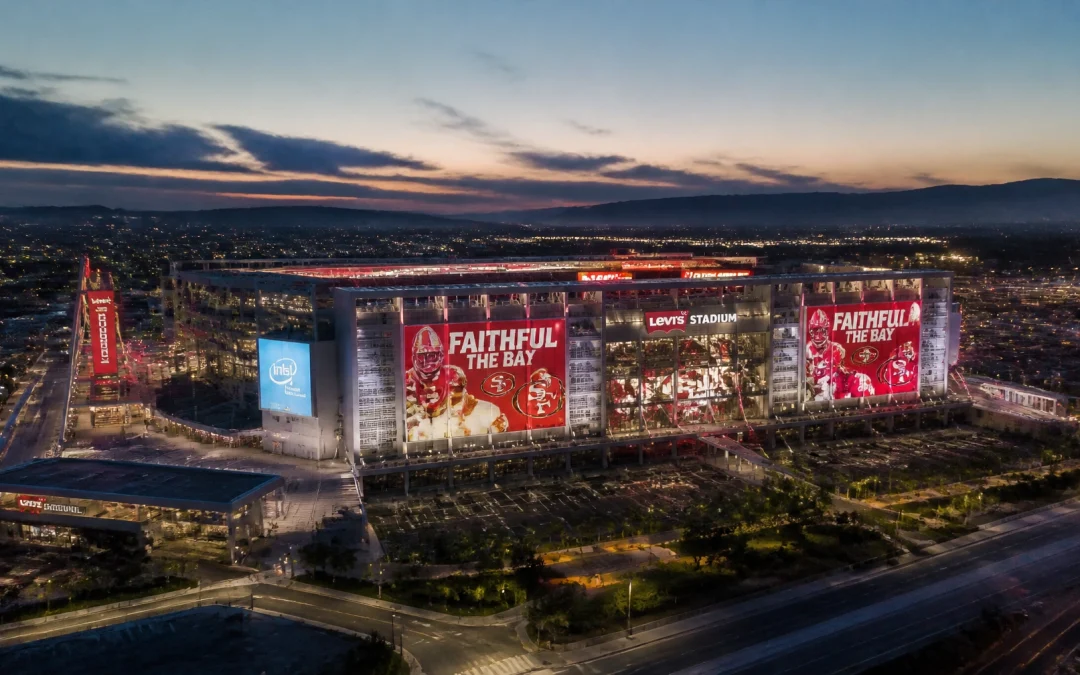
The Super Bowl is not merely a football game; it is the pinnacle of the American sports media calendar, a cultural phenomenon that demands a strategic presence from the world’s most ambitious brands. As the industry prepares for Super Bowl 2026, scheduled to take place at Levi’s Stadium in Santa Clara, the landscape of out-of-home (OOH) advertising has evolved far beyond the traditional static billboard. With a legacy spanning 40 years, the approach to venue-wide domination now involves a sophisticated integration of technology, geography, and creative precision.
For media buyers and brand managers, the challenge is to move past the 30-second broadcast spot and capture the attention of fans where they live, travel, and celebrate. Achieving this level of saturation requires a strategy that spans from the very floors fans walk on to the towering billboards that define the city skyline.
Strategy: The 10-Mile Radius Dominance
The most effective campaigns for high-profile events like Super Bowl 2026 do not start and end at the stadium gates. They utilize a comprehensive geographic strategy that targets a 10-mile perimeter around the host venue. This radius represents the "active zone" where fans, media, and corporate partners congregate in the days leading up to and during the game.
By securing digital video advertising boards across every category within this 10-mile stretch, brands create a persistent presence. This strategy ensures that whether a consumer is arriving at San Jose International Airport, dining in downtown San Jose, or commuting toward Santa Clara, the brand message remains inescapable.

Key tactics for 10-mile radius targeting include:
- Transit Hubs: Dominating digital screens at airports, train stations, and ride-share pickup zones to greet arriving fans.
- Retail and Hospitality: Utilizing screens in high-traffic shopping centers and hotel lobbies where fans spend their leisure time.
- Urban Digital Screens: Placing high-impact creative on street furniture and urban panels along the primary arteries leading to the stadium.
Objective: Venue-Wide Coverage from Floors to Billboards
Inside and immediately around the venue, the objective is total immersion. Super Bowl 2026 demands a multi-sensory approach where branding is integrated into the physical environment of the stadium experience. This "floor-to-billboard" philosophy ensures that every glance: whether directed at the field, the concourse, or the sky: encounters a strategic brand touchpoint.
Floor Graphics and Concourse Branding
Often overlooked, the floors of a stadium represent premium advertising real estate. High-durability floor graphics provide a unique way to guide fans through the venue while maintaining brand visibility. In high-traffic concourse areas, these visuals act as a ground-level foundation for an omnichannel campaign.

Sportrons and Perimeter Signage
The use of Sportrons and digital perimeter boards allows brands to sync their messaging with the live action. These high-definition displays are designed for maximum visibility during both the live event and the subsequent broadcast highlights, providing a dual benefit for advertisers.
Large-Format Billboards
Towering above the venue and the surrounding highways, large-format billboards serve as the "beacons" of a Super Bowl campaign. These assets are essential for establishing brand authority and providing the high-reach coverage necessary to anchor a citywide presence.
Technology Partners: Programmatic DOOH and AI
The integration of programmatic Digital Out-of-Home (DOOH) has revolutionized how brands execute Super Bowl campaigns. Rather than relying on static loops, modern campaigns leverage data to deliver dynamic creative that responds to the environment.
The emergence of AI-centric creative was a defining trend for 2026. Brands are now using AI not just for production efficiency, but to create modular content that can be adapted in real-time. For example, a beverage brand might trigger specific creative on concourse screens based on the temperature or the current score of the game.
Collaborations with platforms such as StackAdapt have enabled media planners to buy sports-adjacent inventory with the same precision as digital display ads. This programmatic approach allows for:
- Real-time Optimization: Shifting budget to the highest-performing screens during peak fan movement.
- Audience Targeting: Using mobile device IDs to identify and reach high-value segments as they move through the 10-mile perimeter.
- Contextual Relevance: Aligning creative with game-day events, such as halftime shows or specific scoring plays.
Execution: Integrating the Campaign Ecosystem
A successful Super Bowl strategy treats the OOH component as a central node in a larger marketing ecosystem. The most effective campaigns for Super Bowl 2026 were those that maintained visual and thematic consistency across TV, social media, and physical screens.

When a brand uses 90s-themed nostalgia in its broadcast spot, that same aesthetic must be mirrored on the stadium floors and the city billboards. This creates a "halo effect," where each exposure reinforces the others, leading to higher recall and brand favorability.
Tactical execution steps include:
- Pre-Game Teasing: Launching OOH creative 10 to 14 days before the event to build anticipation alongside social media teasers.
- Game-Day Dominance: Synchronizing all digital screens within the 10-mile radius to run "takeover" creative during peak arrival windows.
- Post-Game Retargeting: Using the data gathered from OOH exposure to retarget fans on their mobile devices with follow-up offers and content in the week following the game.
Results: Quantifying the Impact
The success of venue-wide sports marketing is measured through rigorous data analysis and brand lift studies. Historically, campaigns that utilize a mix of stadium-side and citywide DOOH have shown significant increases in key performance indicators.
- Purchase Consideration: In previous programmatic DOOH campaigns, brands like White Claw have seen a 74% lift in purchase consideration.
- Brand Image: Major advertisers such as AB InBev have reported a 119% lift in positive brand image by utilizing a synchronized OOH approach.
- Reach and Frequency: By covering the 10-mile perimeter, brands can achieve a frequency of exposure that is impossible with broadcast alone, often reaching fans 5 to 7 times before they even enter the stadium.
The Power of Venue-Wide Advertising
To truly understand the scale and impact of this type of advertising leadership, it is helpful to see the execution in action. The following video demonstrates how venue-wide coverage transforms a sports arena into a powerful branding platform.
https://www.youtube.com/watch?v=l6J-0zileKE
Conclusion
Dominating Super Bowl 2026 requires more than a single high-budget commercial. It requires a 360-degree strategy that leverages 40 years of industry expertise to place brand messaging in every high-value location. From the literal floors of the stadium to the digital billboards that light up the Northern California sky, the goal is clear: total brand immersion. By utilizing the 10-mile perimeter and the latest in programmatic technology, advertisers can ensure their message is not just seen, but remembered as a part of the Super Bowl legacy.