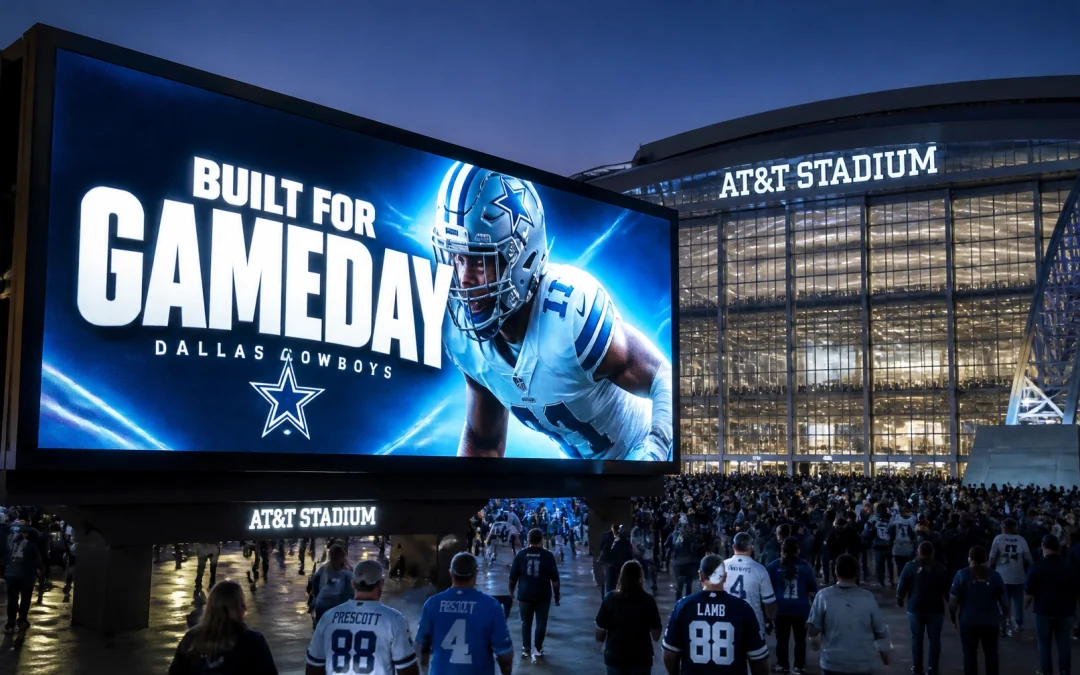
The landscape of sports marketing has shifted from static signage to dynamic, data-driven experiences. Digital Out of Home (DOOH) advertising now allows brands to reach fans at every stage of their journey, from the commute to the stadium to the post-game celebration. As media buyers and brand managers seek higher engagement and measurable ROI, the integration of real-time data and programmatic buying has become the standard for successful campaigns.
OOH Sports provides a network that extends up to 10 miles around major sports venues, capturing the attention of the most passionate consumers in America. By leveraging the perimeter around arenas, brands can transcend traditional sponsorship and own the entire game-day atmosphere. The following 25 creative strategies demonstrate how modern DOOH can be utilized to outpace competitors and drive significant brand lift.
Strategy: Leveraging Real-Time Data and Fan Proximity
The core of an effective sports DOOH strategy lies in relevance. Fans are not just consumers. They are emotionally invested participants in a live event. When advertising reflects the current state of that event, the message becomes part of the experience rather than an interruption.
Real-Time Engagement Tactics
- Score-Reactive Creative: Screens automatically update to reflect the live score of a game. When the home team takes the lead, the creative shifts to a high-energy celebratory message.
- Victory Takeovers: Within seconds of a win, every screen in the 10 mile radius around the stadium flips to a branded victory graphic. This captures the peak emotional state of the audience.
- Player Performance Highlights: Using live league data feeds, brands can spotlight specific players who are having a standout game, making the ad feel hyper-current.
- Pre-Game Countdown Clocks: Synchronized clocks across city transit hubs and digital billboards build anticipation leading up to the opening whistle.
- Weather-Triggered Gear Ads: For outdoor venues, campaigns can switch from sun protection or hydration to waterproof apparel or warm beverages based on local weather sensors.

Location-Based Targeting
- The "Last Mile" Command: Screens positioned on the primary walking routes to the stadium provide directions combined with quick-service restaurant (QSR) or retail offers.
- Transit Hub Synchronization: Capturing fans at train stations and bus shelters near the arena ensures a high frequency of touchpoints during the commute.
- Rideshare TV Integration: In-vehicle screens provide a "second screen" experience for fans traveling to the venue, offering longer-dwell content and exclusive promo codes.
- Sports Bar Dominance: Placing DOOH in high-traffic bars near the stadium targets fans who couldn't get tickets but are still actively watching the game.
- Gym and Fitness Network: Reaching the "everyday athlete" in fitness centers with training-related content that references local team schedules.
- Gas Station "Game Break" Content: Using audio-enabled screens at pumps to deliver highlights and previews to fans traveling from out of town.
- Airport Arrival Greeting: For major playoff events, welcoming visiting fans at the airport with team-specific graphics and local destination guides.
Interactive and Social Integration
Interaction is the key to moving a consumer from awareness to engagement. Modern DOOH hardware allows for seamless transitions from the physical screen to the mobile device.
- QR-Driven Mobile Extensions: Placing QR codes on stadium concourse screens to lead fans directly to a landing page for limited-edition merchandise.
- Social Media Hashtag Walls: Displaying moderated fan posts from X or Instagram on large-format screens to foster a sense of community.
- Augmented Reality (AR) Portals: Using DOOH as a trigger for an AR experience where fans can take virtual photos with star athletes.
- Live Trivia and Polls: Interactive screens in concourses that allow fans to vote on "Player of the Match" or answer sports trivia via their mobile devices.
- Personalized Fan Spotlights: Allowing fans to submit photos through a brand portal to see themselves featured on a billboard near the entrance.
- Fantasy Sports Leaderboards: Real-time updates for fantasy leagues, making the screen a hub for stat-conscious fans.

Measurement-Driven Creative
Data does not just drive the creative. It measures the result. By utilizing programmatic platforms, brands can track foot traffic, brand lift, and purchase intent.
- Attribution-Friendly Offers: Using unique promo codes for each location to track which specific billboards drove the most sales.
- Post-Game Retargeting: Using device IDs exposed to the DOOH screens to serve follow-up mobile ads the next day.
- A/B Testing Dynamic Content: Running different creative variations simultaneously to see which imagery or call-to-action (CTA) generates more QR scans.
- Localized Team Allegiance: Shifting brand colors and messaging based on the specific neighborhood or the team playing that day.
- Utility-Based Content: Providing live transit updates or traffic alerts alongside brand messaging to increase the "helpfulness" of the ad.
- In-Game Odds and Lines: For sports betting brands, integrating live betting lines that update as the game progresses.
- The "Road Home" Offer: Shifting creative after the game to promote late-night food delivery or rideshare services as fans exit the venue.
Objective & Strategy: The Programmatic Advantage
The implementation of these ideas is made possible through programmatic DOOH. This technology allows for the automation of buying and the dynamic delivery of creative. Instead of a manual upload process, ads are triggered by external data points such as the score of a game or a change in weather. This level of precision ensures that marketing dollars are spent only when the context is most relevant.
Strategic placement around sports venues is not just about visibility. It is about capturing a specific mindset. Fans at a stadium are in a state of high receptivity. They are looking for ways to enhance their experience. By providing real-time value, such as scores or highlights, a brand transitions from a distractor to a provider of useful information.

Technology Partners and Integration
Successful execution requires a robust tech stack. OOH Sports utilizes specialized platforms to ensure seamless delivery across all screen types. Through partnerships with industry leaders like StackAdapt, campaigns can be managed through an omnichannel approach. This allows media planners to coordinate their DOOH efforts with mobile, video, and social campaigns, ensuring a unified brand voice.
Measurement is conducted through brand lift studies and device ID tracking. These methodologies allow for a clear understanding of how the campaign influenced consumer behavior. For instance, a brand can measure how many people who saw a billboard later visited a retail location or searched for the brand online.
Results: Measuring the Impact of Sports DOOH
The efficacy of these strategies is supported by significant data from recent campaigns within the OOH Sports ecosystem. High-impact sports environments have consistently delivered results that outperform traditional media benchmarks.
- White Claw Vodka Launch: By utilizing programmatic DOOH near high-traffic social venues and sports hubs, the campaign achieved a 74% lift in purchase consideration.
- AB InBev (Mike’s Hard Iced Tea): A focused DOOH campaign targeting social gatherings and game-day environments resulted in a 119% lift in positive brand image.
- Sea-Doo: In its first major digital OOH push, the brand saw a 144% increase in purchase consideration, demonstrating that even specialized lifestyle products can find a massive audience through targeted sports networks.
These metrics highlight the power of the "sports perimeter" strategy. When a brand dominates the area surrounding a stadium, it creates an omnipresence that static billboards cannot replicate.
Conclusion
Innovation in sports marketing is no longer about who has the largest logo on a jersey. It is about who can integrate most effectively into the fan experience. The 25 ideas listed above represent a roadmap for brands that want to lead rather than follow. By utilizing real-time data, programmatic flexibility, and hyper-local targeting, media buyers can ensure their campaigns are as dynamic as the games themselves.
For more information on how to activate these strategies, explore the OOH Sports marketing solutions or review the latest case studies to see these tactics in action.