
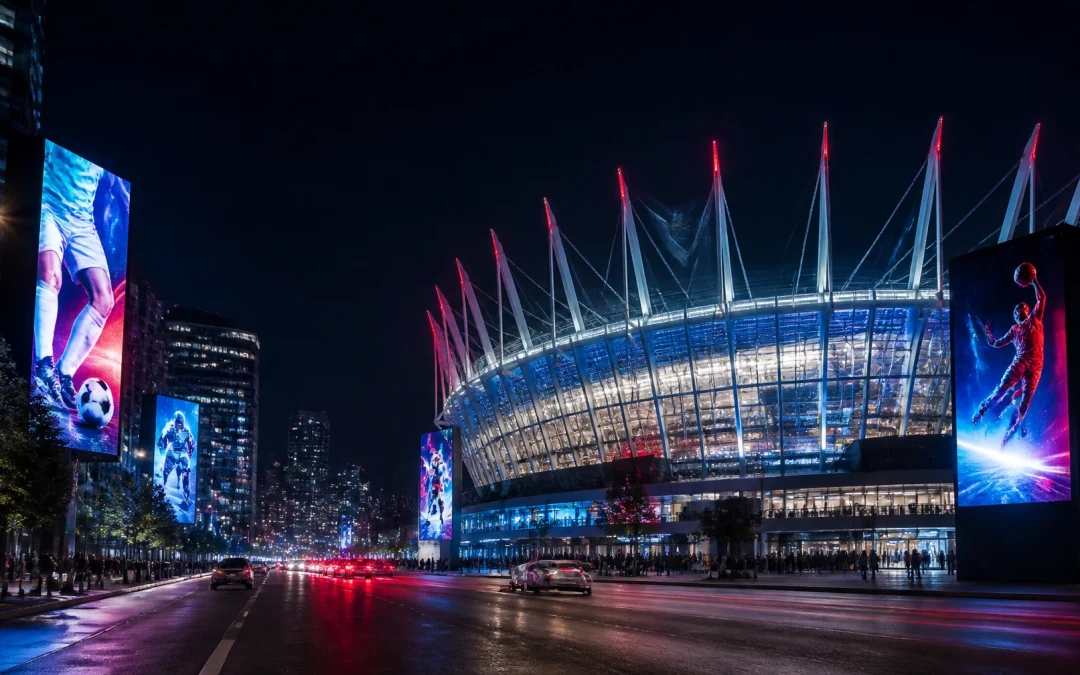
Traditional marketing often stops at the entrance of the arena, but modern fan engagement begins miles before the first whistle. In the high-stakes world of sports media, stadium perimeter advertising has evolved into a sophisticated, multi-layered strategy that extends far beyond a simple logo on a wall. By leveraging a digital out-of-home (DOOH) network that blankets the perimeter up to 10 miles around major sports venues, brands can achieve a level of visibility and resonance that traditional media struggle to replicate.
The psychology of a sports fan is unique. During game day, spectators are in a state of high arousal and emotional investment. This heightened state makes them six to eight times more engaged than typical internet audiences. For creative directors and CMOs, the stadium perimeter represents a prime opportunity to capture this captive attention through a strategic, data-driven approach.
Objective & Strategy: The 10-Mile Radius
The core of an effective stadium advertising strategy is the 10-mile perimeter. This radius is not an arbitrary boundary; it represents the critical "last mile" of the fan journey. Within this zone, every digital screen serves as a touchpoint that reinforces a brand's message during the peak of the consumer’s emotional experience.

A comprehensive stadium strategy focuses on three distinct phases of the fan experience:
- Pre-game Anticipation: Fans traveling toward the venue via highways, public transit, and airport routes are exposed to messaging that builds excitement. This phase is about establishing the brand as a part of the day's ritual.
- In-game Peak Emotion: While the action happens inside, the perimeter remains active for the thousands of fans in local sports bars, fan zones, and surrounding concourses. This is where contextual creative, such as real-time score updates or player highlights, drives deep resonance.
- Post-game Reflection: As fans exit the stadium and begin their journey home or to local restaurants, the perimeter ads provide a final, lingering impression. This phase is critical for driving immediate actions, such as social media engagement or retail visits.
By maintaining a presence across all three phases, a brand ensures it is not just a sponsor, but a consistent participant in the fan's story. For more on localized strategies, consider the impact of a 10-mile stadium strategy during global sporting events.
Technology Partners: Programmatic and Precision
The transition from static billboards to programmatic DOOH has revolutionized how brands interact with stadium crowds. Programmatic platforms allow for precision targeting and real-time adjustments that were previously impossible. Instead of a "set it and forget it" approach, advertisers can now buy inventory based on specific triggers and audience data.

Key technological components include:
- Moment-Based Triggers: Digital boards can be programmed to change content based on live game events. If a home team scores a touchdown or a goal, the perimeter network can instantly switch to celebratory creative. This synchronization between the game and the advertisement creates a "halo effect," where the brand shares in the fan's joy.
- Device ID Exposure: By tracking anonymized mobile device IDs that pass within the view of a DOOH screen, marketers can quantify the exact audience reached. This data is invaluable for retargeting fans on their mobile devices long after they have left the stadium perimeter.
- Geo-Fencing and Attribution: Advanced location analytics allow brands to measure foot traffic to nearby retail locations or restaurants following exposure to perimeter ads. This bridges the gap between digital visibility and physical sales.
The use of these technologies ensures that the right message reaches the right fan at the most impactful moment. The integration of programmatic DOOH platforms has become a standard requirement for brands looking to maintain a competitive edge in sports marketing.
Strategy: Contextual Creative and Real-Time Engagement
Effective stadium perimeter advertising requires more than just high-resolution graphics; it demands creative that is contextually relevant. Fans are quick to dismiss generic advertising, but they embrace content that feels like "part of the game."
Strategic creative choices include:
- Localization: Using local slang, team colors, and references to regional traditions helps a brand feel authentic rather than like a distant corporate entity.
- Interactive Elements: Incorporating QR codes on concourse screens and street-level DOOH boards can transform passive viewing into active engagement. Fans can scan to enter contests, download coupons for local concessions, or access exclusive augmented reality (AR) content.
- Dynamic Data Feeds: Displaying live scores, social media feeds, or weather updates keeps the screens functional and useful to the fan. This increases the likelihood that fans will look at the boards repeatedly throughout their time in the perimeter.
When a brand’s creative strategy aligns with the intensity of the event, the results are reflected in significantly higher recall and engagement rates.
Case Study Insights: Quantifying the Impact
The effectiveness of perimeter DOOH is best illustrated through the lens of data-backed campaigns. Two notable examples demonstrate how strategic placement and programmatic execution drive measurable brand lift.
- Alcohol Beverage Category: A programmatic DOOH campaign for a major vodka brand utilized screens near stadiums to target fans during peak game-day hours. This campaign resulted in a 74% lift in purchase consideration, a figure that far exceeds standard digital benchmarks. Detailed logistics of this execution can be found in the White Claw case study.
- Ready-to-Drink (RTD) Tea Category: Another campaign focused on enhancing brand image through strategically timed messages during high-profile sporting events. The result was a 119% lift in positive brand image, proving that the emotional context of a stadium environment significantly amplifies message reception. Further data is available in the Ab InBev's Mike's Hard Iced Tea case study.
These results confirm that stadium perimeter advertising is not just about visibility; it is about driving specific, high-value consumer behaviors.
Results: Metrics That Matter
To evaluate the success of a stadium perimeter campaign, media planners and brand managers focus on a specific set of KPIs. These metrics provide a clear picture of how the campaign influenced the target audience.

- Ad Recall: Research indicates that ad recall for sports venue DOOH is approximately 86%. This high rate is attributed to the combination of dwell time and the uncluttered nature of the perimeter compared to crowded digital feeds.
- Follow-Up Action: Between 74% and 90% of fans exposed to a DOOH ad near a stadium take a follow-up action, such as visiting a website or searching for the product on social media.
- Brand Preference Rating: By conducting brand lift studies before and after the campaign, marketers can measure the shift in fan perception. It is common to see double-digit percentage increases in brand preference after a successful perimeter activation.
- Local Economic Impact: Data often shows that 99% of fans attending a game spend money on hotels, restaurants, or transportation within the stadium vicinity. Perimeter advertising captures this spending power at the exact moment of decision-making.
Conclusion: The New Playbook for Fan Engagement
Stadium perimeter advertising represents a shift from broad-spectrum messaging to hyper-targeted, context-aware engagement. By understanding the 10-mile radius, leveraging programmatic technology, and utilizing contextual creative, brands can move beyond the sidelines and into the hearts of the fans.
The stadium is no longer just a place where games are played; it is the center of a massive, interconnected marketing ecosystem. For brands looking to build long-term equity and drive immediate action, the perimeter is where the most significant plays are made. For further exploration of how technology is driving these changes, read about innovation in sports DOOH.
By focusing on the mechanics of the fan journey and the precision of modern DOOH networks, brands can ensure their message resonates long after the final buzzer sounds.