
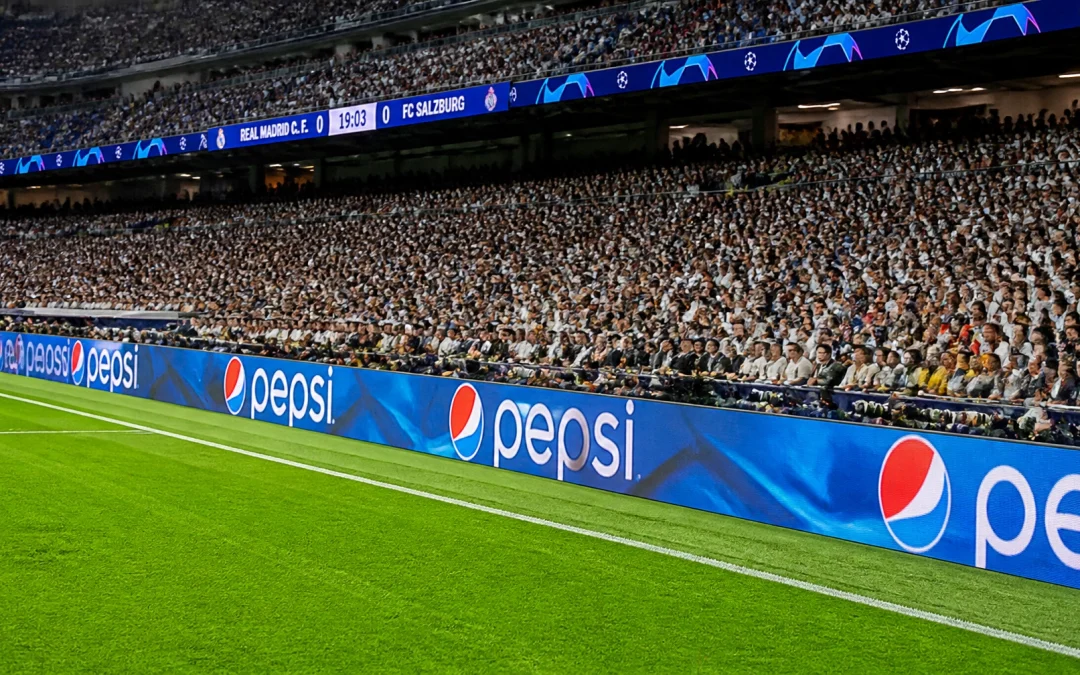
Sports marketing has changed fast. Static billboards around sports venues are not enough to hold attention the way they once did. If you want to earn loyalty today, you need touchpoints that feel timely, dynamic, and relevant. Stadium perimeter advertising has become a key part of that mix because it helps you reach fans when energy and attention are already high.
If you are a creative director or CMO, it helps to know how to use stadium perimeter networks well. This guide walks through how digital out of home, or DOOH, can strengthen brand presence, improve fan engagement, and support measurable ROI.
Static Versus Programmatic DOOH: The Evolution of Perimeter Boards
For years, perimeter advertising meant static vinyl banners or painted boards. They delivered visibility during televised games, but they were not flexible. Once installed, the message stayed the same all season.
Digital LED perimeter boards changed that. Now, venues use high-resolution screens that wrap around the field or court. Just as important, programmatic DOOH gives you a way to buy and manage that space in real time.
Programmatic technology gives sports marketers a few clear advantages:
- Agility: You can swap creative quickly to reflect breaking news, player milestones, or seasonal moments.
- Targeting: You can schedule campaigns around specific quarters, halves, or innings when viewership is strongest.
- Dynamic Content: You can update messaging automatically using live game data, including scores, time remaining, or team performance metrics.
The shift from static to programmatic DOOH turns perimeter boards from background signage into an active part of the live experience.
Expanding Reach: The Power of the Ten-Mile Venue Radius

A common mistake is assuming stadium advertising only reaches people inside the venue or watching the broadcast. In practice, sports marketing works best when it extends beyond the gates.
The strongest campaigns use a perimeter strategy built around screens within a 10-mile radius of sports venues. That area includes pre-game hangouts, sports bars, transit hubs, and retail centers where fans spend time before and after the event.
When you activate screens across that wider footprint, your brand stays present throughout the fan journey. Fans may see the message on the way from parking to the venue, while stopping for food or drinks, or during the trip across town on game day. That creates a halo effect, where the excitement of the event carries into the surrounding area and reinforces recall across multiple touchpoints.
Creative Design Strategies for Maximum Impact

Designing for stadium perimeter screens is different from designing standard digital banners or TV spots. Fans are watching the game, so your message has to land fast.
That means creative should focus on legibility and clarity first. A few practical design tips:
- Simplicity: Keep the message short. Seven words or fewer is often the sweet spot.
- High Contrast: Use bold sans-serif fonts and high-contrast color combinations, such as white text on a dark background, so the message reads clearly under stadium lighting.
- Subtle Motion: Use light motion, like smooth logo wipes or slow color changes, to catch peripheral attention without pulling focus from the game.
- Clear Call to Action: Add easy-to-scan QR codes or short, memorable URLs that fans can use during natural breaks in play.
When creative respects how quickly people are processing the environment, the ad feels useful and well-timed instead of disruptive.
Bridging the Physical and Digital Worlds
Consumer journeys do not happen in one place anymore. A fan in the stadium or near the arena is almost always holding a smartphone. Perimeter advertising works best when it connects that physical moment to digital engagement.
Real-time data triggers make that possible. A brand can sync perimeter screen content with mobile activity as it happens. For example, a beverage brand might launch a mobile ad or social filter right when its perimeter board appears during a key moment in the game.
This kind of coordination helps create a more connected experience. When you pair strong outdoor visibility with mobile retargeting inside the venue footprint, you turn a quick visual impression into engagement you can track. Fans get something relevant, and your team gets useful first-party data.
Measuring ROI and Campaign Success

One of the long-time challenges in out of home advertising was proving attribution. That is much easier now. Modern measurement tools give CMOs clearer data on performance and budget impact.
Today’s stadium perimeter campaigns can be measured in a few practical ways:
- Footfall Attribution: Track device IDs exposed to perimeter screens and measure whether those viewers later visit retail locations, dealerships, or branded pop-ups.
- Brand Lift Studies: Measure changes in awareness, preference, and purchase intent among exposed audiences versus control groups.
- Digital Engagement Tracking: Monitor QR code scans, promo code redemptions, and local website traffic spikes during live event windows.
When you quantify these signals, you get a clearer view of ROI. You can also improve targeting and optimize future creative with more confidence.
Elevate Your Brand Presence Today
Stadium perimeter advertising is no longer just part of the background. It is a dynamic, data-driven channel that helps you reach high-intent audiences, extend visibility across community touchpoints, and measure business impact more clearly. If your goal is to build stronger connections with passionate fans, programmatic DOOH deserves a place in the plan.
Ready to sharpen your next campaign? Explore the inventory and capabilities available through the OOH Sports Network.