
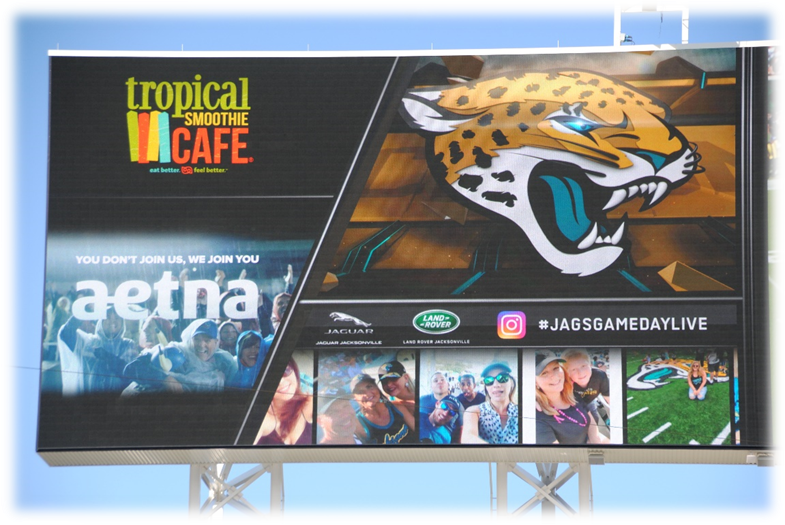
A live sports event creates something most advertising channels cannot easily reproduce: shared attention. Fans arrive with a strong connection to the team, venue, and game. Stadium perimeter advertising gives brands a way to enter that experience without interrupting it.
Digital boards around the field, court, or arena can reinforce a brand message during the moments fans care about most. When the campaign is planned well, the advertising becomes part of the event environment. It can support fan engagement, improve brand recall, and extend the value of sports media beyond the stadium.
For creative directors and CMOs, the opportunity is not simply to place a logo near the action. It is to build a relevant brand presence that follows the fan journey from the surrounding area to the venue and beyond.
Why Stadium Perimeter Advertising Supports Fan Engagement
Stadium perimeter advertising is visible to two connected audiences:
- Fans watching inside the venue
- Viewers watching through broadcast, streaming, and social content
That dual visibility gives perimeter boards an important role in sports branding. The message appears alongside the action rather than in a separate commercial break. This makes the exposure feel more connected to the fan experience.
The strongest benefits include:
- High visibility: LED boards are placed near the playing surface and often remain within broadcast sightlines.
- Emotional relevance: The brand appears during moments of anticipation, celebration, and tension.
- Repeated exposure: Fans may see the message before the game, during play, and while leaving the venue.
- Creative flexibility: Digital screens can support video, animation, live data, and multiple message variations.
- Broader reach: Stadium advertising can be supported by OOH placements near transit hubs, restaurants, sports bars, and retail locations.
This combination makes stadium perimeter advertising more than a sponsorship marker. It becomes a consistent part of the fan environment.

Start With the Fan Journey
A strong campaign begins before fans enter the stadium. It considers where people travel, gather, and spend time before and after the event.
OOH Sports uses a perimeter approach that can extend across a defined radius around a sports venue. A 10-mile strategy can include digital screens along key fan routes, near parking areas, in hospitality locations, and around entertainment districts.
Each placement should have a clear role:
- Pre-game placements: Build anticipation and introduce the campaign message.
- Arrival placements: Connect the brand with the transition into the venue.
- Perimeter boards: Place the message beside the action and reinforce brand recognition.
- Concourse and fan-zone screens: Provide space for offers, contests, and interactive content.
- Post-game placements: Encourage a visit, purchase, download, or social action.
This approach creates more continuity than a single stadium placement. A fan may see a brand message on the way to the game, recognize it on the perimeter boards, and respond to a related offer after the final whistle.
The OOH Sports marketing services page outlines how digital displays and interactive signage can be used across stadium properties and nearby fan environments.
Use Creative That Responds to the Game
A static logo can deliver recognition, but dynamic creative can make a brand feel more relevant. Digital perimeter boards allow campaigns to respond to the game state, audience, or location.
Creative teams can prepare modular assets for different situations, including:
- Score changes
- Halftime
- Overtime or extra time
- Team wins
- Player milestones
- Weather conditions
- Crowd participation
- Pre-game and post-game windows
For example, a food delivery brand could display a celebration offer after a home-team score. A sportswear brand could feature a player-focused message after a standout performance. A financial services brand could use a simple message about confidence, preparation, or making the next move.
The creative does not need to be complicated. It needs to be fast to understand and appropriate to the moment.
Useful principles include:
- Keep the main message short.
- Use strong contrast for visibility from a distance.
- Make the brand easy to identify.
- Use animation to support the message, not distract from it.
- Build alternate versions before the campaign launches.
- Keep calls to action simple and easy to remember.
The goal is to make the brand feel present without competing with the game.
Turn Attention Into Participation
Fan engagement becomes more valuable when fans can take an action. Digital boards can serve as entry points to mobile content, promotions, and branded experiences.
Common activation options include:
- QR codes connected to a mobile offer
- Live polls or fan voting
- Team or player trivia
- Exclusive video content
- Merchandise promotions
- Digital contests
- Loyalty program sign-ups
- Location-based retail offers
- Social media prompts
A QR code can connect a stadium perimeter ad to a second-screen experience. A fan might scan to view live statistics, enter a contest, unlock a discount, or access a limited piece of content.
The path from exposure to action should be as short as possible. A campaign that asks fans to remember a long URL or complete several steps will lose participation. The best activations provide a clear benefit and an immediate next step.
Sportrons, an OOH Sports solution, supports advertising opportunities on digital video boards and LED screens inside venues. Its model can also extend messaging to areas outside the stadium, including sports bars, public transit locations, parking areas, and custom-defined venue radiuses. Learn more on the Sportrons page.

Match the Message to the Objective
Different campaign objectives require different uses of stadium perimeter advertising.
For brand awareness
Use high-impact perimeter placements with:
- Strong logo visibility
- Clear product branding
- Simple visual systems
- Repeated exposure
- Creative that works in both venue and broadcast settings
For fan engagement
Use interactive content such as:
- Polls
- Trivia
- QR codes
- Fan-generated content
- Sponsored entertainment during breaks
For retail or conversion
Connect the stadium campaign to:
- Nearby stores
- Restaurants and hospitality locations
- Mobile offers
- Product sampling
- Click-to-buy experiences
- Retargeting audiences
For brand positioning
Use creative that links the brand to a relevant part of the sports experience. A performance brand may focus on preparation and achievement. A technology brand may highlight data and connectivity. A beverage brand may focus on social occasions, subject to applicable regulations and audience requirements.
The placement, creative, and call to action should support the same business goal. A campaign designed for awareness should not rely on a complicated conversion path. A campaign designed to drive visits should include a clear location-based action.
Extend Stadium Branding Across Channels
Stadium perimeter advertising performs best when it is part of an omnichannel campaign. The message should connect with mobile, social, online video, connected TV, and other OOH placements.
A coordinated campaign might follow this sequence:
- A digital screen near the stadium introduces the message.
- A perimeter board reinforces the brand during the game.
- A QR code moves the fan to mobile content.
- Device IDs exposed to the OOH campaign become a retargeting audience.
- Online video or social creative continues the message after the event.
- A brand lift or attribution study measures the outcome.
This structure helps creative teams build one campaign system rather than separate messages for every channel. It also gives CMOs a clearer way to connect sports media exposure with downstream actions.
OOH Sports has documented programmatic campaigns that used device IDs exposed to digital out-of-home advertising for retargeting through online video and connected TV. This type of connection helps position OOH as part of a measurable media plan, not an isolated awareness tactic.
Measure More Than Impressions
Impressions remain useful, but fan engagement should be measured across several stages of the customer journey.
Recommended metrics include:
- Reach and frequency
- Ad recall
- Brand preference
- Brand image
- QR scans
- Landing page visits
- Contest entries
- App engagement
- Store visits
- Product sales
- Social interactions
- Retargeting performance
Brand lift studies can help compare people who recall seeing the advertising with those who do not. Location-based attribution can help identify whether exposed audiences later visited a retail partner or commercial location.
OOH Sports case studies provide examples of how programmatic DOOH can influence brand outcomes. In a White Claw campaign, brand lift research reported a 74 percent increase in purchase consideration, a 144 percent increase in positive brand image, and an 800 percent increase in brand preference among ad recallers during one campaign flight. The campaign used multiple OOH environments and was measured with support from Broadsign and Happydemics.
The results show why measurement matters. Strong branding is valuable, but a clear comparison between exposed and non-exposed audiences gives the campaign a more useful business case.
Additional examples are available through the OOH Sports case studies.

Build a Practical Stadium Perimeter Plan
A focused plan can help teams move from a general sports sponsorship idea to a clear fan engagement strategy.
1. Define the audience
Identify the fan segments that matter most. Consider age, interests, travel patterns, purchase behavior, and the role of the sports audience in the broader customer strategy.
2. Select the venue radius
Decide whether the campaign should cover the stadium only or include a wider perimeter. A broader radius can help reach fans before arrival and after departure.
3. Assign a job to each screen
Clarify whether each placement is designed for awareness, interaction, retail support, or conversion.
4. Create modular assets
Prepare creative for different game moments, locations, and calls to action. This makes the campaign easier to manage and more relevant to fans.
5. Connect the experience
Use consistent branding across perimeter boards, nearby DOOH screens, mobile landing pages, social content, and retargeting.
6. Establish measurement before launch
Set benchmarks for recall, engagement, preference, visitation, and conversion before the first ad is delivered.
The Role of Perimeter Advertising in Sports Branding
Stadium perimeter advertising works because it places a brand inside a high-attention environment while giving fans room to stay focused on the game. The format supports recognition, relevance, and participation when the campaign is built around the fan journey.
For brands, the value comes from stronger visibility, flexible creative, and measurable connections across channels. For fans, the best campaigns add useful information, entertainment, offers, or shared moments without disrupting the event.
The most effective strategy is simple: show up in the right places, use creative that fits the moment, make participation easy, and measure what happens next. With the right planning, OOH sports advertising can turn stadium branding into an active part of fan engagement.
To discuss venue coverage, digital inventory, and perimeter targeting, visit the OOH Sports contact page.