
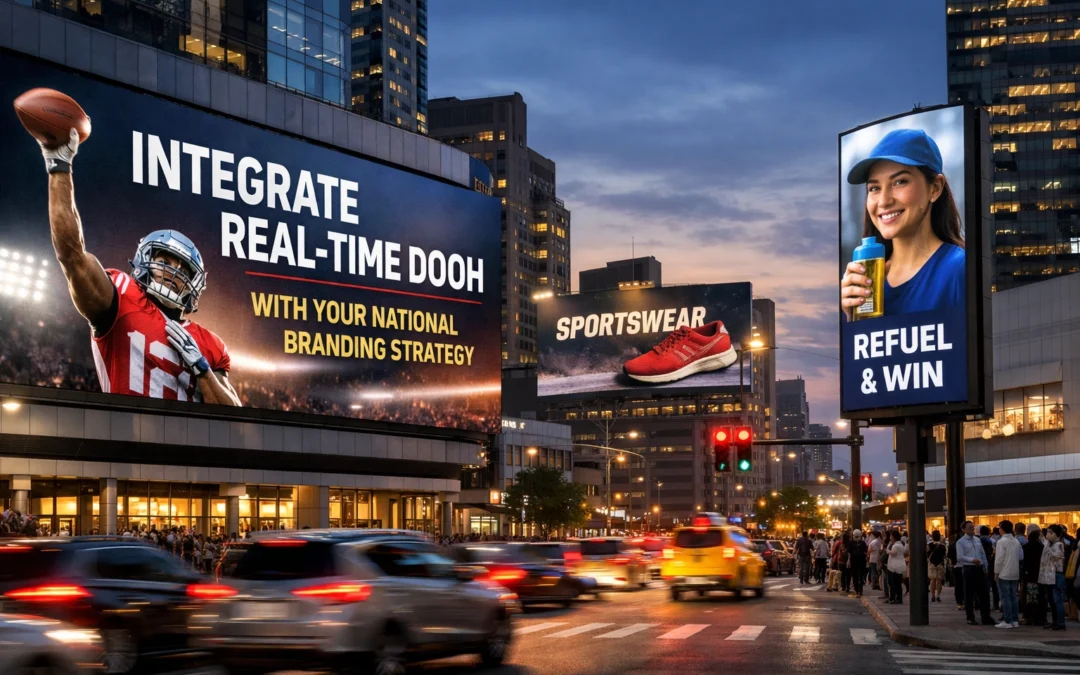
The landscape of national brand advertising is undergoing a fundamental transformation. Historically, national campaigns relied on static billboards and broad television buys that offered limited flexibility and delayed feedback loops. Today, the integration of real-time Digital Out-of-Home (DOOH) advertising allows national brands to maintain a consistent identity while responding to live data, local conditions, and shifting consumer behaviors.
By leveraging programmatic technology and a vast network of digital screens, marketers can now execute high-impact strategies that were previously impossible. This guide explores the technical and strategic frameworks required to integrate real-time DOOH into a cohesive national branding strategy.
The Evolution of National Brand Visibility
National branding requires a delicate balance between scale and relevance. In the past, achieving scale often meant sacrificing relevance because creative assets were fixed for months at a time. Digital Out-of-Home technology has resolved this tension by introducing programmatic buying and dynamic creative optimization.
OOH Sports provides the infrastructure for this evolution, offering access to over 25,000 digital screens that reach consumers in high-intent environments. The transition from traditional outdoor advertising to real-time DOOH allows brands to move away from buying specific physical locations and toward buying specific audience segments based on movement patterns and real-time triggers.

Strategy: Synchronizing Creative Across an Omnichannel Ecosystem
A successful national strategy does not treat DOOH as an isolated channel. Instead, it serves as the physical anchor for a broader omnichannel ecosystem. To achieve maximum impact, national brands must synchronize their DOOH messaging with mobile, social, and search efforts.
Maintaining Tonal Consistency
When a brand launches a national campaign, visual and tonal consistency is paramount. Programmatic DOOH platforms allow creative teams to adapt master assets for digital screens while maintaining the core brand identity. This ensures that a consumer seeing an ad on a stadium perimeter screen has a seamless experience when they later encounter the same brand on their mobile device.
Driving Immediate Mobile Engagement
The physical presence of a DOOH screen serves as a powerful prompt for digital action. Incorporating QR codes, NFC tags, and personalized URLs into DOOH creative bridges the gap between the physical and digital worlds. Research indicates that 74 percent of mobile device users take action on their devices after being exposed to a DOOH ad. This synergy is particularly effective for driving purchase consideration. For instance, the White Claw programmatic DOOH campaign resulted in a 74 percent lift in purchase consideration for their vodka launch by effectively targeting high-traffic areas and reinforcing the message across channels.
Objective: Leveraging Dynamic and Contextual Messaging
The primary advantage of real-time DOOH is the ability to change creative based on external data feeds. This allows national brands to remain relevant at a local level without requiring manual updates for every individual screen.
Weather and Environment Triggers
Contextual triggers allow brands to respond to real-world conditions automatically. A national apparel brand can use weather-triggered creative to promote rain gear during a localized storm in Seattle while simultaneously showcasing summer wear in Miami. These adjustments happen in real-time based on live weather data, ensuring the brand always provides a relevant solution to the consumer’s immediate environment.
Time-Based and Event-Driven Content
National brands can optimize their visibility by aligning creative with the time of day or specific live events. In the sports advertising sector, this might involve updating digital screens with live scores or post-game celebrations. Launching real-time sports betting DOOH campaigns can now be accomplished in under 24 hours, allowing advertisers to capitalize on the momentum of a specific game or tournament.

Implementation: Audience-Based Targeting at Scale
The shift toward programmatic DOOH has replaced the "location-first" mentality with an "audience-first" approach. National brands can now target specific demographics across multiple markets simultaneously by utilizing aggregated data signals.
Utilizing Movement Patterns and First-Party Data
Programmatic platforms analyze movement patterns to identify where a brand’s target audience is most likely to be at any given time. By integrating first-party data, advertisers can refine their targeting to reach consumers who have already interacted with the brand online. This creates a feedback loop where digital data informs physical ad placements.
Audience Reach Percentage (ARP) Targeting
Audience Reach Percentage (ARP) is a critical metric for national campaigns. It helps identify which screens across different regions over-index for specific customer profiles. This ensures that the budget is allocated to the most efficient screens, maximizing the national reach while minimizing wasted impressions. As a result, 67 percent of media planners are shifting budgets toward DOOH to take advantage of these sophisticated targeting capabilities.
Tactics: Geo-Fencing and Sequential Retargeting
To move a consumer from brand awareness to conversion, national strategies must employ sequential messaging. Geo-fencing is the technology that makes this possible at a national scale.
Closing the Loop with Mobile Retargeting
By activating geo-fencing around DOOH placements, brands can identify mobile devices that have been exposed to the outdoor ad. These "exposed" devices are then added to a retargeting pool, allowing the brand to serve follow-up ads on social media or mobile apps. This sequential approach has been proven to improve conversion rates significantly compared to digital-only campaigns.
Case Study Evidence
The effectiveness of this tactic is well-documented. For example, Sea-Doo’s first digital OOH campaign utilized these strategies to achieve a 144 percent increase in purchase consideration. By reaching the right audience in a physical environment and following up with digital touchpoints, the brand was able to dominate the consumer's decision-making process.

Technology Partners: Performance Optimization and Analytics
One of the most significant barriers to traditional OOH was the lack of real-time measurement. Modern DOOH platforms have solved this by providing detailed analytics that allow for continuous campaign optimization.
Real-Time Budget Allocation
Unlike static media, programmatic DOOH allows for budget flexibility. If a specific market or creative variation is underperforming, the budget can be reallocated to high-performing locations in real-time. This ensures that a national budget is always working at its highest potential efficiency.
Measuring Incremental Impact
National brands use media mix modeling to understand how DOOH contributes to overall business outcomes. Key metrics include:
- Brand Lift: Measuring changes in brand perception or preference after exposure.
- Foot Traffic Attribution: Quantifying the number of people who visited a retail location after seeing a DOOH ad.
- Sales Lift: Tracking the direct impact on revenue.
For instance, AB InBev’s Mike’s Hard Iced Tea campaign saw a 119 percent lift in positive brand image by utilizing programmatic DOOH. This data-driven approach provides the transparency needed to justify large-scale national investments.
Strategic Alignment: Future-Proofing the Brand
As the industry moves toward 2030, the DOOH sports advertising market is projected to reach $50 billion. Brands that integrate real-time capabilities now will be positioned to capture a significant share of this growth. Seven specific strategies are currently being deployed by industry leaders to prepare for this shift, including the adoption of AI-powered optimization and advanced stadium perimeter targeting.
The comparison between AI-powered DOOH and traditional stadium ads highlights a clear trend: the flexibility and data-rich nature of digital screens offer a superior Return on Investment (ROI) for modern sports marketers. The ability to deploy 25,000 digital screens nationwide is fundamentally changing how sports marketing is executed.

Summary of National Integration Tactics
To successfully integrate real-time DOOH into a national branding strategy, organizations should follow a structured process:
- Define National Objectives: Establish clear KPIs for reach, frequency, and brand lift across all target markets.
- Coordinate Creative Assets: Develop a master creative suite that can be dynamically adapted for local triggers while maintaining brand standards.
- Select Programmatic Partners: Utilize platforms like OOH Sports that offer large-scale screen inventory and robust targeting data.
- Implement Real-Time Triggers: Connect creative to data feeds such as weather, time, or live sports scores to increase relevance.
- Activate Retargeting: Use geo-fencing to bridge the gap between DOOH exposure and mobile conversion.
- Analyze and Optimize: Review performance data weekly and adjust budget allocations to favor high-performing screens and regions.
By treating DOOH as a dynamic, data-driven component of the marketing mix rather than a static outdoor placement, national brands can achieve unprecedented levels of engagement and ROI. The transition to real-time integration is no longer an optional upgrade but a strategic necessity for brands looking to maintain a competitive edge in an increasingly digital world.