
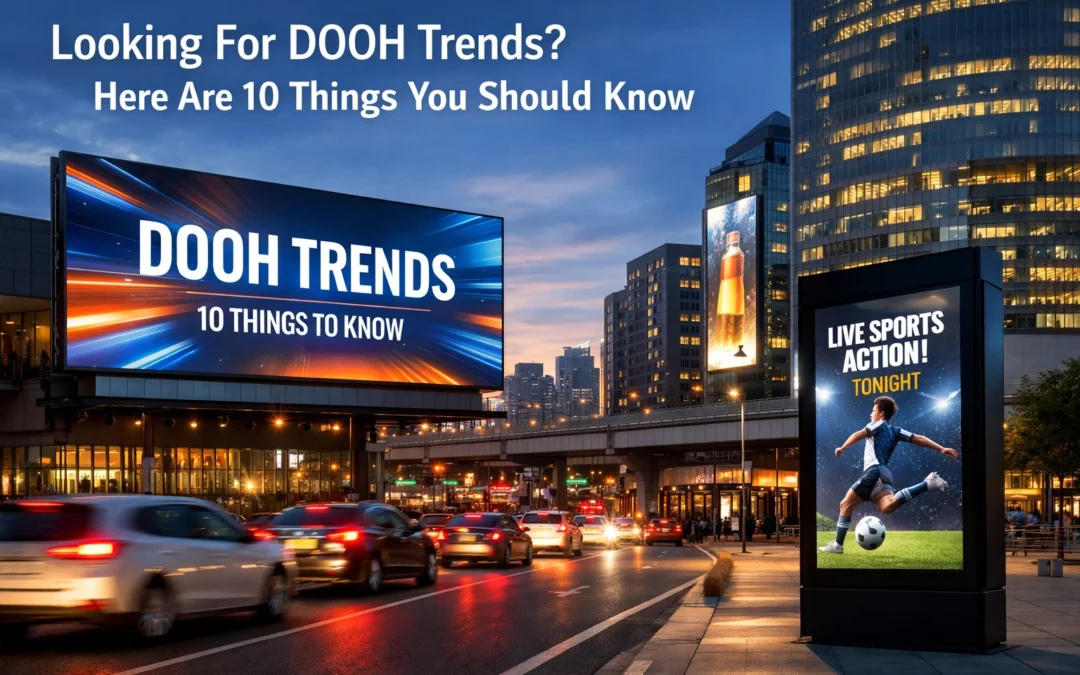
The world of advertising is moving faster than ever. If you have spent any time looking at the skyline of a major city or walking through a crowded sports stadium lately, you have probably noticed that the signs are changing. The static, paper billboards of the past are being replaced by vibrant, high definition screens that can change their message in the blink of an eye. This is the era of Digital Out-of-Home (DOOH) advertising, and it is completely reshaping how brands connect with their audiences.
At OOH Sports, we see these shifts happening in real time. For brands and media planners, staying ahead of these trends is not just about being "innovative." It is about ensuring that your marketing budget is working as hard as possible. Whether you are a seasoned advertiser or just starting to explore the potential of the "great outdoors," here are 10 things you should know about the current state and future of DOOH.
1. Programmatic Buying is the New Standard
Not long ago, buying a billboard was a manual process that involved phone calls, paper contracts, and weeks of lead time. Those days are largely over. Programmatic buying has moved from a niche technology to the industry standard. This automation allows brands to launch, optimize, and adjust their campaigns with the same ease they experience with online ads.
With programmatic DOOH, you can adjust your frequency, time slots, and locations in real time. If a certain location is not performing as expected, or if a game schedule changes, you can pivot instantly. This flexibility is a game changer for sports marketing, where timing is everything. For those looking to dive deeper into the tech side of this shift, exploring the StackAdapt DSP can provide great insights into how programmatic adoption is driving omnichannel success.
2. Data Driven Planning Replaces Location Alone Targeting
In the past, the value of a billboard was determined almost entirely by its physical location. While location still matters, it is no longer the only factor. Modern campaigns now use audience data and real time contextual signals to decide when and where an ad should appear.
Instead of just buying a screen near a stadium, savvy advertisers are looking at movement patterns, local events, and even weather conditions. For example, a brand selling rain gear might trigger their ads to only appear when the forecast calls for a downpour. This level of precision ensures that you are reaching the right people at the absolute best moment.

3. Dynamic Creative Responds to Real Time Contexts
The message on the screen is becoming just as smart as the technology behind it. We are seeing a massive shift toward dynamic creative, where the ad content itself changes based on external data. Ads are no longer static images; they are living pieces of content that adapt to the environment.
Research shows that dynamic creative can boost action rates by 6 percent and increase purchase intent significantly compared to generic ads. Imagine an ad for a sports betting app that updates the live odds every few seconds right outside the arena. This kind of relevance is hard to ignore. We have seen this work effectively in real time sports betting DOOH campaigns that convert viewers in record time.
4. Smart Billboards and AI Hyper Personalization
Artificial Intelligence is making its mark on the physical world. Billboards equipped with sensors and AI can now tailor content dynamically based on the traffic flowing past them. If a crowd of fans wearing a specific team's jersey walks by a screen, the AI can detect the color patterns and serve an ad relevant to that specific fan base.
The best part is that this is done without invasive data collection. About 55 percent of audiences report feeling that these campaigns are personally relevant to them. By using AI to understand the "vibe" of a location, brands can create a connection that feels organic. To avoid common pitfalls in this high tech space, it is helpful to review mistakes to avoid with sports DOOH.
5. Sustainability as a Competitive Differentiator
As consumers become more conscious of their environmental impact, brands are following suit. Sustainability has become a major trend in the DOOH space. We are seeing a rise in the use of eco-friendly materials, including biodegradable vinyl for hybrid displays and solar powered digital screens.
Recent surveys indicate that a significant majority of consumers are willing to pay a premium for brands that prioritize "green" practices. Advertisers who choose platforms that utilize energy efficient LED screens or water based inks are not just helping the planet. They are building brand equity with a demographic that values corporate responsibility.

6. Attribution Models Prove the Digital Lift
One of the biggest criticisms of traditional outdoor advertising was that it was hard to measure. "I know half my advertising works, I just don't know which half," was the old saying. Today, DOOH attribution models have solved that problem.
Programmatic DOOH can now track billboard views and link them to online actions. This means you can see exactly how a screen in the middle of a city influenced search traffic, website visits, and physical foot traffic. For instance, a campaign for White Claw saw a 74 percent lift in purchase consideration by using these advanced measurement tools. It provides a level of accountability that was previously only available in the online world.
7. DOOH Integrates into Omnichannel Strategies
DOOH is no longer a siloed channel. It is now a critical part of a broader omnichannel strategy. Marketers are finding that DOOH works best when it is synchronized with mobile, social media, and connected TV (CTV).
For example, a fan might see a high impact DOOH ad at a stadium, and then receive a coordinated "retargeting" ad on their mobile device or social feed later that day. This multi touchpoint approach bridges the gap between the physical and digital environments, creating a seamless brand experience. When DOOH is part of a larger plan, the results are often much stronger, as seen in the Sea-Doo campaign that increased purchase consideration by 144 percent.
8. CTAs and Conversion Mechanics Drive Engagement
The way audiences interact with billboards is changing. We are seeing a surge in the use of interactive elements like QR codes and unique URLs. These conversion mechanics turn a passive viewing experience into a measurable digital engagement.
Sequential messaging is another trend gaining traction. This involves showing a series of different ads to the same audience as they move through a transit system or a street furniture network. This builds a narrative and encourages the viewer to take the next step, whether that is scanning a code or visiting a store. This strategy is particularly effective in high traffic areas like New York City during the holiday shopping season.

9. The Market Expansion Driven by Digital Fatigue
There is a growing sense of "digital fatigue" among consumers. People are increasingly using ad blockers and ignoring the cluttered sidebars of websites. This has led advertisers to shift their budgets back to the real world.
The outdoor advertising sector is projected to hit nearly 10 billion dollars in the coming years. Why? Because you cannot "ad block" a 50 foot screen on the side of a building or a digital display at a basketball game. DOOH offers a brand safe, high impact environment where the ads are actually welcomed as part of the visual landscape. This shift is why we are seeing such a gold rush in sports media planning.
10. Rapid Growth in DOOH Market Share
Finally, it is important to understand the sheer scale of this growth. DOOH is projected to represent a significant portion of all out of home advertising by 2027. Programmatic DOOH alone is expected to reach massive valuations as brands embrace data driven outdoor as a core media pillar.
By 2030, DOOH sports advertising is forecasted to hit the 50 billion dollar mark. This is not just a temporary trend. It is a fundamental shift in how the advertising industry operates. Brands that understand how to capture their share of this market now will be the leaders of the next decade.
Why This Matters for You
Understanding these trends is the first step toward building a more effective marketing strategy. The common thread across all ten of these points is the move toward relevance and accountability. Whether it is through AI, programmatic buying, or better attribution, DOOH is becoming smarter, greener, and more connected.
At OOH Sports, we are excited to help our partners navigate this evolving landscape. The physical world is the new digital frontier, and the opportunities for brands to stand out are limitless. If you want to see how these trends can be applied to your specific brand, or if you are looking for more AI powered analytics to prove your campaign success, we are here to help.
The future of advertising isn't just on a phone screen in someone's pocket. It is all around us, larger than life and more engaging than ever. Stay tuned to our updates as we continue to track these changes and provide the insights you need to win in the world of OOH Sports.