
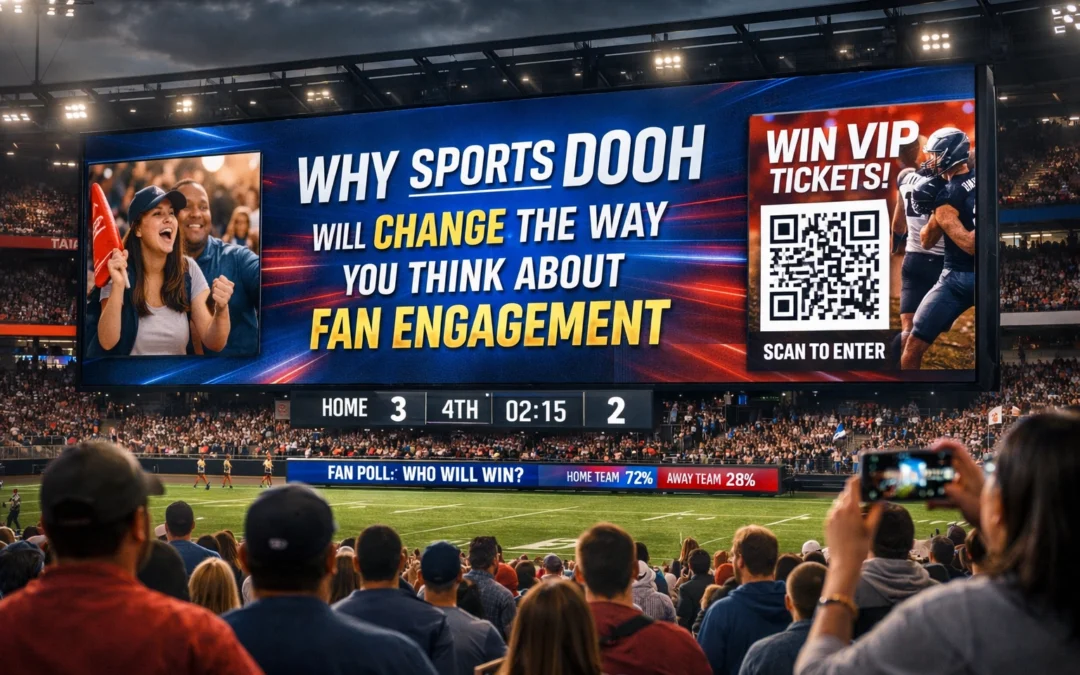
Digital out of home (DOOH) advertising is fundamentally transforming how brands interact with sports fans. The era of static, unchanging billboards is being replaced by a dynamic ecosystem of screens that respond to live game data, audience movement, and emotional peaks. This shift represents more than just a technological upgrade. It is a complete reimagining of the fan journey.
Sports marketing has traditionally relied on expensive stadium sponsorships or broadcast commercials. While these methods offer reach, they often lack the precision and real-time relevance that modern media buyers demand. By leveraging programmatic technology, DOOH allows brands to move beyond the stadium walls and engage fans wherever they are, from the moment they leave their homes to the post game celebrations at a local bar.
Strategy: Capturing the Entire Fan Journey
Successful fan engagement does not happen in a vacuum. It requires a strategy that mirrors the physical and emotional movement of the audience. The fan journey begins long before the first whistle and continues long after the final score. DOOH provides the flexibility to meet fans at every touchpoint.
- The Pre Game Commute: Digital billboards along major highways and transit hubs can build anticipation. These screens can display countdown clocks or highlights from previous matchups.
- The Stadium Perimeter: As fans approach the venue, high impact screens can provide utility, such as directions or gate information, alongside brand messaging.
- The Viewing Experience: For fans not at the game, screens in sports bars and restaurants offer a secondary environment where engagement levels remain high.
- The Post Game Celebration: When a team wins, brands can immediately update creative content to reflect the victory, capturing the peak emotional state of the fan base.
This omnipresent approach ensures that a brand is seen as a participant in the event rather than just an advertiser. It creates a narrative that follows the fan, building frequency and recall through multiple meaningful exposures.

Objective and Creative Strategy: Real Time Resonance
The primary objective of modern sports DOOH is to create an emotional connection. Unlike traditional media, DOOH can utilize live data feeds to change creative content in an instant. This capability is a game changer for relevance.
When a star player hits a milestone or a team scores a last minute goal, the creative on a digital screen can update to congratulate the athlete or celebrate the moment. This level of responsiveness makes the advertisement feel like a live update, which increases the likelihood of the audience paying attention. Research suggests that 81 percent of consumers feel more positively toward brands that sponsor the sports they love. When that sponsorship feels active and informed, the impact is even greater.
Brands are also using DOOH to drive specific actions. For example, sports betting platforms use real-time odds on digital screens to prompt immediate engagement. This strategy is explored in detail in the guide on how to launch real-time sports betting DOOH campaigns.

Technology Partners and Programmatic Efficiency
The rise of programmatic DOOH is a major driver of this industry shift. Media buyers no longer need to negotiate individual contracts for every screen. Instead, they use Demand Side Platforms (DSPs) to bid on inventory in real time. This process allows for incredible precision in targeting.
By using platforms such as the StackAdapt DSP, advertisers can target specific audience segments based on movement patterns and affinity data. If a brand wants to reach fans of a specific soccer team, it can trigger ads on screens located in neighborhoods where those fans live or work.
Programmatic technology also allows for better budget management. Advertisers can set parameters to only display ads during certain times or when specific conditions are met, such as weather changes or game outcomes. This efficiency is why many media planners are shifting budgets toward digital screens. Detailed insights on this trend can be found in the analysis of why media planners are shifting budgets.
Execution: Avoiding Common Pitfalls
While the potential of DOOH is vast, execution requires a careful approach. One of the most common mistakes is treating a digital screen like a static one. To maximize engagement, creative must be optimized for the environment and the audience's state of mind.
Common errors include:
- Using too much text that cannot be read by a passing driver.
- Failing to update creative based on real-time events.
- Ignoring the surrounding context of the screen.
Effective execution involves leveraging stadium perimeter targeting to reach fans when their attention is most focused on the sporting event. This strategy helps fix many of the mistakes made with sports DOOH campaigns.

Results: Quantifiable Impact and ROI
The success of DOOH is not just theoretical. It is backed by significant data and measurable brand lift. When compared to traditional stadium sponsorships, programmatic DOOH often delivers superior results because it is more targeted and flexible.
Consider these documented results from major brand campaigns:
- White Claw: Their programmatic campaign for a vodka launch resulted in a 74 percent lift in purchase consideration. Detailed results are available in the White Claw case study.
- AB InBev (Mike’s Hard Iced Tea): This campaign saw a 119 percent lift in positive brand image by utilizing a programmatic approach. The full breakdown can be seen in the AB InBev report.
- Sea-Doo: Their first digital OOH campaign increased purchase consideration by 144 percent. More information is found in the Sea-Doo success story.
These numbers prove that DOOH is a highly effective tool for moving the needle on key brand metrics. It typically delivers a 23 percent to 40 percent better ROI than traditional stadium advertising. This efficiency is forcing a broader conversation about how sports marketing dollars are allocated. For a deeper dive into this comparison, readers can explore the analysis of programmatic DOOH vs traditional stadium ads.

Integrating into an Omnichannel Strategy
DOOH is most powerful when it is part of a larger, integrated marketing strategy. It serves as a physical anchor for digital and social media efforts. For example, a brand can use DOOH to build broad awareness near a stadium and then use mobile retargeting to reach those same individuals with a specific offer on their smartphones.
This synergy ensures that the brand remains top of mind throughout the entire day. A fan might see a high impact billboard on their way to the game, encounter a digital screen at the stadium entrance, and later see a related social media ad while checking game stats. This multi channel approach creates a unified experience that is much harder to ignore than a single, isolated ad.
The effectiveness of this strategy was notably demonstrated by brands that were not official sponsors of major events but still captured significant mindshare. A prime example is how Nike utilized OOH during the NYC Marathon to maintain a dominant presence without the official sponsorship price tag.
The Future of Sports Marketing
The landscape of advertising is shifting toward automation and data driven decision making. As more digital screens become available, the ability to reach fans with precision will only increase. Projections indicate that DOOH sports advertising will hit 50 billion by 2030, reflecting its growing importance in the media mix.
AI is also beginning to play a role in optimizing these campaigns. AI powered DOOH can analyze traffic patterns and audience sentiment in real time to adjust messaging even more accurately. This evolution is discussed in the comparison between AI powered DOOH and traditional ads.
For media buyers and brand managers, the message is clear. Fan engagement is no longer about just being present at the game. It is about being relevant, responsive, and integrated into the fan's entire journey. Digital out of home advertising provides the tools to achieve this at scale, offering a level of flexibility and measurability that was previously impossible.
By moving away from static placements and embracing the dynamic nature of DOOH, brands can build deeper, more meaningful connections with one of the most passionate and loyal audiences in the world. The shift is already happening, and those who adapt their strategies now will be best positioned to lead the next generation of sports marketing. For more resources on how to navigate this changing landscape, visit the OOH Sports homepage.