
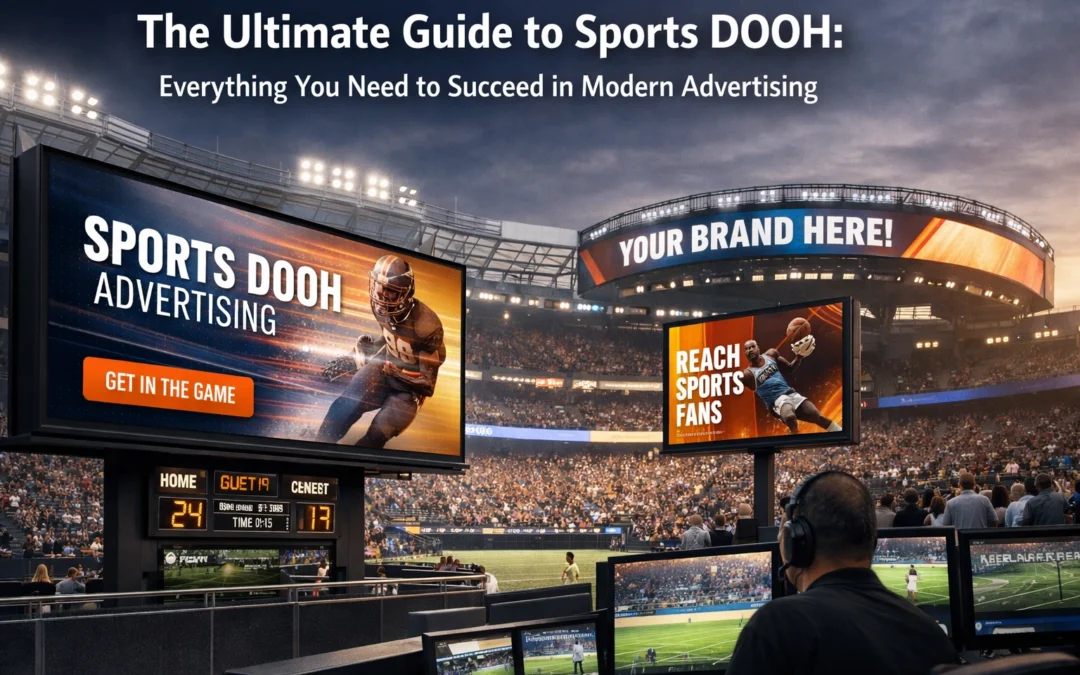
Digital Out-of-Home (DOOH) advertising has emerged as a cornerstone of modern sports marketing. As traditional television viewership becomes increasingly fragmented, brands are looking for more effective ways to connect with sports fans where they live, work, and play. DOOH offers a unique combination of high-impact physical presence and the technical precision of digital targeting.
For media buyers and brand managers, the transition to sports-focused DOOH is not just about moving budget from static billboards to digital screens. It represents a fundamental shift in how campaigns are executed and measured. This guide outlines the essential strategies, technologies, and frameworks required to maximize return on investment in the sports advertising landscape.
The Strategic Advantages of Sports DOOH
Traditional sports advertising often relies on massive investments in television spots or multi-million dollar stadium naming rights. While these provide significant reach, they also come with high barriers to entry and limited flexibility. DOOH provides a more accessible and agile alternative.
One primary advantage is the ad-block-proof nature of the medium. Unlike digital ads on smartphones or computers, DOOH screens cannot be skipped or hidden. When fans are in high-traffic areas like transit hubs, urban centers, or near stadiums, the messaging is unavoidable and high-impact.
Furthermore, programmatic DOOH allows for scalable activation. Marketers can target fans across thousands of screens simultaneously, ensuring consistent brand exposure. This repeated exposure at a lower cost than traditional television spots makes it an efficient choice for both national brands and local businesses.
High-Impact Locations for Fan Engagement
Success in sports DOOH depends heavily on location. To capture the attention of fans, messaging must be placed where they naturally congregate throughout the game-day journey.
- Stadium Perimeters and Arenas: Capturing fans as they arrive and depart provides peak visibility.
- Commute Routes: Digital billboards along highways and transit lines build anticipation as fans travel to the game.
- Sports Bars and Restobars: These locations offer a high dwell time, allowing fans to engage with messaging while watching the event.
- Retail and Grocery Points: Targeting screens in retail environments allows brands to reach fans who are purchasing game-day supplies.
- Urban Pedestrian Areas: Digital street furniture and panels in city centers capture broader fan activity and casual observers.

Strategic placement is not just about being near the venue. It is about understanding the fan journey. By identifying where fans go before the first whistle and after the final buzzer, brands can create a continuous presence that reinforces brand recall.
The Three-Stage Campaign Framework
An effective sports DOOH campaign is structured around the timeline of the sporting event. This three-stage framework ensures that the brand remains relevant at every phase of the fan experience.
Stage 1: Pre-Game Activation and Awareness
The objective of the pre-game stage is to build excitement and establish top-of-mind awareness. Brands often use upper-funnel channels like social media or connected TV (CTV) to introduce a message, then use DOOH to reinforce it in the physical world.
During this phase, digital billboards near stadiums and fan zones should be secured early. High-demand screens often sell out quickly, so utilizing programmatic guaranteed deals or direct buys is essential for ensuring prime visibility.
Stage 2: Game-Time Impact
When the event begins, the focus shifts to maximizing exposure during peak excitement. Screens in restaurants, retail locations, and along commute routes should display consistent, high-energy messaging.
This stage is also the ideal time to leverage the priming effect. When a fan sees a brand on a large digital urban panel, it strengthens the memory structure associated with other digital ads they may have seen earlier. This cross-channel reinforcement makes every marketing dollar more efficient.
Stage 3: Post-Game Reinforcement and Conversion
The post-game stage is often overlooked but is critical for driving action. After the event ends, brands can use DOOH to congratulate the winning team or offer limited-time deals to fans as they leave the area.
Retargeting plays a major role here. By capturing anonymized mobile device IDs in the geofenced area around DOOH screens, brands can continue the conversation. This involves delivering follow-up ads via mobile display or CTV to fans who were exposed to the physical screens earlier in the day.
Leveraging Programmatic DOOH and Real-Time Triggers
The introduction of programmatic technology has transformed out-of-home advertising into a responsive medium. Marketers no longer have to rely on static images that stay the same for weeks. Instead, they can use real-time triggers to adjust creative content instantly.
Common triggers used in sports DOOH include:
- Live Scores: Updating creative to reflect current game scores or the final result.
- Weather Conditions: Changing messaging based on local weather, such as promoting cold drinks on hot days.
- Time of Day: Optimizing ads for morning commutes or late-night post-game celebrations.
- Inventory Levels: Promoting specific products at nearby retail locations based on current stock.

Using a specialized demand-side platform (DSP) is key to managing these programmatic elements. For instance, StackAdapt helps drive programmatic DOOH adoption by allowing brands to integrate DOOH into their omnichannel strategies with ease. This technology enables real-time bidding, ensuring that ads are only shown when and where they are most relevant.
Real-Time Sports Betting and Conversion
The growth of sports betting has opened new opportunities for DOOH. Real-time sports betting campaigns can be launched and updated in under 24 hours to reflect changing odds and game situations. This level of agility is particularly effective for driving immediate conversions among fans who are already engaged with the live action.
Detailed strategies on how to launch real-time sports betting campaigns highlight the importance of speed and contextual relevance in modern sports marketing.
Measuring ROI and Brand Lift
One of the most significant shifts in modern advertising is the ability to measure the impact of DOOH with precision. Historically, outdoor advertising was difficult to track. Today, brands use sophisticated analytics and brand lift studies to prove the success of their campaigns.
The data consistently shows that DOOH drives measurable results:
- Purchase Consideration: A campaign for White Claw saw a 74% lift in purchase consideration for a new product launch.
- Brand Image: AB InBev reported a 119% lift in positive brand image through programmatic DOOH efforts.
- Direct Action: Sea-Doo achieved a 144% increase in purchase consideration by leveraging targeted digital screens.

These results are achieved by focusing on key metrics such as device IDs exposed, geographic performance, and post-campaign surveys. By comparing the behavior of exposed audiences against a control group, marketers can determine the exact impact of their DOOH spend.
Cost Efficiency: DOOH vs. Traditional Sponsorships
For many brands, the cost of traditional stadium sponsorships is becoming prohibitive. A single high-profile sponsorship can cost millions of dollars, yet it only reaches the fans inside the stadium.
In contrast, smart brands scale with perimeter DOOH for significantly less, often achieving similar or better results for 80% less investment. This approach allows brands to appear as if they are major sponsors without the associated overhead. For example, Nike effectively navigated the NYC Marathon without being an official sponsor by using clever placement and timing on digital screens throughout the city.
Best Practices for Creative Execution
To succeed in sports DOOH, the creative content must be tailored to the environment. Unlike a mobile ad that a user might spend time reading, a DOOH ad has only a few seconds to make an impression.
- Simplicity is Essential: Use bold fonts and high-contrast colors. The message should be clear from a distance.
- Focus on Visuals: Use dynamic imagery or video to capture the eye.
- Clear Call to Action: Use QR codes or simple website URLs to direct fans toward the next step in the customer journey.
- Contextual Relevance: Ensure the creative matches the mood of the event. A celebratory tone works best for post-game wins, while an anticipatory tone is better for pre-game build-up.
Conclusion
Sports DOOH is no longer a peripheral tactic; it is a primary driver of fan engagement and brand growth. By combining strategic locations, programmatic flexibility, and rigorous measurement, media buyers and brand managers can execute campaigns that deliver significant results. As the sports marketing landscape continues to evolve toward real-time personalization and digital integration, DOOH remains the most effective way to bridge the gap between the digital world and the physical fan experience.

Whether the goal is to drive purchase consideration or build long-term brand equity, the principles of sports DOOH provide a clear path to success. By staying focused on the fan journey and leveraging the latest in programmatic technology, brands can ensure their message is heard loudly and clearly throughout the world of sports.