
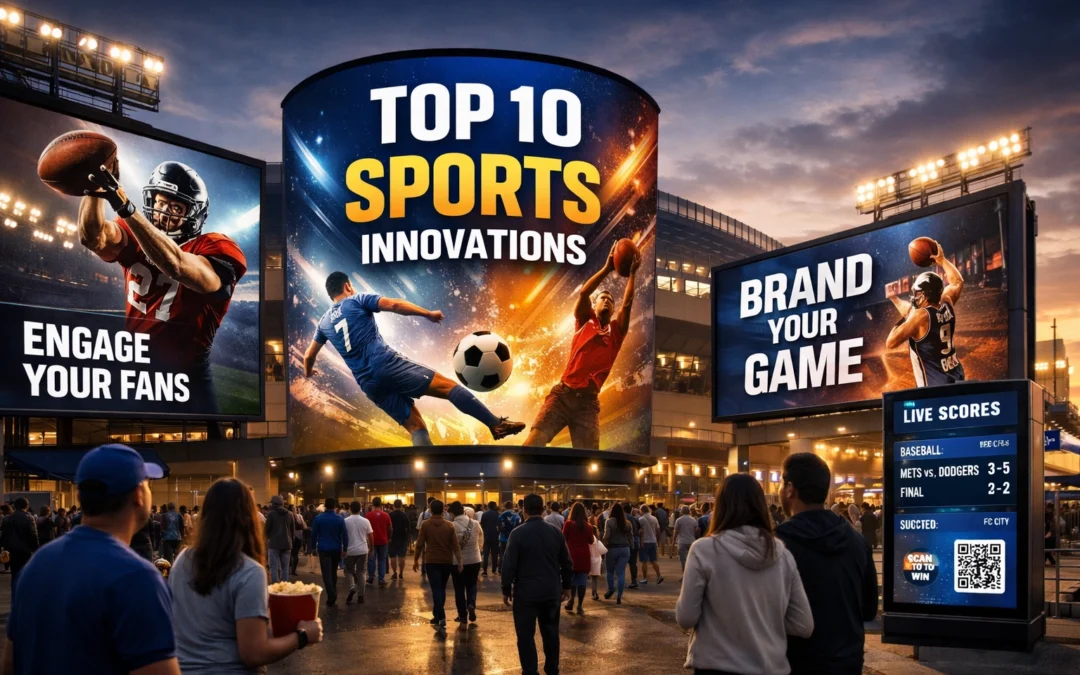
The landscape of sports marketing is undergoing a significant transformation. Traditional static billboards and standard stadium signage are no longer the only options for brands looking to capture the attention of passionate fans. As digital out-of-home (DOOH) technology evolves, it offers media buyers and brand managers new ways to integrate their messaging into the high energy environment of live sports.
Sports fans are a unique audience. They are highly engaged, emotionally invested, and often gathered in specific geographical clusters. To reach them effectively, a branding strategy must be as dynamic as the games they watch. This transition toward digital innovation allows for more flexibility, better measurement, and higher engagement rates. Here are the top 10 sports DOOH innovation ideas to refresh a branding strategy and maximize impact in the sports arena.
1. Real-Time Score and Event Triggers
One of the most effective ways to maintain relevance during a sporting event is through live data integration. By linking DOOH screens to real-time sports data feeds, brands can display live scores, game clocks, and immediate reactions to key plays.
When a team scores a goal or a game goes into overtime, the creative on the screen updates instantly. This strategy ensures that the brand is not just a passive observer but an active participant in the fan experience. For industries like sports betting, this is particularly valuable. Brands can launch real-time betting campaigns that react to game developments in under 24 hours. For more on this, explore how to launch real-time sports betting DOOH campaigns that convert.
2. Dynamic Creative Optimization (DCO)
Dynamic Creative Optimization allows advertisers to serve multiple versions of an ad based on external variables. In a sports context, this means the messaging can change based on who is winning, which player is performing well, or the overall momentum of the match.
If a star player hits a home run, the creative can automatically switch to feature that player or a specific product associated with them. This level of automation keeps the content fresh and prevents ad fatigue. It also ensures the creative stays relevant to the emotional intensity of the moment, which is a major driver for purchase consideration.
3. Programmatic Digital OOH (pDOOH)
Programmatic technology has revolutionized how screen inventory is purchased. Instead of long term contracts for static space, brand managers can buy screen time through automated platforms. This provides the flexibility to activate campaigns closer to event kickoff or during specific windows of high fan activity.
Using programmatic DOOH allows for a more tactical approach to budgeting. Brands can scale their presence up or down based on performance or game importance. This shift is a primary reason why many media planners are moving budgets toward digital formats. Detailed insights on this transition can be found in the discussion on driving programmatic DOOH adoption in omnichannel campaigns.

4. Geofencing and Hyper-Local Targeting
Sports fans follow a predictable journey. They travel through transit hubs, gather in fan zones, and eventually enter the stadium. Geofencing allows brands to target these high intent zones with precision.
By focusing on the perimeter of a stadium, advertisers can reach fans right when their excitement is peaking. This approach is often more cost effective than traditional stadium sponsorships. It allows smart brands to scale their presence for significantly less investment while still capturing the same audience. Understanding the shift from traditional stadium sponsorships to perimeter DOOH is essential for any modern branding strategy.
5. Interactive Elements and QR Codes
Turning a passive impression into an active exchange is a key goal for modern marketing. DOOH screens can now include interactive elements like QR codes, mobile prompts, and live polls.
A fan waiting at a concourse can scan a QR code to enter a contest, download a coupon, or vote for the player of the game. This interaction bridges the gap between the physical screen and the consumer's mobile device. It also provides brands with valuable first party data that can be used for future retargeting efforts.
6. Weather-Triggered Campaigns
The environment plays a major role in the sports experience, especially for outdoor events like golf, tennis, or football. DOOH technology allows for weather triggered creative that automatically adjusts based on local conditions.
If it starts to rain during a tournament, a brand could switch its creative to promote umbrellas or rain gear. Conversely, if it is a hot summer day, the messaging can pivot to cold beverages or sun protection. This contextual relevance makes the brand appear more thoughtful and helpful to the consumer.

7. Augmented Reality (AR) Activations
Augmented Reality is moving from mobile phones to large format digital screens. AR enabled billboards can create immersive experiences where fans see themselves on the big screen alongside digital avatars of their favorite athletes.
These activations are highly shareable. Fans are likely to record the experience and post it to social media, which extends the reach of the campaign far beyond the physical location of the screen. It turns a simple advertisement into a memorable event.
8. Personalized Multi-Audience Messaging
Not every person at a sporting event has the same interests. Some are die-hard fans, while others are there for the social atmosphere. Advanced DOOH platforms can serve different creative variations to different audience segments at the same location.
By analyzing movement patterns and demographic data, brands can show family friendly content during the afternoon and switch to more adult oriented or betting focused content in the evening. This level of precision ensures that the media spend is optimized for the specific people standing in front of the screen.
9. Immersive, Large-Format Displays
Size matters when it comes to capturing attention in a crowded sports environment. Immersive, large format displays and 3D LED screens are becoming more common in high traffic areas like stadium concourses and entertainment districts.
These screens use anamorphic depth to create 3D effects that appear to pop out of the display. This "wow factor" is incredibly effective for brand storytelling and ensures that the message is not lost in the visual noise of a stadium.

10. Advanced Measurement and AI-Powered Analytics
One of the biggest hurdles in traditional out-of-home advertising has been measurement. However, modern sports DOOH uses AI and data analytics to prove campaign success with high accuracy.
Brands can now track household level attribution, see how many people visited a store after seeing an ad, and measure overall brand lift. This data driven approach removes the guesswork from media buying. By using AI powered analytics, brand managers can justify their spend and optimize their strategies in real time.
Conclusion: The Future of Sports Branding
The integration of technology into the fan experience is not just a trend, it is a fundamental shift in how advertising works. Digital out-of-home advertising offers a level of agility and precision that was previously impossible. By utilizing these ten innovation ideas, brands can move beyond static images and create meaningful, real time connections with their audience.
OOH Sports provides the platform and expertise to execute these strategies across a massive network of digital screens. Whether it is leveraging live game data or targeting fans at the stadium perimeter, the opportunity to refresh a branding strategy has never been more accessible. As the industry moves toward a more programmatic and data driven future, staying ahead of these innovations is the key to capturing a share of the growing sports marketing market.
For those looking to compare different strategies, it is helpful to look at the ROI differences between programmatic DOOH and traditional stadium ads. The results often show that a digital, flexible approach leads to better engagement and a more successful branding outcome.