
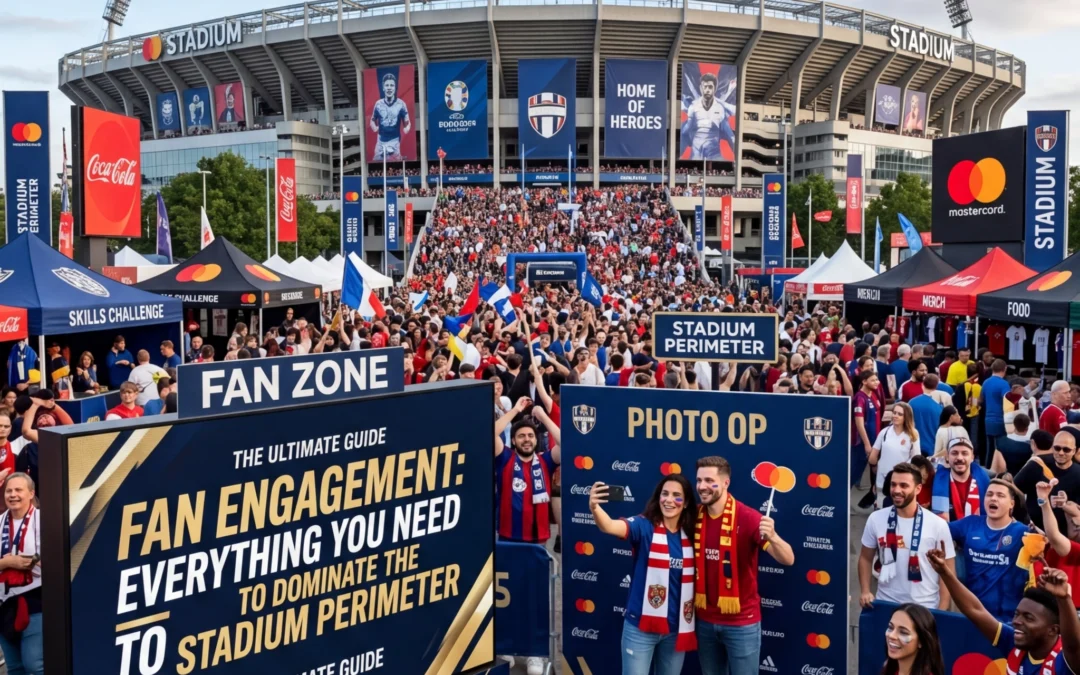
The stadium environment is unlike any other advertising space. It is a place of high emotion, intense focus, and collective experience. For Creative Directors and CMOs, the stadium perimeter represents more than just a boundary for the field of play. It is a premium real estate opportunity to capture the attention of a captive and passionate audience. As traditional advertising methods face increasing fragmentation, the power of sports marketing continues to grow.
Dominating the stadium perimeter requires a blend of strategic placement, visual simplicity, and cutting edge technology. This guide explores how brands can move beyond static logos to create meaningful fan engagement that resonates long after the final whistle.
The Strategic Power of the Stadium Perimeter
Stadium perimeter advertising is a powerhouse for brand recognition because it leverages the natural flow of the game. A single minute of perimeter advertising can translate to 156 minutes of on-screen visibility globally when accounting for broadcast reach, replays, and social media distribution. This compounding effect is a primary reason why sports marketing remains a cornerstone for major global brands.
Strategic placement is critical. Positioning boards behind goals or at corner flags ensures that a brand is part of the most emotionally charged moments of a match. When a goal is scored and the celebration begins, the perimeter branding is often right in the frame. These celebration moments are the most replayed and shared clips on social media, strengthening the memory association between a brand and positive fan emotions.
The reach of these placements extends far beyond the physical seats in the stadium. With top tier leagues commanding hundreds of millions of social media followers, a well placed perimeter ad gains sustained exposure throughout an entire season. This makes the perimeter a vital tool for building long term brand equity.
Visual Impact: Simplicity and Motion
In a fast paced sporting event, the window to capture attention is small. Viewers are focused on the ball and the players, not the advertisements. Therefore, visual simplicity is the most effective strategy. Clear brand names and recognizable logos consistently outperform complex messaging or detailed calls to action.

Dynamic LED displays have revolutionized this space. Research indicates that moving imagery on digital boards has significantly higher recall rates than static boards. Motion draws the eye naturally, but it must be used carefully. The animation should enhance the brand presence without becoming a distraction from the game itself.
The goal is immediate recognition. When a viewer sees a flash of color or a moving logo during a live broadcast, the brand identity should be clear within a split second. This immediate recognition facilitates better recall during subsequent exposures, such as when a fan sees the brand again in a retail environment.
The Shift to Programmatic DOOH
The transition from traditional, long term sponsorships to programmatic digital out of home (DOOH) advertising has changed the game for marketers. Brands are no longer locked into multi-year contracts just to get a presence in a stadium. Programmatic technology allows for more flexibility and precision.
Smart brands are now scaling their reach with perimeter DOOH for significantly less than the cost of a traditional multi-million dollar stadium sponsorship. You can learn more about this shift in the article: Are 2m Stadium Sponsorships Dead? How Smart Brands Scale with Perimeter DOOH.
Programmatic DOOH allows advertisers to buy space based on specific triggers, such as game times, weather conditions, or even real-time scores. This level of control ensures that budgets are spent efficiently, targeting the right fans at the most impactful times.

Technology and Global Relevance
Modern stadium advertising technology allows brands to be more relevant than ever before. One of the most significant advancements is virtual perimeter advertising. This technology uses AI to swap sponsors on the digital boards based on the broadcast region.
For example, viewers watching a match in Germany might see German brands on the perimeter boards, while viewers in Asia watching the same match see local Asian brands. This happens without changing the physical displays in the stadium. This geographic relevance maximizes the impact for global brands and allows for hyper-targeted regional campaigns.
Additionally, AI powered analytics are now being used to track viewer engagement across platforms. Marketers can feed this data back into their systems instantly to adjust creative or bidding strategies. For more on the growth of this sector, see how DOOH sports advertising is projected to hit 50 billion by 2030.
Bridging the Gap: Geofencing and the Second Screen
The stadium perimeter is the starting point for a multi-channel engagement strategy. One of the most effective ways to convert a spectator into a customer is by bridging the gap between the physical ad and the fan's mobile device.
Geofencing technology creates a virtual perimeter around the stadium. When fans enter this zone, brands can trigger real-time notifications or offers. For instance, as a fan walks near a concession stand or the team store, a push notification can offer a 10% discount on merchandise for the next 15 minutes. This turns brand awareness into immediate action.

Interactive content also plays a major role. Brands can deploy QR codes on perimeter boards during breaks in play or half-time. Scanning these codes can unlock:
- Exclusive behind the scenes content.
- Live player statistics and advanced data.
- Instant entry into contests or sweepstakes.
- Digital coupons for nearby retail locations.
This "second screen" experience ensures that the brand remains top of mind even when the fan's eyes move from the field to their phone. It creates a data-rich environment where marketers can track the journey from seeing an ad to taking a specific digital action.
Measuring Success and ROI
In the past, measuring the ROI of stadium advertising was often based on guesswork or broad estimates. Today, the focus is on data-driven results. Success is measured through broadcast data for television reach, mobile app analytics for fan engagement, and social media monitoring to quantify the extended life of the campaign.
Campaigns that utilize programmatic DOOH have shown significant results in brand lift. For example, White Claw’s programmatic campaign saw a 74% lift in purchase consideration for a new product launch. These kinds of measurable outcomes are why 67% of media planners are expected to shift their budgets toward sports DOOH.
To prove campaign success, marketers now use AI powered analytics that provide a clear picture of how an audience interacts with the brand. This eliminates the need for guesswork and allows for a more analytical approach to sports marketing. You can explore these measurement techniques in detail here: 7 AI Powered DOOH Analytics That Prove Campaign Success.

Enhancing the Venue Experience
Engagement does not begin and end with the perimeter board. The stadium perimeter is part of a larger ecosystem of venue experiences. Leading brands use the perimeter to drive fans toward other activations within the stadium, such as interactive kiosks, augmented reality games, or photo booths in the concourse.
Digital mapping and heat mapping also play a role in the broader strategy. Stadium operators use this data to manage crowds and direct fans to less populated entrances or concession stands. Brands that align themselves with these "utility" functions (e.g., "This restroom wait time brought to you by Brand X") can build significant goodwill by solving actual problems for the fans.
When the fan experience is improved through technology and thoughtful branding, the overall sentiment toward the sponsors increases. This is the difference between simply being a "logo on a wall" and being a meaningful part of the event.
Conclusion: The Perimeter as a Hub
The stadium perimeter has evolved from a static billboard into a data-informed engagement hub. For Creative Directors and CMOs, the opportunity lies in using this space to create a cohesive, multi-channel narrative. By combining the visual power of LED motion with the precision of programmatic buying and the interactivity of geofencing, brands can dominate the stadium environment and deliver measurable ROI.

Dominating the perimeter is about more than just visibility. It is about being present in the moments that matter to fans and providing them with value, whether that is through entertainment, exclusive offers, or enhanced experiences. As the sports marketing landscape continues to grow, those who embrace technology and strategic simplicity will be the ones who truly connect with the audience.