
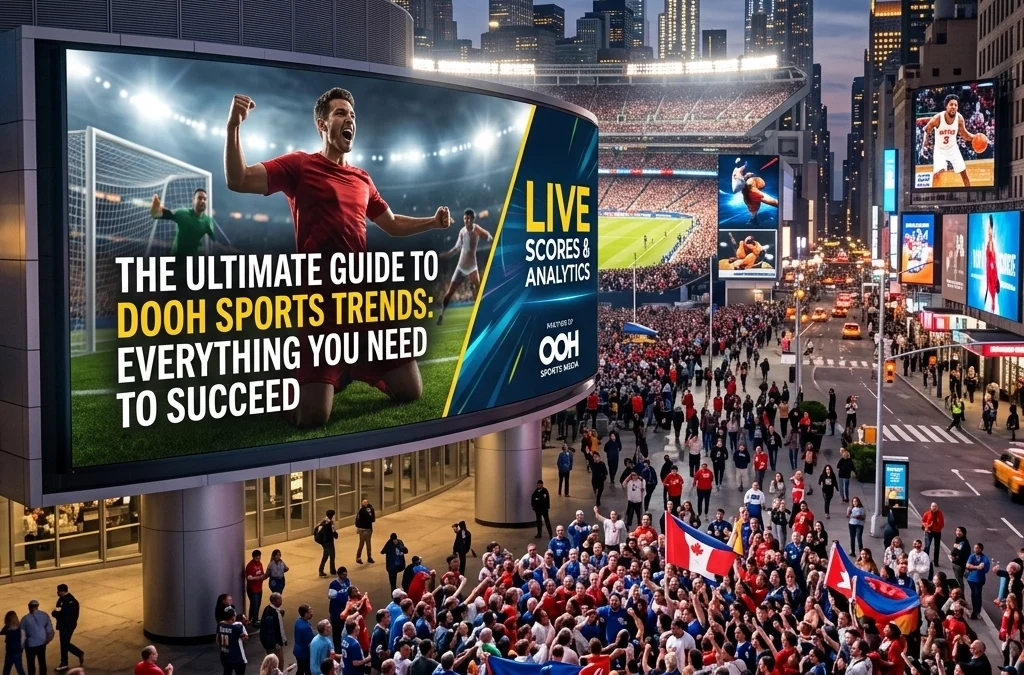
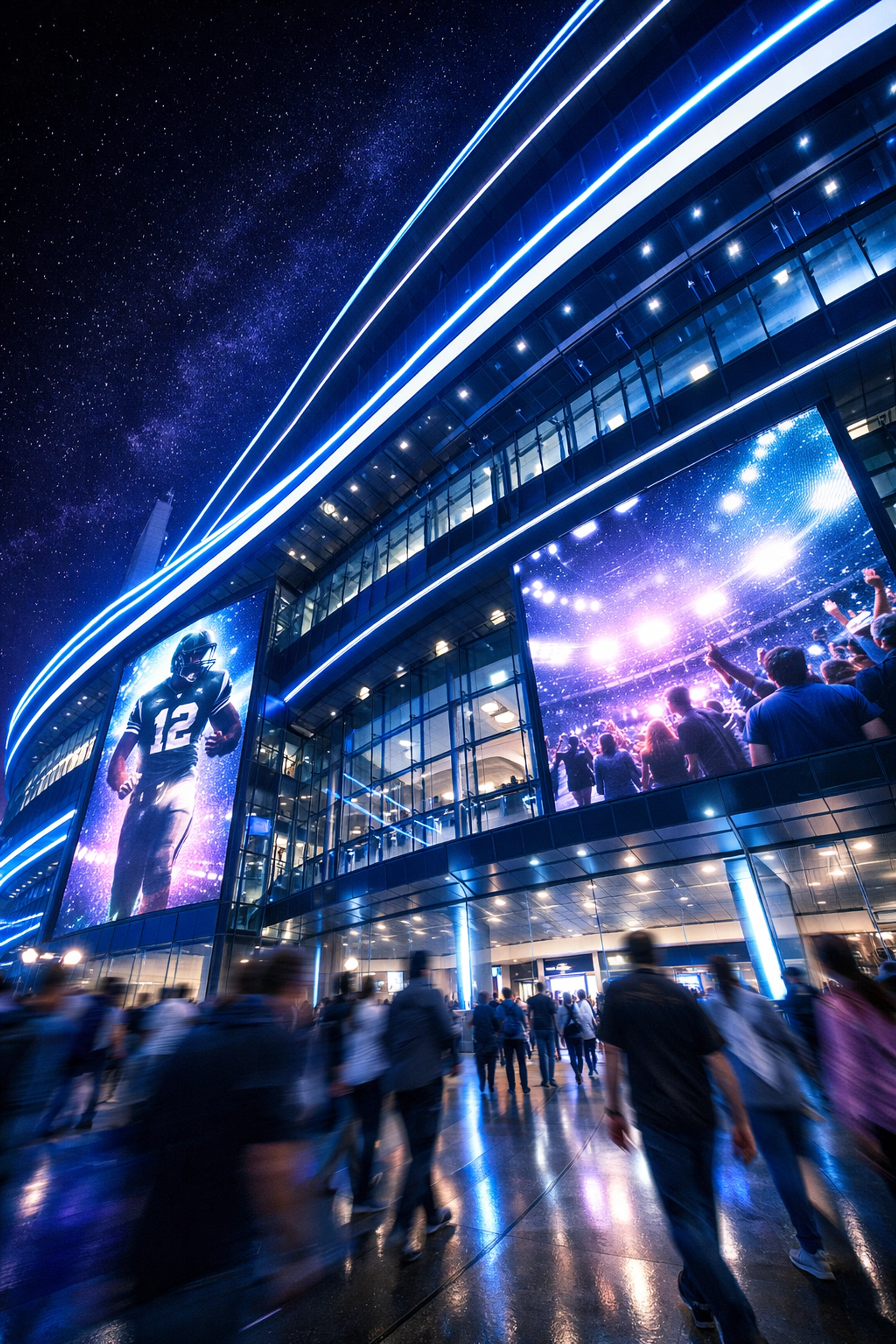
Digital Out-of-Home (DOOH) advertising has undergone a massive transformation within the sports industry. As fans move between their homes, transit hubs, and massive stadiums, the opportunity for brands to capture attention has never been higher. The traditional model of buying a static billboard for an entire season is being replaced by agile, data-driven strategies that respond to the game in real-time. This guide explores the core trends shaping the future of sports marketing and provides a clear roadmap for achieving measurable success.
The New Era of Sports Advertising
The modern sports fan is a multi-screen consumer. Engagement no longer starts and ends with the whistle. Instead, it begins days before an event through digital content and continues long after the final score is posted. For advertisers, this means the physical environment around sports venues is now a high-velocity digital canvas.

One of the most significant shifts is the move away from locked-in, high-cost placements. Many brands are questioning whether the high costs of traditional stadium sponsorships are still the most efficient way to reach an audience. With the rise of programmatic DOOH, brands can now surround a stadium with digital messaging for a fraction of the cost, targeting the exact moments when fan density is at its peak.
Strategy: Connecting with the Multi-Screen Fan
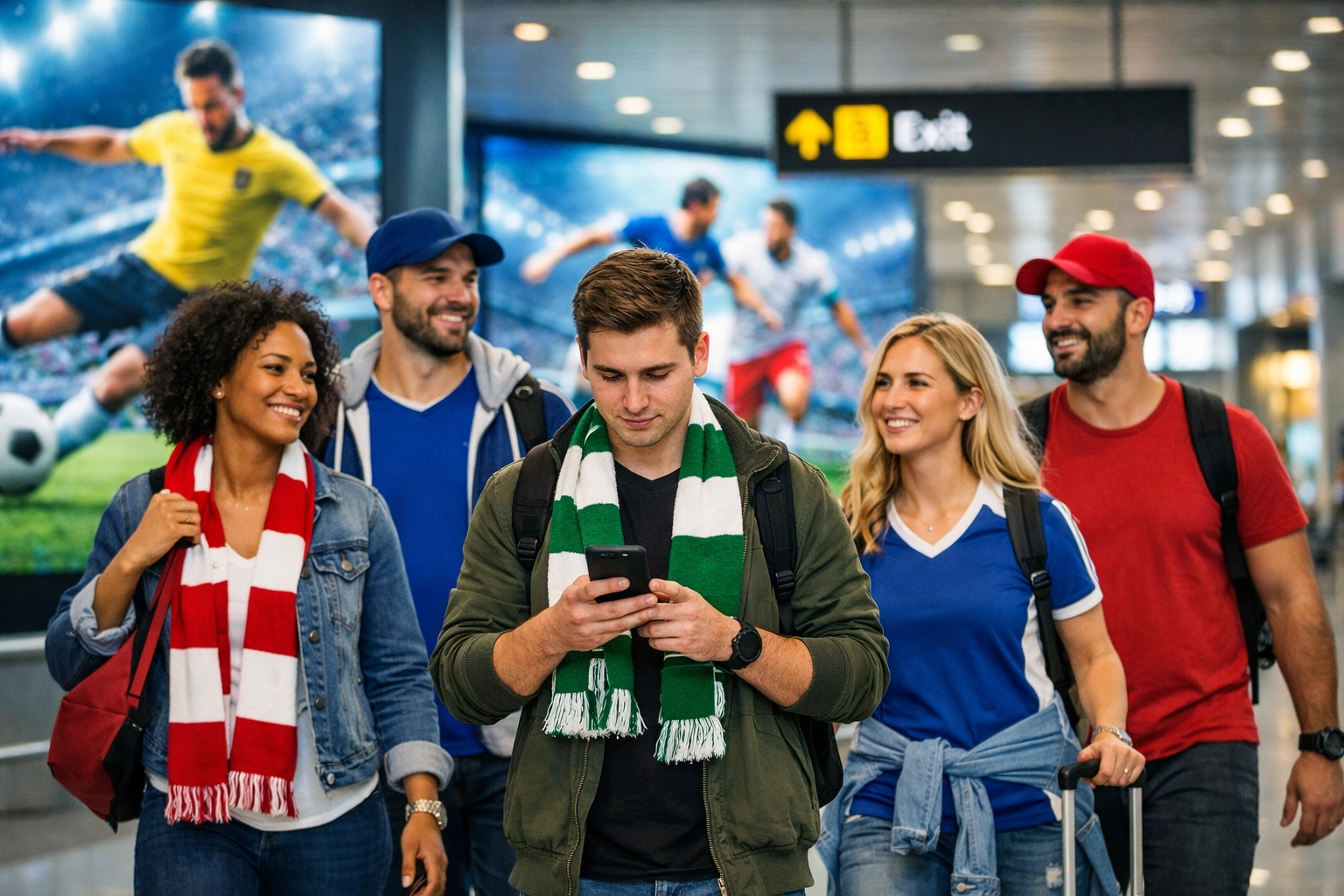
Success in sports DOOH requires a deep understanding of the fan journey. A fan does not just appear at their seat. They travel through airports, use ride-sharing services, visit local bars, and walk through entertainment districts. Each of these touchpoints offers a unique opportunity for contextually relevant messaging.
The most effective strategies focus on three distinct phases:
- The Build-Up: Using digital screens in high-traffic transit areas and city centers to build anticipation and guide fans toward specific retail or fan-zone locations.
- The Live Window: Activating screens in the immediate vicinity of the venue during the hours before and after the event. This is where real-time scores, betting odds, and interactive creative drive the highest engagement.
- The After-Action: Refreshing messaging to congratulate a winning team or offer celebratory promotions at local hospitality spots.
The Programmatic Revolution
The adoption of Programmatic DOOH (pDOOH) has fundamentally changed how media planners approach sports budgets. Automation allows for the buying of inventory based on specific triggers rather than fixed schedules. If a game is delayed, the ads can be paused. If a specific player breaks a record, the creative can be swapped instantly to reflect the moment.
This level of flexibility is critical for categories like sports betting and quick-service restaurants. For instance, launching real-time sports betting campaigns that convert in under 24 hours is now a reality. Advertisers can bid on screen time only when the odds are most attractive or when excitement is peaking during a halftime break.
Objective and Strategy: Real-Time Relevance
The core objective of modern sports DOOH is to move from passive awareness to active consideration. To achieve this, brands are leveraging Dynamic Creative Optimization (DCO). This technology allows a single ad template to update itself based on external data feeds.
Common triggers used in sports DOOH include:
- Live Scores: Displaying the current score of a local game to provide utility to passersby.
- Weather Conditions: Promoting cold beverages on hot game days or apparel during sudden rain.
- Traffic and Transit Data: Providing fans with real-time updates on the best routes away from the stadium.
- Social Sentiment: Integrating live fan polls or social media mentions to foster a sense of community.
By making the advertisement useful to the fan experience, brands reduce the "noise" of traditional advertising and become part of the game-day story.
Results: Measuring Success in the Digital Age
One of the historical challenges of out-of-home advertising was the difficulty of proving ROI. That challenge has been largely solved through AI-powered analytics and sophisticated measurement frameworks.
Campaigns are no longer measured simply by "estimated impressions." Instead, OOH Sports utilizes several key metrics to prove success:
- Brand Lift Studies: These studies measure the increase in brand awareness, favorability, and purchase intent by comparing exposed versus unexposed audiences. Recent data from a White Claw campaign showed a 74% lift in purchase consideration during a product launch.
- Foot Traffic Attribution: By tracking anonymized mobile device IDs that have been exposed to a DOOH screen, advertisers can see exactly how many people visited a physical retail location after seeing an ad.
- Purchase Consideration: Campaigns for lifestyle brands like Sea-Doo have demonstrated that targeted DOOH can increase purchase consideration by as much as 144% when executed with the right frequency and location strategy.
- Positive Brand Image: Alcohol brands like Mike’s Hard Iced Tea have seen a 119% lift in positive brand image by aligning their messaging with the celebratory atmosphere of sports events.
Integrating Sports Betting and Fan Engagement
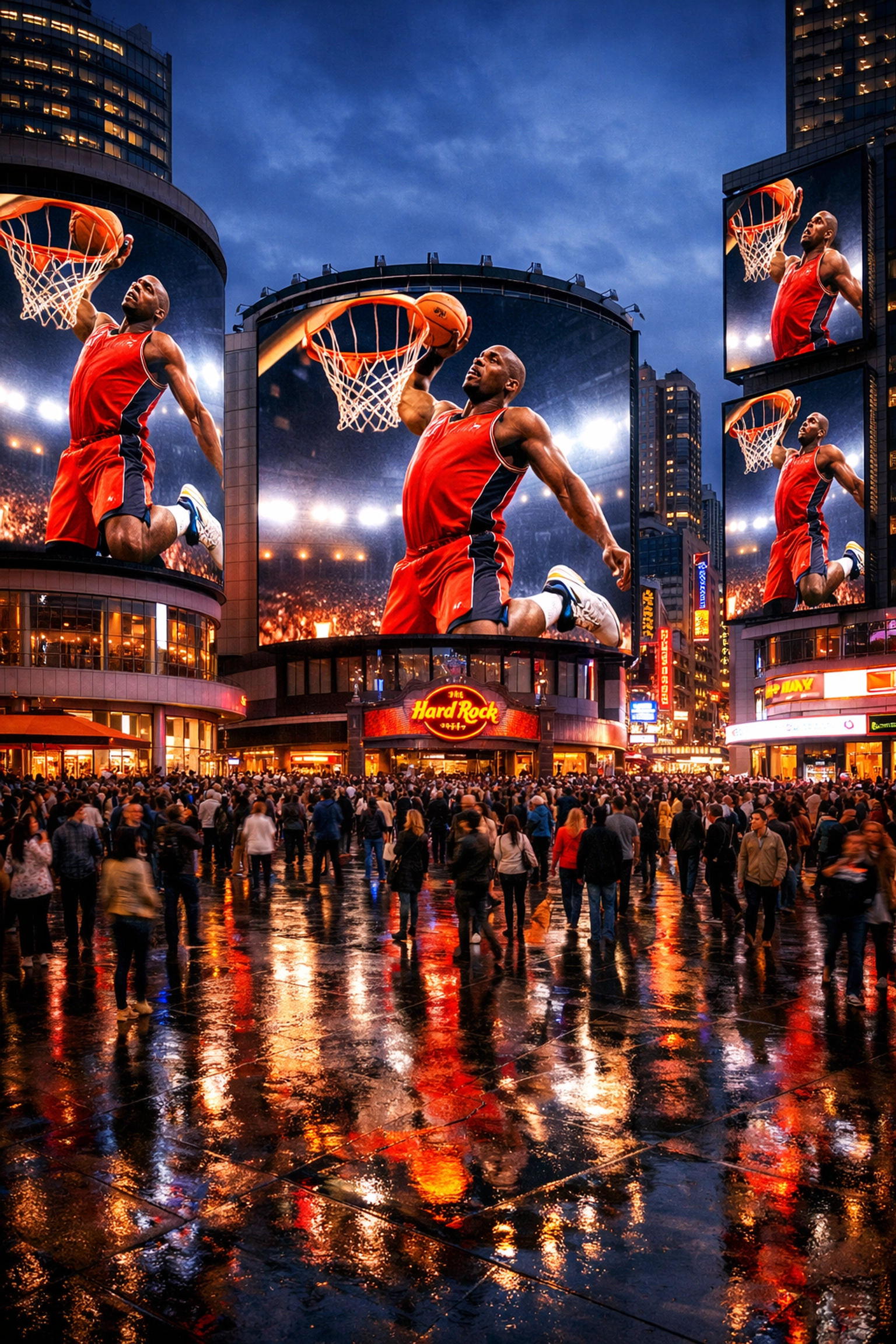
The legalization of sports betting in many regions has created a massive new vertical for DOOH. Betting brands require high-frequency, high-relevance messaging. Because odds change by the minute, traditional static media is almost useless for this sector.
DOOH allows betting platforms to display live odds directly on the path to the stadium. This creates a seamless transition from seeing an ad to placing a bet on a mobile device. The integration of QR codes has further streamlined this process, allowing fans to scan a screen and be taken directly to a betting slip with the featured odds pre-populated.
Seven Common Mistakes to Avoid
Even with the best technology, execution is everything. There are several common pitfalls that can diminish the effectiveness of a sports DOOH campaign:
- Ignoring the Surroundings: Failing to account for the physical environment of the screen. An ad designed for a quiet transit hub may not work in a loud, crowded stadium plaza.
- Overcomplicating the Creative: Fans are often moving quickly. If the message takes more than three seconds to understand, it is likely lost.
- Static Messaging in a Dynamic World: Using the same creative for the entire season ignores the narrative arc of a sports campaign.
- Poor Timing: Bidding on screens at 3:00 AM near a stadium when there is no event happening is a waste of resources.
- Neglecting Mobile Integration: DOOH works best as the "top of the funnel" for a mobile-first fan experience.
- Inconsistent Branding: Ensure the DOOH creative matches the look and feel of the TV and social media components of the campaign.
- Lack of Measurement Planning: Not setting up attribution windows and baseline data before the campaign launches makes it impossible to prove success later.
Looking Ahead: The Future of Sports DOOH
As physical infrastructure continues to expand, the density of digital screens will only increase. We are moving toward a world where the entire fan journey is "digitally mapped." This expansion is not limited to just the top professional leagues. College sports, minor leagues, and even large-scale amateur tournaments are becoming viable grounds for sophisticated DOOH activations.
Technology partners are also playing a larger role. Collaboration with specialized Demand Side Platforms (DSPs) is making it easier for omnichannel marketers to manage their DOOH spend alongside their social and search budgets. This holistic view ensures that every dollar spent is working toward a unified goal.
Conclusion
The ultimate guide to succeeding in sports DOOH is simple: stay agile, stay relevant, and use the data. By moving away from the rigid structures of the past and embracing the programmatic, real-time nature of modern digital screens, brands can connect with fans in a way that feels organic rather than intrusive.
Whether the goal is to drive a 90% increase in fan engagement or to prove a direct lift in retail sales, the tools are now available to make it happen. Sports marketing is no longer about who has the biggest sign – it is about who has the smartest strategy. For more insights on optimizing your next campaign, explore the full range of resources at oohsports.com.