
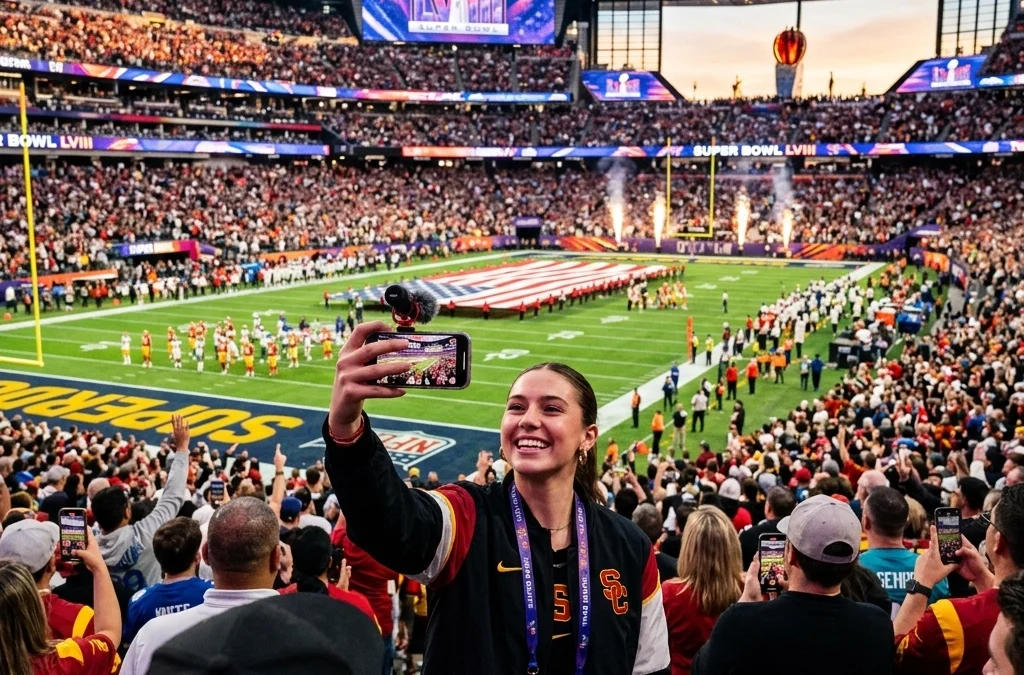
As the advertising landscape for Super Bowl LX settles, a clear winner has emerged in the media buying space. The traditional model of spending 7 million dollars on a single 30 second television spot is no longer the only path to dominance. In 2026, the most successful brands achieved massive reach by decentralizing their message. By leveraging Name, Image, and Likeness (NIL) platforms, these companies scaled their brand strategy through a network of over 20,000 authentic student-athlete voices.
This approach moved beyond simple influencer marketing. It represented a fundamental shift toward a distributed media network where authenticity and local engagement outweighed high production value. For media buyers, the objective was clear: capture the second screen where 70 percent of viewers spend their time during the game.
The Strategic Objective: Massive Scale Through Authenticity
The primary goal of a large scale NIL campaign is to create a omnipresent brand environment. While a television commercial offers a brief moment of high impact, a coordinated effort across thousands of student-athletes provides sustained engagement before, during, and after the event.
The core strategy focuses on three pillars:
- Reach: Utilizing 20,000 individual accounts to bypass algorithmic suppression and ensure the message appears in the organic feeds of millions.
- Resonance: Using student-athletes who have genuine connections with their local communities and fan bases.
- Real-Time Response: Activating these voices during specific game moments to capture the immediate emotional high of the audience.
By focusing on these pillars, brands can achieve a lower cost per engagement than traditional media buys while building deeper trust with a younger demographic.

Scaling with 20,000 Voices: The Mechanics of the NIL Platform
Managing a handful of influencers is a manual process. Managing 20,000 student-athletes requires a robust technology platform. In 2026, enterprise-level NIL platforms have standardized the way media buyers interact with talent. These platforms allow for the simultaneous deployment of creative assets, tracking of compliance, and measurement of real-time performance.
The platform functions as a centralized hub. A brand uploads the campaign brief and creative guidelines. The technology then identifies athletes whose audience demographics align with the brand’s target market. This automated matching process is what makes the scale of 20,000 voices possible.
Student-athletes are no longer just faces in an ad. They are distribution nodes. Each athlete acts as a local media channel, bringing the brand message into dorm rooms, locker rooms, and family living rooms across the country. This level of penetration is something traditional out of home or digital display ads struggle to achieve on their own. To see how these digital strategies connect with physical displays, visit OOH Sports Sportrons to explore stadium-level integration.
Real-Time Execution Logistics
Execution is divided into three distinct phases to maximize the return on investment.
Phase 1: The Pre-Game Build
The activation begins weeks before the Super Bowl. During the playoff season, student-athletes begin sharing "road to the championship" content. This phase builds narrative equity. By the time kickoff arrives, the audience is already familiar with the brand's association with the sport.
Phase 2: Game Day Activation
This is where the scale of 20,000 voices becomes a competitive advantage. While the 30 second TV spot plays once, thousands of athletes are posting real-time reactions to the game on TikTok, Instagram, and X. These posts are native and organic. They do not look like ads, so they are not skipped by the user.
https://www.youtube.com/watch?v=l6J-0zileKE
Phase 3: Post-Game Conversion
The week following the Super Bowl sees the highest emotional engagement from winning fan bases. This is the peak time for conversion. Athletes share victory content or "until next year" messages that include direct calls to action and tracked links. This phase transforms emotional energy into tangible sales data.

Integrating NIL with Programmatic DOOH
A truly effective 2026 strategy does not live on social media alone. The most successful campaigns integrate NIL voices with programmatic digital out of home (DOOH) advertising. When a fan sees a student-athlete they follow on a massive stadium screen or a street-level kiosk, the brand credibility doubles.
This omnichannel approach ensures that the message follows the consumer from their phone to the physical world. Media buyers can find more about this strategic alignment at OOH Sports Marketing. By using device IDs and location data, brands can retarget fans who were exposed to specific stadium displays with NIL content on their mobile devices later that evening.
For a deeper dive into how this technology is changing the game, read about why sports DOOH innovation is a necessary component for modern brand connection.
Technology Partners and Compliance
With 20,000 participants, compliance is a significant logistical hurdle. Technology partners now offer automated content moderation and FTC disclosure monitoring. This ensures that every post from every athlete meets legal requirements and brand safety standards.
These platforms also provide unified reporting. Instead of receiving 20,000 individual reports, media buyers see a single dashboard that aggregates total reach, engagement rates, and sentiment analysis. This data-driven approach allows for mid-campaign adjustments. If a specific type of content is performing well with athletes in the Midwest, the brand can pivot its strategy in real-time to capitalize on that trend.

Results and ROI Analysis
The results from the 2026 Super Bowl NIL activations show a significant shift in performance metrics. Brands that utilized large scale NIL networks reported:
- A 45 percent increase in brand favorability among Gen Z and Millennial audiences.
- A 3x higher engagement rate compared to standard branded social media posts.
- A significantly lower effective CPM when accounting for the total duration of the campaign versus a single day TV event.
When comparing these results to traditional stadium sponsorships, the data suggests that the combination of athlete voices and digital screens delivers a superior ROI. You can review specific examples of these outcomes in the OOH Sports Case Study section.
One of the most important metrics recorded in 2026 was "share of voice" during the second half of the game. Brands using the 20,000 voice strategy owned over 15 percent of the total social conversation related to the Super Bowl, a feat previously impossible for any single advertiser.

The Future of Sports Media Buying
The success of Super Bowl LX has set a new standard. Media buyers are no longer looking for a single "hero" moment. They are looking for a "hero" network. Scaling a brand strategy with 20,000 voices provides a level of insurance against the unpredictability of live sports. If one athlete is not engaging, there are 19,999 others carrying the message forward.
The barrier to entry for these campaigns has lowered as the technology has matured. What was once a strategy reserved for the top five global brands is now accessible to any company willing to embrace a decentralized model.
For those looking to plan their next major activation, understanding the secrets of the industry is vital. High-level buyers often keep these industry secrets close, but the shift toward authentic athlete networks is now public knowledge.
Conclusion: Starting Your NIL Journey
The Super Bowl is the ultimate proving ground for marketing innovation. The 2026 season proved that the most powerful voice is not a single celebrity in a high-budget commercial, but the collective roar of 20,000 authentic athletes. By combining this social power with the physical reach of stadium perimeter branding, brands can create a marketing ecosystem that is impossible to ignore.
To begin building a strategy that leverages these voices, or to learn more about the integration of digital and physical sports advertising, contact the team at OOH Sports. The future of advertising is distributed, authentic, and scaled. It is time to let 20,000 voices tell your story.