
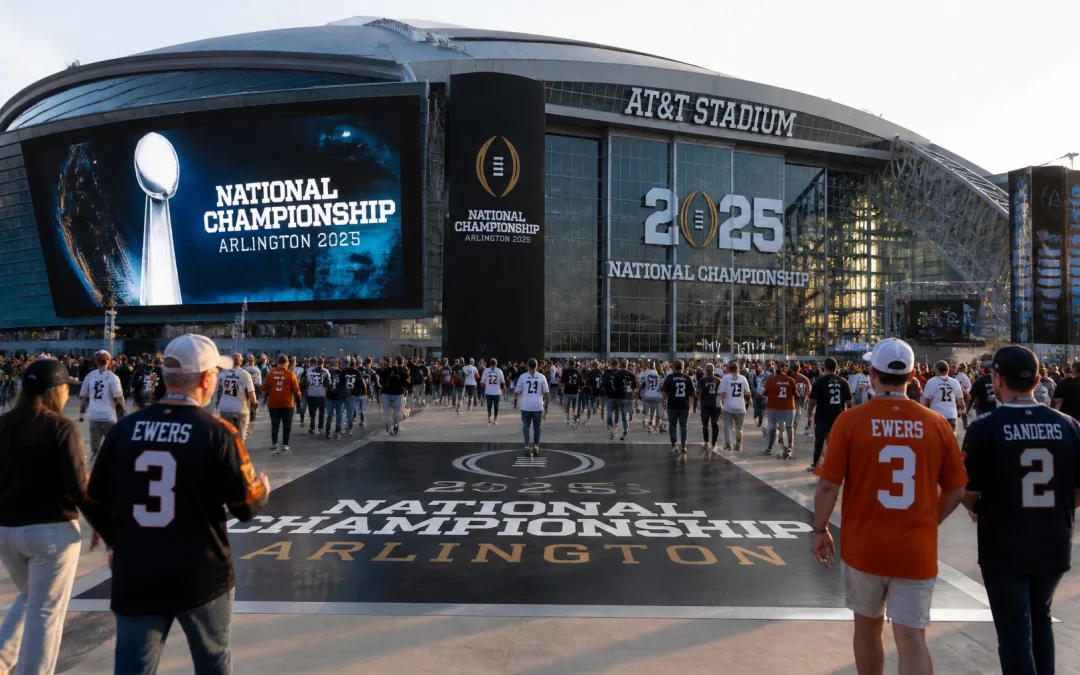
The Super Bowl represents the pinnacle of American sports marketing, a singular event where consumer attention is at its highest and the stakes for brand visibility are unparalleled. As Super Bowl LX in 2026 approaches, the landscape of advertising has shifted from traditional television spots to a comprehensive, multi-platform experience. For brand managers and media buyers, the challenge is no longer just about being in the game, it is about owning the entire environment surrounding the game.
OOH Sports, a division of the Sports Media Inc. family, has spent the last 40 years perfecting the art of stadium and arena dominance. The strategy for 2026 focuses on a total venue takeover, moving beyond simple logo placement to an integrated ecosystem of digital out-of-home (DOOH) assets, high-impact floor graphics, and a strategically mapped 10-mile perimeter around the host venue. This guide outlines the mechanics of a successful Super Bowl campaign, focusing on the technology, tactics, and data-driven results that define modern sports advertising.
Strategy: The 10-Mile Perimeter Dominance
A successful Super Bowl campaign does not start at the stadium gates; it starts miles away. The primary strategy employed by leading advertisers is the establishment of a "brand halo" around the host city and venue. By leveraging a network of over 25,000 digital screens and specialized OOH placements, brands can maintain a constant presence in the lives of fans as they travel to, enter, and move within the sports environment.
The 10-mile perimeter strategy utilizes geographically targeted DOOH to reach fans at key touchpoints: transit hubs, major highways, hotel districts, and local entertainment zones. This ensures that by the time a fan reaches the stadium, the brand has already achieved multiple high-value impressions. This pre-game saturation builds familiarity and preference, making the in-stadium activations significantly more effective. Detailed insights on this approach can be found in recent reports on geographically targeted DOOH strategies.
Objective & Strategy: Multi-Platform Integration
The objective for 2026 is to move beyond the "one-off" commercial and toward a "campaign spine" approach. In this model, OOH serves as the physical anchor for a broader digital and social campaign. With the Super Bowl audience increasingly engaged with second-screen devices, physical placements like billboards and floor graphics provide a necessary real-world touchpoint that drives digital action.
Key Objectives:
- Maximize brand recall through consistent physical and digital presence.
- Drive second-screen engagement via interactive OOH elements like QR codes and specialized hashtags.
- Bridge the gap between broad national television reach and localized, high-intent stadium traffic.
- Utilize 40 years of industry leadership to secure high-demand placements that competitors cannot access.
By aligning OOH creative with the themes of AI-driven personalization, nostalgia, and emotional storytelling, brands can ensure their message resonates across generations of fans. This strategy is particularly effective for tech brands looking to humanize complex products or legacy brands aiming to celebrate their heritage during a milestone event like the 2026 Big Game.

Technology Partners & Programmatic Innovation
The execution of a venue-wide takeover requires sophisticated technology and a network of specialized partners. OOH Sports utilizes programmatic DOOH (pDOOH) platforms to offer media buyers unprecedented flexibility and precision. Through partnerships with leading Demand Side Platforms (DSPs), such as StackAdapt, campaigns can be optimized in real-time based on game events, weather, or crowd density.
Technology partners provide the infrastructure for:
- Real-Time Bidding: Allowing brands to capture premium screen time during peak traffic hours.
- Device ID Exposure: Tracking mobile devices that pass within view of an OOH asset to enable retargeting across mobile and social platforms.
- Dynamic Creative Optimization: Automatically updating billboard content to reflect live scores or trending social media conversations.
This technological layer transforms static advertising into a dynamic conversation with the fan, ensuring the brand remains relevant throughout the entire Super Bowl weekend.
Execution & Tactics: From the Ground Up
The hallmark of the OOH Sports approach is the "Floors to Billboards" philosophy. This ensures that a brand’s message is visible at every eye level, from the moment a fan steps out of their car to the moment they take their seat.
High-Impact Floor Graphics
Floor graphics are a frequently overlooked but highly effective medium in high-traffic sports environments. These specialized adhesive decals are placed at stadium entrances, concourses, and restroom areas. Because fans naturally look down while navigating crowds, floor graphics achieve a high dwell time and near-perfect visibility.
In the context of the Super Bowl, floor graphics can be used to create "fan paths" that lead attendees toward specific retail activations or photo-ready zones. They serve as excellent surfaces for QR codes, driving immediate traffic to mobile apps or promotional landing pages.

Digital Video Boards and Sportrons
Inside the arena and in the immediate vicinity, Sportrons and digital video boards provide the high-definition canvas needed for premium brand storytelling. These screens offer the motion and vibrancy of television but within the high-energy context of a live event. Strategic placement of these boards in the "perimeter" up to 10 miles around the venue ensures that the brand message is inescapable.
Measurement & Results: Quantifying Success
In the modern advertising era, success is measured through data, not just impressions. OOH Sports focuses on rigorous measurement methodologies, including brand lift studies and attribution modeling, to prove the impact of every placement.
Recent campaigns across the OOH Sports network have demonstrated significant results:
- White Claw: A programmatic DOOH campaign for a new vodka launch resulted in a 74 percent lift in purchase consideration.
- Mike's Hard Iced Tea: An omnichannel approach led to a 119 percent lift in positive brand image.
- Sea-Doo: A first-time digital OOH campaign increased purchase consideration by 144 percent.
For the Super Bowl, the measurement focus shifts to "Total Venue Impact." This involves analyzing device IDs exposed to stadium assets and tracking the subsequent lift in brand search volume and social media engagement. By using industry-standard terms like "brand preference rating" and "attribution," OOH Sports provides media planners with the technical fluency needed to justify large-scale investments in sports marketing.

The projected growth of the industry also supports these investments. Research suggests that DOOH sports advertising will hit 50 billion dollars by 2030. This massive influx of capital is driven by the realization that physical presence in a digital world is a brand's most powerful asset.
Video Showcase: Sports Media Integration
To see the "Floors to Billboards" strategy in action, watch the following overview of how Sports Media Inc. and OOH Sports transform the fan experience through integrated advertising.
https://www.youtube.com/watch?v=l6J-0zileKE
Conclusion
The 2026 Super Bowl represents a unique opportunity for brands to leverage 40 years of advertising leadership. By combining the high-impact nature of stadium floor graphics with the wide-reaching power of a 10-mile digital perimeter, advertisers can move beyond the noise of the traditional commercial break. Through programmatic technology and data-driven execution, OOH Sports ensures that every impression counts, turning the "Big Game" into a major victory for brand growth and fan engagement.