
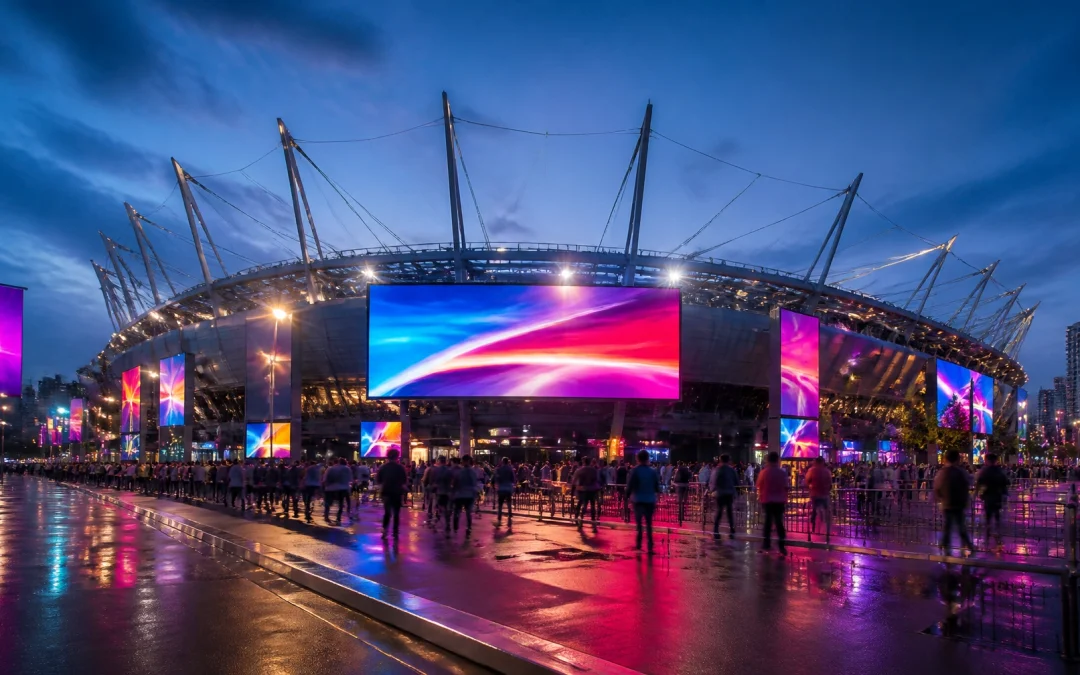
A common challenge for Chief Marketing Officers and Creative Directors in the sports industry is the growing disconnect between brand spend and actual fan resonance. Despite massive budgets allocated to digital social channels and traditional sponsorships, many brands find their message lost in the noise of a gameday experience. Fan engagement is not merely a metric of likes and follows. It is the art of capturing a fan's attention when their emotional investment is at its peak.
If a current strategy feels stagnant, it is likely because the campaign is missing a critical piece of the gameday journey. Below are ten reasons why fan engagement strategies often fail, and the strategic shifts needed to fix them.
1. Ignoring the "Last Mile" of the Fan Journey
Many campaigns focus heavily on the weeks leading up to a game or the post-game recap. However, the period when a fan is physically traveling to the stadium is often overlooked. This "last mile" is where anticipation is highest. If a brand is not present in the physical space surrounding the arena, it misses the opportunity to become part of the ritual of going to the game.
The Fix: Implement stadium perimeter advertising. By using digital out-of-home (DOOH) assets within a 10 mile radius of the venue, a brand can saturate the fan's environment during their most attentive hours. This ensures the brand is the first thing they see before they even enter the gates.
2. Over-Reliance on Saturated Social Channels
Social media is a crowded space during live sports. Fans are busy checking scores, posting highlights, or texting friends. A brand's sponsored post is often just another distraction to be scrolled past. The digital fatigue experienced by fans in-stadium is real.
The Fix: Move the message from the small screen to the big screen. Digital billboards and stadium perimeter displays offer a non-intrusive yet impossible-to-ignore presence. Unlike a social ad, a 50 foot digital board cannot be skipped or blocked by an ad-blocker.

3. Treating Engagement as a Seasonal Event
A frequent mistake is "going dark" during the off-season or only activating around major championship games. Deloitte research indicates that fans who engage at least once a month during the off-season spend significantly more on tickets and merchandise when the season returns.
The Fix: Maintain a year-round presence. Use programmatic DOOH to keep the brand top-of-mind even when the stadium is empty. Advertising near sports bars, training facilities, and urban centers ensures the brand remains synonymous with the team's identity 365 days a year.
4. Disconnect Between Message and Emotion
Engagement fails when the creative is generic. A creative director's vision must align with the high-stakes emotion of the sport. If the advertisement feels like a standard corporate placement, it will fail to trigger the emotional response required for brand loyalty.
The Fix: Use dynamic creative that reacts to real-time events. Programmatic platforms now allow brands to update messaging based on the score, weather, or key player milestones. Imagine a billboard that congratulates a player on a home run within seconds of it happening. This level of relevance is what creates a lasting bond with the fan base.
5. Lack of Physical Proximity
Digital-only strategies often lack "place-based" relevance. A fan seeing an ad for a beverage while sitting at home feels different than seeing that same ad on a digital board right next to the stadium where that beverage is being served.
The Fix: Focus on hyper-local targeting. By securing stadium perimeter targeting, brands can ensure their creative is seen by the exact people who are seconds away from making a purchase decision.

6. Fragmented Messaging Across Channels
If the message on the stadium's internal LED boards does not match the message on the billboards outside or the ads on the fan's phone, the campaign loses impact. Fragmentation leads to confusion and a lack of brand recall.
The Fix: Adopt an omnichannel approach. Use DOOH as the anchor for the visual identity of the campaign. When fans see a consistent, high-impact message on their way to the game, it reinforces the smaller-scale ads they may see on their devices later.
7. Static Creative in a Dynamic World
Traditional static billboards are becoming obsolete in the sports world. They cannot be updated quickly, and they do not capture the eye like a high-definition digital screen. In a fast-moving industry like sports marketing, static is often synonymous with "stale."
The Fix: Shift to digital. The transition from traditional stadium ads to programmatic DOOH allows for video, movement, and rapid updates. This flexibility is essential for staying relevant in the modern media landscape.
8. Weak Attribution and Measurement
For a CMO, "engagement" is a difficult metric to bring to the board if it cannot be quantified. Many fan engagement strategies fail because they rely on "estimated reach" rather than hard data. If you cannot measure it, you cannot improve it.
The Fix: Use device ID tracking and attribution studies. Modern OOH Sports networks can track how many unique mobile devices were exposed to a specific billboard and then subsequently visited a retail location or a website. This turns "brand awareness" into a measurable conversion metric.

9. Ignoring the Secondary Audience
While the fans in the seats are vital, they are only a fraction of the total audience. Many engagement strategies forget the millions of fans watching on television or streaming devices who also see the perimeter of the field during the broadcast.
The Fix: Optimize for "TV-visible" assets. Perimeter boards that wrap around the field are often in the direct line of sight for the main broadcast cameras. This provides a global reach at a local cost. It is a strategic way to scale a brand's presence without the price tag of a national TV spot.
10. Missing the "Hype Cycle"
Every game has a lifecycle. There is the pre-game buildup, the live action, the halftime lull, and the post-game celebration (or mourning). Strategies that treat the entire day as a single time block fail to capitalize on these specific windows of attention.
The Fix: Use time-parting to adjust messaging. A brand can run "get ready for the game" creative in the morning, "celebrate the win" creative in the evening, and "fuel up for the second half" ads during halftime. This strategic timing ensures the message is always contextually appropriate.
Strategic Execution and Results
Execution is the differentiator between a good idea and a successful campaign. When brands shift their focus to the stadium perimeter, the results are often immediate and measurable. For instance, the rise of digital screens is fundamentally changing the ROI of sports marketing, offering a more dynamic and cost-effective alternative to traditional, long-term sponsorship contracts.
Media planners are increasingly moving budgets toward these flexible, high-impact assets. Reports show that 67 percent of media planners are shifting budgets to capture the "gold rush" of sports-centric DOOH. By targeting the 10 mile radius around arenas, brands can reach a concentrated, high-value audience that is already in a "spending mindset."

Conclusion
Fixing a fan engagement strategy requires a move away from the "noise" and a move toward the "moment." By leveraging the physical environment of the stadium and the technological power of digital out-of-home advertising, brands can stop chasing attention and start commanding it. The perimeter of the stadium is not just a fence. It is the most valuable real estate in the world of sports marketing.
The objective is clear: reach the fan where they are, when they are most excited, with a message they cannot ignore. That is the future of fan engagement.