
The landscape of sports advertising is undergoing a fundamental shift as Super Bowl LX approaches in February 2026. With the price of a standard 30-second linear television spot reaching a record high of approximately $8 million, media buyers and brand managers are seeking more efficient, high-impact alternatives. The traditional model of a single, massive television buy is being replaced by a multi-platform cultural ecosystem that prioritizes authenticity, geographic precision, and the power of individual voices.
Central to this transformation is the Name, Image, and Likeness (NIL) revolution. For the first time at this scale, brands have the opportunity to move beyond the polished, high-cost celebrity endorsements of the past and tap into a network of over 20,000 authentic student-athlete voices. These athletes are not just endorsers. They are digital-native creators who command the trust and attention of Gen Z and Millennial fans. When combined with the strategic placement of digital out-of-home (DOOH) assets, this NIL-driven approach offers a sophisticated playbook for dominating the Super Bowl conversation without the constraints of a traditional national broadcast buy.
The Objective: Authenticity at Scale
The primary objective for media buyers in 2026 is to achieve brand resonance through authenticity. Research into the 2026 marketing environment indicates that consumers are increasingly gravitating toward creators who feel "real" and relatable. Student-athletes, who are often peers to a significant portion of the target demographic, provide a level of credibility that professional stars sometimes lack.
By leveraging a platform that connects brands with a massive roster of student-athletes, advertisers can create a surround-sound effect. Instead of one voice speaking to millions, the strategy involves thousands of voices speaking to their dedicated, niche communities. This creates a groundswell of engagement that begins weeks before kickoff and continues long after the final whistle. The goal is to move the brand from being a mere spectator to an active participant in the sports culture.

Strategy: The 10-Mile Perimeter Advantage
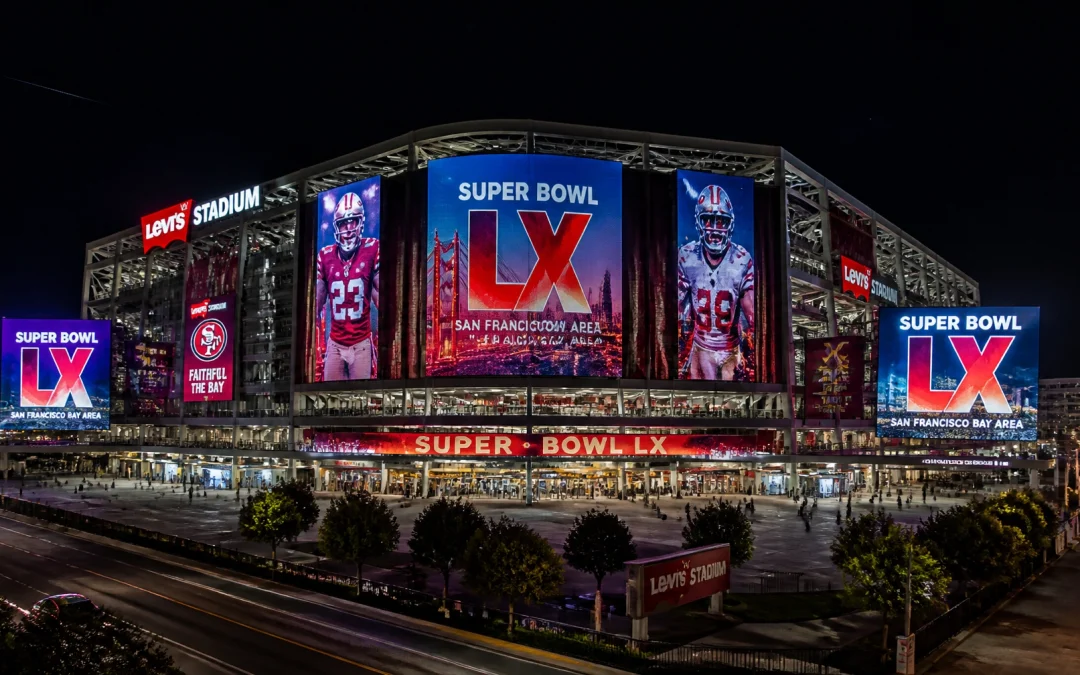
While the game takes place inside Levi’s Stadium in Santa Clara, the most valuable advertising real estate for savvy planners exists in the 10-mile perimeter surrounding the venue. OOH Sports has developed a network that provides access to digital video advertising boards in every category within this critical zone. This geographic targeting allows brands to capture the attention of the hundreds of thousands of fans, influencers, and media personnel who descend upon the host city.
The strategy involves a two-pronged approach:
- Geographic Dominance: Utilizing digital screens at airports, transit hubs, shopping centers, and high-traffic corridors within the 10-mile radius. This ensures that every fan traveling to the game is exposed to the brand message multiple times.
- Narrative Integration: Aligning the digital screen content with the NIL athlete campaigns. When a fan sees a student-athlete they follow on TikTok or Instagram also appearing on a massive digital billboard near the stadium, the brand impact is compounded.
This localized approach is often referred to as "stadium perimeter targeting." It allows non-sponsors to achieve a level of presence that rivals official partners, often at a fraction of the cost. More details on the evolution of this space can be found in the analysis of why 67% of media planners are shifting budgets to DOOH by 2026.
Technology Partners and Programmatic Execution
The execution of a Super Bowl-scale NIL and DOOH campaign requires sophisticated technology. Programmatic platforms allow media buyers to bid on and deploy creative in real-time, reacting to the ebb and flow of the Super Bowl week narrative. If a particular student-athlete’s content goes viral on Thursday, that creative can be pushed to digital screens across the Santa Clara and San Jose area by Friday morning.
Key technological components include:
- Real-Time Optimization: The ability to swap out creative assets based on live events, weather, or social media trends.
- Device ID Exposure: Tracking the mobile devices that pass by specific digital boards to build retargeting audiences for future social and streaming ads.
- Omnichannel Integration: Ensuring that the NIL content on social media perfectly mirrors the visual language used on the large-format OOH screens.
As explored in recent industry reports, digital out-of-home sports advertising is projected to hit $50 billion by 2030. This growth is driven by the precision that programmatic buying brings to the physical world.

Logistics: Connecting With 20,000 Authentic Voices
Managing a campaign with thousands of athletes might seem like a logistical nightmare, but specialized NIL platforms have streamlined the process. These platforms handle everything from athlete discovery and contract negotiation to content approval and payment. For a media buyer, the process is as simple as defining the target audience and the campaign objectives.
The logistics of an NIL-heavy Super Bowl campaign typically follow a structured timeline:
- The Identification Phase: Selecting athletes based on their sport, school, follower demographics, and engagement rates. For the Super Bowl, brands often look for athletes from the competing teams' home regions or those with a high "lifestyle" appeal.
- The Creative Briefing: Providing the 20,000+ voices with a framework for content creation while allowing them the freedom to maintain their unique style. This is essential for maintaining the authenticity that makes NIL effective.
- The Deployment: Scheduling social media posts to coincide with the rollout of the DOOH assets in the stadium perimeter.
This scale of coordination ensures that the brand message is ubiquitous. It creates a feeling of a "takeover" that feels organic rather than forced. This method has proven more effective than traditional sponsorships in many recent case studies, leading some to ask if traditional stadium sponsorships are becoming obsolete.
Results: Quantifying the Impact
Success in the 2026 Super Bowl landscape is measured by data, not just "buzz." By utilizing a combination of NIL voices and DOOH, brands can expect significant lifts across several key metrics.
Based on similar high-impact campaigns, the following results are common:
- Brand Lift: Campaigns focusing on authentic creator voices and localized OOH have seen purchase consideration increases of up to 74% in specific categories.
- Positive Brand Image: The use of relatable student-athletes can lead to a documented 119% lift in positive brand perception among younger demographics.
- Engagement Rates: NIL-driven social content typically generates 3 to 5 times higher engagement than standard brand-led posts.
- Attribution: By tracking device IDs exposed to the 10-mile perimeter screens, media buyers can prove a direct correlation between OOH exposure and website visits or app downloads.
The use of outcome-based analytics ensures that every dollar of the budget is accounted for. This analytical approach allows brands to let the data speak for itself, proving the success of the campaign through measurable results rather than subjective hype.

The Future of Sports Marketing
The integration of NIL talent into the largest advertising event of the year marks a turning point for the industry. It represents a shift toward a more democratized, human-centered form of marketing. As brands look toward the 2026 season and beyond, those who embrace the NIL revolution and the precision of the 10-mile DOOH perimeter will be the ones who win the game of attention.
To understand more about how the NIL platform is changing the relationship between athletes and brands, watch the following overview:
https://www.youtube.com/watch?v=l6J-0zileKE
Summary of Tactics for Super Bowl 2026
- Prioritize the 10-Mile Radius: Focus DOOH spend on the immediate area surrounding Levi's Stadium to reach the most influential fans.
- Leverage Local Relevance: Select NIL athletes who have a direct connection to the host city or the participating teams.
- Use Programmatic DOOH: Maintain flexibility in your creative to respond to real-time events during the Super Bowl week.
- Measure Everything: Use device ID tracking and brand lift studies to quantify the impact of your multi-platform strategy.
By following this guide, media buyers can navigate the complexities of Super Bowl 2026 with confidence, ensuring their brand becomes a memorable part of the cultural conversation.