
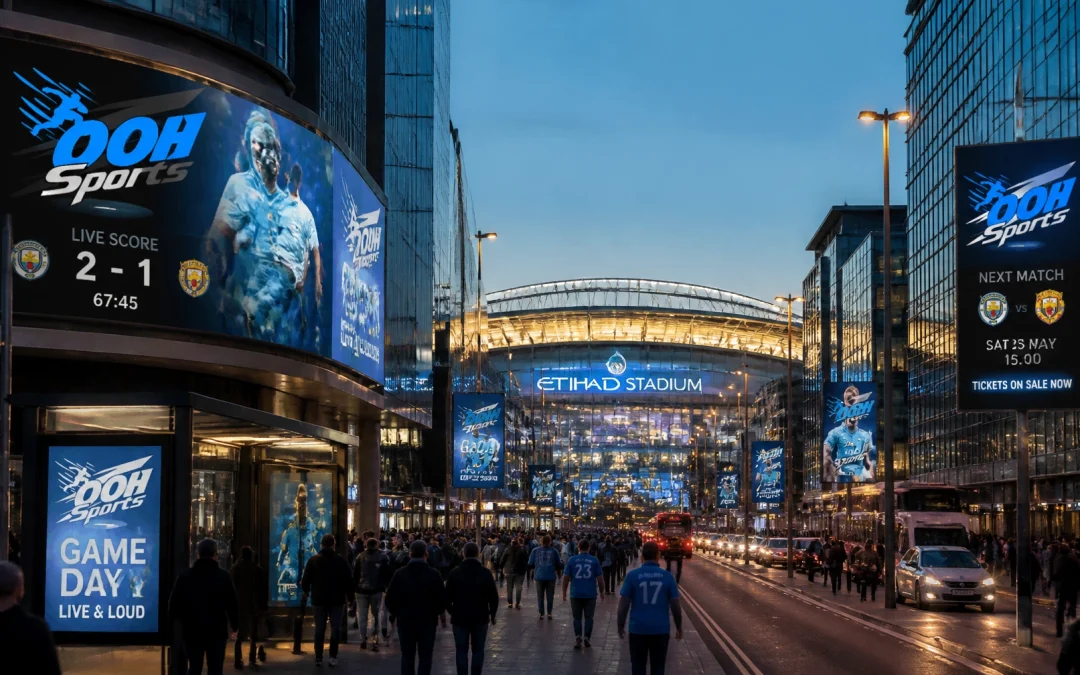
The landscape of sports media buying is undergoing a significant transformation. As traditional television viewership fragments across streaming platforms and social media, digital out-of-home (DOOH) advertising has emerged as a powerhouse for reaching captive, high-intent sports fans. By 2030, the DOOH sports advertising market is projected to reach $50 billion, reflecting a massive shift in how brands interact with audiences in the physical world. For media buyers and brand managers, staying ahead of this curve requires more than just buying billboard space; it requires a data-driven, strategic approach to the entire fan journey.
Below are the top 10 industry insights for optimizing DOOH investments in the sports sector.
1. Programmatic Precision is the New Standard
Programmatic digital out-of-home (pDOOH) has moved from a niche experimental tactic to a core component of omnichannel media plans. The ability to buy inventory through demand-side platforms (DSPs) allows for unprecedented flexibility and speed. Advertisers are no longer locked into rigid, months-long contracts. Instead, they can activate screens in real time based on specific conditions. This automation is a primary reason why 67% of media planners are shifting budgets toward digital platforms.
2. Real-Time Data Triggers Drive Engagement
One of the most effective ways to capture fan attention is by syncing creative content with live game data. Modern DOOH technology allows campaigns to react to live scores, game clocks, and even betting odds. For example, a sportsbook might display updated point spreads in real time as a game progresses.
Dynamic creative optimization (DCO) enables brands to swap messaging instantly. If a home team wins, celebration-themed creative can be deployed immediately across the city. This level of relevance ensures that the advertisement feels like a part of the event rather than an interruption.

3. The 10-Mile Stadium Perimeter Strategy
The most successful sports campaigns do not just target the stadium interior; they dominate the surrounding ecosystem. Strategic targeting within a 10-mile radius of a sports venue captures fans during their entire journey. This includes transit routes, parking structures, nearby bars, and retail centers.
By saturating this perimeter, brands create a "surround sound" effect. Targeting these high-traffic fan zones helps avoid the common mistakes many make with sports DOOH campaigns, such as focusing too narrowly on the venue and missing the pre-game and post-game opportunities.

4. Omnichannel Retargeting Closes the Loop
DOOH is no longer a siloed channel. By capturing anonymous device IDs of fans exposed to a specific digital board, advertisers can retarget those same individuals on their mobile devices or Connected TV (CTV) later that day. This sequential messaging reinforces the brand promise.
For instance, a fan who sees a Nike billboard on the way to a marathon can be retargeted with a mobile ad offering a discount on the exact shoes featured on the board. This strategy was highly effective during the NYC Marathon, where Nike maintained a dominant presence despite not being an official sponsor.

5. Tentpole Events Require Programmatic Guaranteed
While programmatic buying offers flexibility, high-demand periods like the FIFA World Cup or the Super Bowl require a different approach. For these "tentpole" moments, media buyers are increasingly using "programmatic guaranteed" deals. This allows them to reserve premium inventory in advance while still utilizing the data-driven targeting and automated reporting of the programmatic ecosystem. This hybrid approach ensures brand safety and inventory certainty during the busiest times of the sporting calendar.
6. Measurement Shifting to Footfall and Sales Lift
The industry has moved beyond basic impression counts. Modern DOOH campaigns are measured by their ability to drive real-world actions. Brand lift studies and footfall attribution models now provide clear evidence of ROI.
Consider the success of recent campaigns in the beverage sector. White Claw saw a 74% lift in purchase consideration for their vodka launch through strategic DOOH placement. Similarly, AB InBev's Mike’s Hard Iced Tea achieved a 119% lift in positive brand image by utilizing programmatic DOOH to target specific fan cohorts.
7. Hyper-Local Context for Sports Betting
With the expansion of legalized sports betting, DOOH has become the primary tool for localized messaging. Since betting regulations vary by state and even municipality, DOOH allows for hyper-local compliance. Ads can be switched off or modified the moment a fan crosses a state line. This precision ensures that sportsbooks only spend budget in areas where their services are legal and available.
8. Retail Media Convergence
The line between DOOH and retail media is blurring. Digital screens in sporting goods stores, convenience stores near stadiums, and mall kiosks are being integrated into broader sports media buys. This allows brands to influence the "last mile" of the consumer journey. For example, a sports apparel brand can run ads on screens inside a stadium-adjacent retailer, prompting immediate sales of jerseys or equipment.
9. Audience-First Planning Over Location-Only
Traditional OOH was bought based on a specific zip code or street corner. Modern DOOH is bought based on the audience. By leveraging first-party and third-party data, media buyers can identify where "die-hard basketball fans" or "casual golf enthusiasts" are likely to be at any given time. This audience-centric approach ensures that the message reaches the right person regardless of the specific screen location, maximizing the efficiency of the media spend.
10. Analytical Dashboards for Real-Time Optimization
The final insight for smarter buying is the use of unified analytical dashboards. These platforms aggregate data from various DOOH networks, allowing buyers to see performance metrics in real time. Instead of waiting for a post-campaign report, managers can shift budgets between underperforming and overperforming screens mid-campaign. This level of agility is critical in the fast-paced world of sports, where momentum can shift in a single weekend.

Conclusion
The evolution of DOOH in sports media buying is characterized by a move toward automation, data integration, and measurable outcomes. By utilizing programmatic platforms, real-time data triggers, and hyper-local perimeter targeting, brands can connect with fans in ways that were previously impossible. As the industry continues to grow toward the projected $50 billion mark by 2030, those who adopt an audience-first, data-driven approach will find the greatest success in capturing the attention of the modern sports fan.