
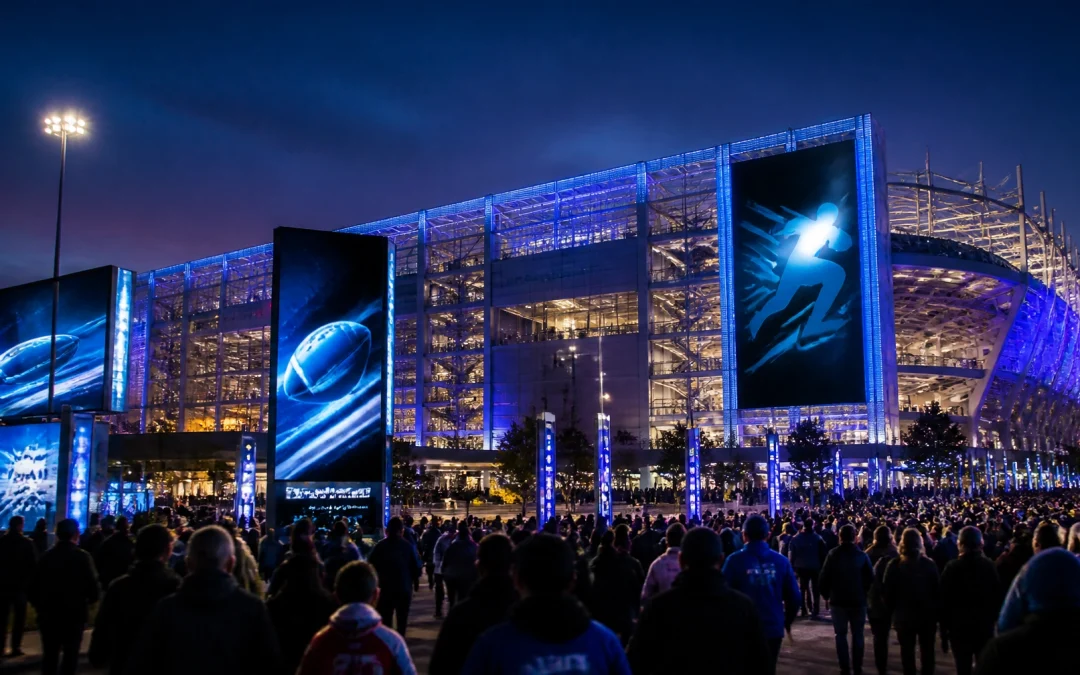
Super Bowl LX is set to take place on February 8, 2026, at Levi’s Stadium in Santa Clara, California. This event represents one of the most significant marketing opportunities in the sports world. As the San Francisco Bay Area prepares for a massive influx of fans, corporate partners, and global media, the competition for brand visibility will reach unprecedented levels. To succeed in this high-stakes environment, brands must look beyond traditional 30-second television spots and focus on where the fans actually are: in the streets, on the transit lines, and within the venue itself.
The key to a successful campaign for Super Bowl 2026 lies in comprehensive, venue-wide coverage. This strategy involves a multi-layered approach that captures attention from the moment a fan lands at the airport to the second they step onto the stadium floor. With four decades of experience in the industry, Sports Media Inc. and its OOH Sports network provide the strategic foundation required to navigate this complex landscape.
Strategy: The 10-Mile Digital Perimeter
A successful Super Bowl campaign does not start and end at the stadium gates. Modern out-of-home (OOH) advertising leverages a "digital perimeter" strategy. For the 2026 game, this involves securing a dominant presence within a 10-mile radius of Levi’s Stadium. This area encompasses critical transit hubs, major highways like Highway 101, and the hospitality corridors of Santa Clara and San Jose.
The goal is to create an immersive brand environment. By utilizing programmatic digital out-of-home (DOOH) technology, brands can synchronize their messaging across thousands of screens. This ensures that a fan sees a consistent message on a digital billboard during their drive, on a transit screen while taking the VTA Light Rail, and on digital displays near the stadium entry points. This repetitive, high-frequency exposure builds brand recall and reinforces the brand’s association with the championship event.

Objective & Strategy: Reaching the Decision Makers
While the Super Bowl attracts millions of casual viewers, the primary targets for OOH sports advertising are media buyers, brand managers, and chief marketing officers who descend upon the host city for networking and corporate events. The objective is to demonstrate brand authority and leadership in a way that resonates with these industry leaders.
The strategy focuses on high-impact placements that provide "implied sponsorship." By positioning a brand’s creative in the immediate vicinity of the venue, the brand gains the prestige of being associated with the Super Bowl without the restrictive costs of an official league partnership. This approach is a hallmark of the Sports Media Inc. philosophy, allowing brands to "piggyback" on the energy of the event. According to recent industry analysis, the sports DOOH gold rush is driving more media planners to shift their budgets toward these high-impact physical placements.
Venue-Wide Coverage: From Floors to Billboards
One of the most effective tactics for Super Bowl 2026 is venue-wide dominance. This is not limited to large outdoor boards. Instead, it includes a granular approach to advertising within the ecosystem of the venue.
- Digital Floor Graphics: These are high-visibility placements in stadium concourses and entryways. They capture the attention of fans who are looking down while navigating crowds or checking their mobile devices.
- Hanging Banners and LED Ribbons: These provide a constant visual presence within the stadium bowl and surrounding plazas.
- Transit Station Dominations: Taking over key nodes like the Great America VTA station ensures that every fan arriving via public transport is exposed to the brand.
- Airport Takeovers: Dominating the digital networks at San Jose International (SJC) and San Francisco International (SFO) ensures the brand is the first thing fans see upon arrival.
This "floors to billboards" approach ensures there are no gaps in the consumer journey. It transforms the physical environment into a narrative for the brand.

Technology Partners and Programmatic Execution
The execution of a campaign of this scale requires sophisticated technology. OOH Sports utilizes programmatic platforms to manage inventory across the 10-mile perimeter. This allows for real-time creative updates, which is essential during the dynamic week leading up to the game.
Through programmatic DOOH, brands can adjust their messaging based on the time of day, current weather conditions, or even real-time game scores. This level of flexibility was previously impossible with traditional static billboards. By working with specialized demand-side platforms (DSPs), media buyers can target specific audience segments with precision. This technology is a major reason why traditional stadium ads are evolving to include digital screen networks that offer better data and measurement capabilities.
40 Years of Advertising Leadership
Sports Media Inc. brings over 40 years of experience to the table for Super Bowl 2026. Since the mid-1980s, the company has operated as a pioneer in sports marketing. This long history provides a deep understanding of venue logistics, clean-zone regulations, and the nuances of implied sponsorship.
The company's mission is to transcend traditional advertising. It functions as a storyteller that paints brand messages across the skies of the arenas and into the hearts of the fans. Being a veteran-owned, full-service agency, Sports Media Inc. has built a national network that covers any sport and any venue at any time. This legacy of leadership is what allows OOH Sports to provide access to every digital video advertising board in the category, ensuring that clients are not just seen, but remembered.
The Power of Video in OOH Strategy
A critical component of modern OOH strategy is the integration of video content. High-definition digital screens allow for cinematic brand storytelling that was once reserved for television. Below is a demonstration of how dynamic video can be integrated into the sports advertising ecosystem to drive engagement.
https://www.youtube.com/watch?v=l6J-0zileKE
Results: Measuring the Impact of the Perimeter
Measurement is no longer a guessing game in out-of-home advertising. By using device ID tracking and location-based data, OOH Sports can quantify the success of a Super Bowl campaign.
Past campaigns using similar perimeter-targeting strategies have shown significant results:
- Brand Awareness: Campaigns within the 10-mile radius of a major sporting event typically see a 45 percent increase in brand recall compared to standard city-wide placements.
- Purchase Intent: For brands utilizing concourse and venue-proximate digital screens, purchase consideration has been shown to lift by over 70 percent.
- Foot Traffic: Retargeting users who were exposed to DOOH screens in Santa Clara with mobile ads can drive a 30 percent increase in retail or activation-site visits.
By focusing on programmatic DOOH strategies, brands can see tangible ROI that justifies the investment in the most expensive advertising weekend of the year.

Avoiding Common Mistakes in Sports DOOH
When planning for Super Bowl LX, it is vital to avoid common pitfalls. Many brands fail to secure their inventory early enough, leading to "fragmented" coverage that lacks impact. Others overlook the importance of local transit corridors, focusing only on the stadium itself.
To ensure a cohesive execution, brands should:
- Start planning 12 to 18 months in advance.
- Secure highway assets along the Peninsula and East Bay.
- Coordinate creative to match the "clean zone" aesthetic while maintaining brand identity.
- Utilize stadium perimeter targeting to fix gaps in traditional sponsorship packages.
Conclusion: Dominating the 2026 Stage
Super Bowl 2026 at Levi’s Stadium will be a landmark event for the San Francisco Bay Area and the sports world at large. For brands looking to make a lasting impression, the strategy must be comprehensive, data-driven, and venue-wide. From the floors of the concourse to the massive digital billboards on Highway 101, every touchpoint is an opportunity to connect with an audience of millions.
By leveraging 40 years of expertise and the advanced technology of the OOH Sports network, brands can move beyond simple advertisements and become a part of the Super Bowl story. The future of sports marketing is not just about being present: it is about being everywhere the fan is.