
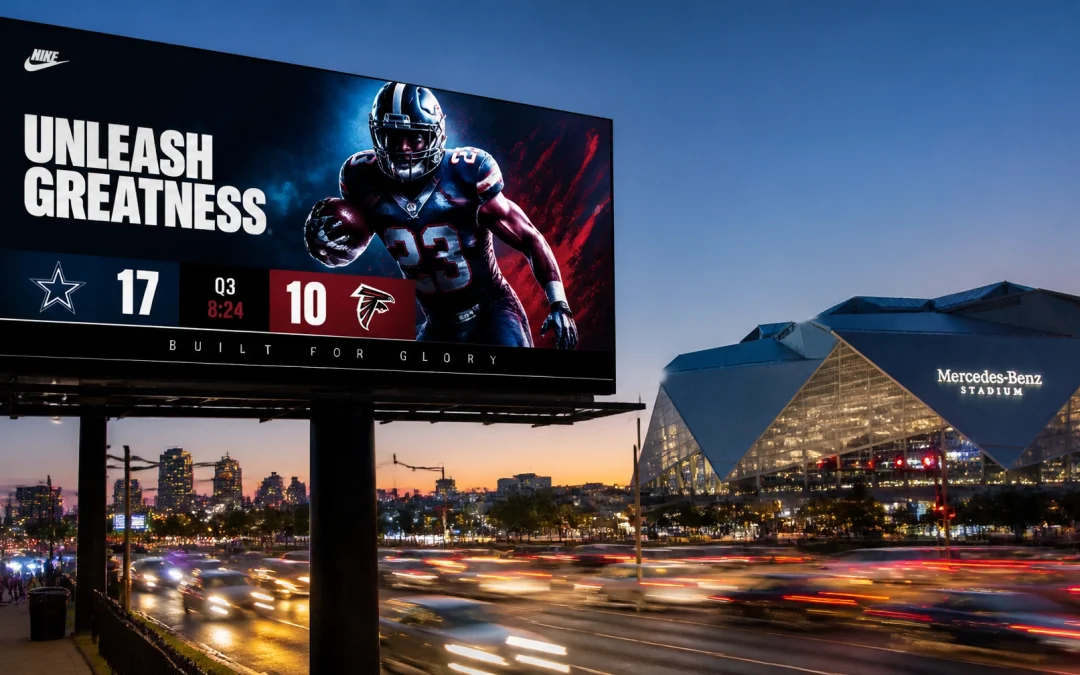
Sports marketing remains one of the most powerful ways to connect with a passionate, captive audience. However, the traditional playbook for sports branding is often riddled with inefficiencies that drain budgets and dilute impact. Many media buyers and brand managers continue to rely on legacy tactics that prioritize simple logo exposure over meaningful engagement.
As the industry shifts toward Digital Out of Home (DOOH) advertising, a new standard for precision and flexibility has emerged. This article outlines seven common mistakes in sports branding and explains how DOOH innovation provides the strategic solutions needed to modernize campaigns.
1. Prioritizing Static Logo Exposure Over Narrative
A common error in sports branding is treating the environment as a "badge" game. Brands often invest heavily in static in-stadium signage or jersey patches, assuming that simple visibility equates to brand growth. While these assets provide baseline awareness, they lack the ability to tell a story or react to the high-energy environment of a live event.
The DOOH Fix:
Dynamic Creative Optimization (DCO) allows brands to move beyond the "wallpaper" effect. Instead of a fixed image, DOOH screens can rotate creative based on the phase of the game. For example, a brand might run "hype" content before kickoff, live score updates during the game, and congratulatory messages following a victory. This shift from exposure to experience ensures the brand becomes a part of the fan’s emotional journey rather than just background noise.
2. Ignoring the Fan Journey Outside the Stadium
Media plans often concentrate the majority of the budget on in-venue assets and broadcast TV. This approach creates a significant gap in the fan journey. Fans spend hours traveling to the stadium, visiting local bars, and congregating in fan zones before and after the game. By focusing only on the "big screen" inside the arena, brands miss multiple high-intent touchpoints.

The DOOH Fix:
A strategic approach involves targeting the "stadium perimeter." OOH Sports utilizes a 10 mile radius around sports venues to reach fans where they live, eat, and commute. By activating all digital video advertising boards within this perimeter, a brand can maintain a consistent presence throughout the entire matchday. This ensures that the message follows the fan from the transit hub to the sports bar and back home.
3. Deploying One-Size-Fits-All Creative
Generic messaging is a frequent pitfall in national sports campaigns. A creative asset that works in New York may not resonate with a fan base in Dallas or Chicago. When brands ignore local rivalries, regional slang, or specific team traditions, the messaging feels disconnected and corporate.
The DOOH Fix:
Programmatic DOOH enables hyper-local versioning at scale. Media buyers can deploy different creative sets to different cities or even specific neighborhoods near different stadiums simultaneously. By tailoring copy to reflect local rituals or specific rivalries, brands can achieve a higher level of relevance. This localized approach builds a deeper emotional connection with the audience, making the brand feel like a true supporter of the local community.
4. Relying on Rigid, Non-Reactive Media Plans
Traditional sports media buys are often locked in months in advance. These fixed schedules cannot account for the unpredictable nature of sports. If a star player is injured or a team's performance declines, a pre-bought campaign can quickly become irrelevant or even counterproductive.
The DOOH Fix:
Programmatic technology allows for real-time triggers and flexibility. Campaigns can be set to "fire" only when specific conditions are met, such as a team reaching a certain score threshold or a game entering overtime. If a campaign needs to be adjusted, digital assets can be swapped in minutes. This agility allows brands to capitalize on "big moments" as they happen, ensuring the marketing remains as dynamic as the game itself.
5. Operating in Disconnected Channel Silos
Many brands manage OOH, social media, and TV as separate entities. This siloed approach results in a fragmented fan experience. A fan might see a high-energy TV spot at home, but then encounter a completely different brand tone on a billboard near the stadium, leading to brand confusion.
The DOOH Fix:
Modern sports marketing requires an omnichannel strategy. DOOH serves as the physical bridge between the digital and broadcast worlds. By using specialized platforms like StackAdapt, media buyers can orchestrate campaigns that synchronize DOOH with mobile retargeting. When a fan is exposed to a digital billboard, their mobile device ID can be captured for follow-up digital ads, creating a reinforced loop of brand messaging.

6. Measuring Success via Vanity Metrics
Focusing on raw impressions or "CPM efficiency" is a mistake that obscures actual business impact. In the context of sports, a high impression count does not necessarily mean the audience took action. Without attribution, it is impossible to determine if a sponsorship or ad buy actually drove purchase consideration or foot traffic.
The DOOH Fix:
Innovation in measurement has transformed DOOH from a "top of funnel" awareness tool into a performance-driven channel. Brands can now conduct brand lift studies and footfall attribution to see exactly how an OOH placement influenced consumer behavior. For instance, Sea-Doo’s first digital OOH campaign saw a 144% increase in purchase consideration by leveraging these data-driven insights. Similarly, White Claw used DOOH to drive a 74% lift in purchase consideration for a new product launch, proving that DOOH outcomes are measurable and significant.
7. Overpaying for "Prestige" Without Efficiency
There is a tendency to overpay for "prestige" placements: such as a specific high-profile stadium screen: while ignoring more efficient ways to reach the same audience. While a single "hero" asset is impressive, it may not be the most cost-effective way to build frequency or reach.
The DOOH Fix:
Strategic DOOH allows for a "surround sound" effect that is often more efficient than a single, expensive in-venue placement. By spreading the budget across a network of digital screens in the high-traffic areas surrounding the venue, brands can achieve higher frequency at a lower total cost. This approach ensures the brand is seen multiple times throughout the fan’s journey, which is more effective for long-term recall than a single, fleeting exposure during the game. AB InBev’s Mike’s Hard Iced Tea utilized this type of strategic reach to see a 119% lift in positive brand image.

Strategy and Execution
The successful execution of a modern sports branding campaign requires a departure from traditional "set it and forget it" mentalities. The strategy must be built on three core pillars:
- Geographic Precision: Utilizing the 10 mile perimeter around professional and collegiate arenas to capture fans at peak engagement times.
- Technology Integration: Leveraging programmatic DSPs to manage bids, frequency, and creative triggers in real-time.
- Data-Driven Evaluation: Moving beyond impressions to focus on brand lift, purchase intent, and location-based attribution.
Results and Impact
Data from recent campaigns indicates that when DOOH is integrated into the sports marketing mix, the results are consistently superior to traditional methods. Campaigns that leverage programmatic DOOH see significant improvements in key performance indicators:
- Brand Image: Strategic placements in high-relevance environments can more than double positive brand perception.
- Purchase Consideration: By reaching fans at multiple touchpoints during an emotional event, brands can drive triple-digit increases in consideration.
- Efficiency: Programmatic buying reduces waste by ensuring ads are only shown when the target audience is actually present and engaged.
Conclusion
Modern sports branding is no longer about who has the biggest logo in the stadium. It is about who can best navigate the fan journey with precision, relevance, and measurable impact. By avoiding these seven common mistakes and embracing DOOH innovation, brand managers and media buyers can transform their sports marketing from a simple expense into a powerful driver of business growth.
OOH Sports provides the infrastructure and expertise to execute these complex, high-impact campaigns across the nation. Through a combination of perimeter-based targeting and advanced programmatic technology, the era of static, inefficient sports branding is effectively over.