
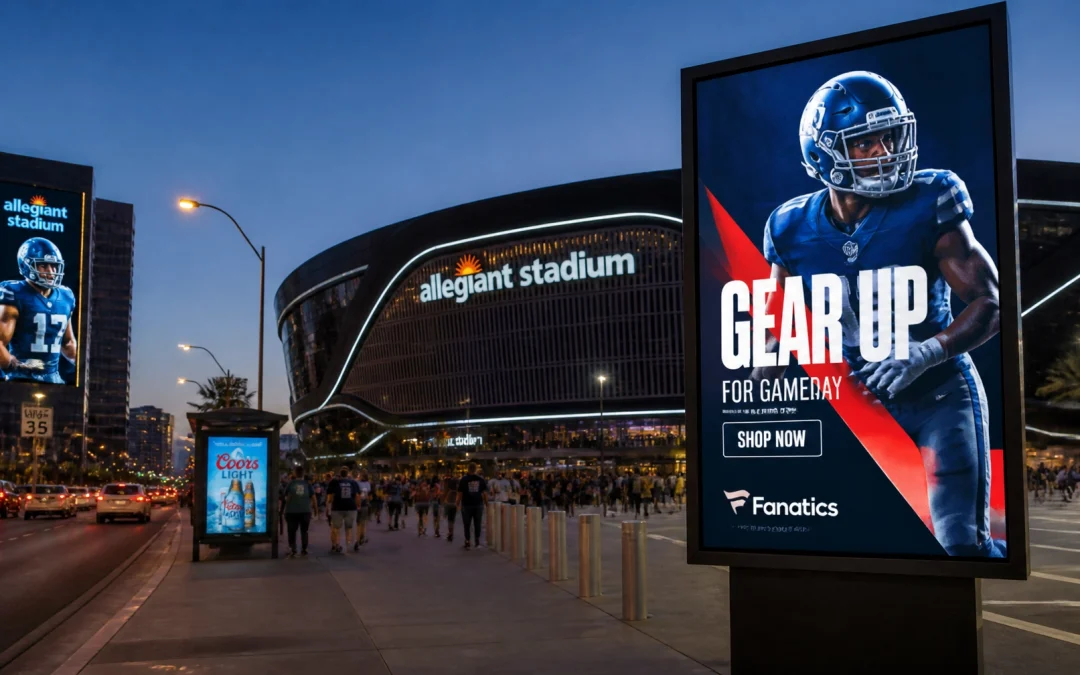
The landscape of sports marketing is undergoing a significant transformation. As traditional television viewership fragments across streaming platforms, the physical world surrounding sports venues remains one of the few places where massive, engaged audiences aggregate reliably. To meet this demand, the OOH Sports network has announced a substantial expansion of its digital out-of-home (DOOH) capabilities. This expansion provides media buyers and brand managers with unprecedented access to fans not only inside the arena but throughout the critical journey leading up to and following the main event.
By extending the digital reach to a 10 mile perimeter around major sports venues, OOH Sports is redefining how brands interact with the sports ecosystem. This strategic growth facilitates a seamless connection between consumer behavior and high impact advertising, ensuring that a brand message is present during every phase of the fan experience.
Objective & Strategy
The primary objective of the network expansion is to solve the proximity challenge faced by many national and local advertisers. Historically, reaching sports fans required expensive official sponsorships or limited static signage. The OOH Sports strategy shifts this paradigm by utilizing a vast network of digital screens in locations where fans naturally congregate.
The strategy focuses on high intent environments. This includes sports bars, casual dining establishments, fitness centers, and transit hubs. By saturating these areas, the network ensures that the brand remains top of mind as fans travel to the game, celebrate after a victory, or engage in their daily routines within the sports focused community. This approach targets media planners who require scale, flexibility, and measurable impact without the constraints of traditional sports media buys.
Strategy
The core of the OOH Sports strategy lies in its hyper local targeting capabilities and the diversity of its inventory. The expansion incorporates a wide array of digital touchpoints, including urban panels, highway signs, and Quick Service Restaurant (QSR) displays.
The 10 Mile Perimeter
The expansion to a 10 mile radius around stadiums and arenas is a calculated move to capture the entire "fan journey." This radius encompasses the suburbs where fans live, the transit corridors they use, and the entertainment districts they frequent. By leveraging this geographic footprint, media buyers can implement a surround sound effect that reinforces a campaign message across multiple touchpoints in a single day.
Dynamic Game Day Scheduling
One of the most tactical elements of the strategy is the ability to run campaigns exclusively on game days. This ensures that the advertising budget is utilized only when audience density and engagement are at their peak. For outdoor venues, the network also offers rainout protection. If a game is cancelled due to weather, the campaign automatically pauses, preventing wasted impressions and preserving the budget for future events. This level of logistical precision is designed to appeal to chief marketing officers who prioritize ROI and fiscal efficiency.

Technology Partners
The expansion is supported by sophisticated programmatic technology that simplifies the buying process for agencies and brand managers. OOH Sports integrates with leading demand-side platforms (DSPs) to offer a streamlined, automated experience.
Partnerships with platforms like StackAdapt allow media buyers to purchase inventory through a programmatic model. This enables real time bidding, flexible budget allocation, and the ability to pivot creative assets based on live performance data. By moving away from rigid, long term contracts, the OOH Sports network provides the agility required in the modern digital landscape. These technology integrations ensure that DOOH is no longer a siloed channel but a core component of a broader omnichannel strategy.
Execution
The execution phase of the OOH Sports expansion relies on a sophisticated mix of geographic and temporal targeting. Media planners can select specific venues, such as the 700 plus stadiums and arenas currently in the network, and layer on specific demographic or interest based data.
Inventory Integration
The network now includes a broader range of indoor and outdoor screens. Sportrons, the specialized network inside the venues, works in tandem with the expanded external network. While Sportrons captures the high energy environment of the concourse and food court, the OOH Sports external network captures the surrounding urban environment.
Execution Logistics
- Venue Selection: Buyers identify target stadiums or arenas based on the specific sport or team audience.
- Perimeter Definition: Campaigns are set to trigger within the 10 mile radius of the selected venues.
- Trigger Logic: Ads are scheduled to run during pre game, mid game, and post game windows.
- Creative Optimization: Digital creative is uploaded and can be updated instantly to reflect current scores, promotions, or social media trends.
This systematic approach removes the guesswork from sports media buying, providing a reliable framework for reaching a highly targeted audience at scale.

Results
The impact of the OOH Sports network expansion is best measured through its contribution to brand lift and purchase consideration. Data collected from previous campaigns within the network highlights the effectiveness of this proximity based model.
Key Performance Metrics
- Total Monthly Impressions: The network now delivers over 50 million impressions monthly across its combined digital assets.
- Return on Investment: Partners have reported an average ROI increase of 25 percent when utilizing targeted game day campaigns.
- Purchase Consideration: Case studies involving major brands have shown significant results. For example, programmatic DOOH campaigns have seen as much as a 74 percent lift in purchase consideration for new product launches.
- Brand Image: Campaigns targeting specific sports demographics have resulted in a 119 percent lift in positive brand image by associating with the passion and excitement of live events.
These results underscore the value of the expanded network. By providing clear, measurable outcomes, OOH Sports allows advertisers to justify their spend with hard data and clear before and after comparisons. More detailed results and performance data can be found in the OOH Sports case study section.
Conclusion
The expansion of the OOH Sports network represents a significant milestone for the sports media industry. By combining the emotional resonance of sports with the precision of programmatic DOOH, the company has created a powerful tool for modern advertisers. The ability to dominate a 10 mile perimeter around the nation’s most iconic venues offers a level of market saturation that was previously unattainable.
As the network continues to grow, the focus remains on delivering high quality, data driven solutions that connect brands with fans. For media buyers and brand managers looking to master the complexities of the sports market, the expanded OOH Sports network offers the scale, technology, and results necessary to achieve long term success.
