
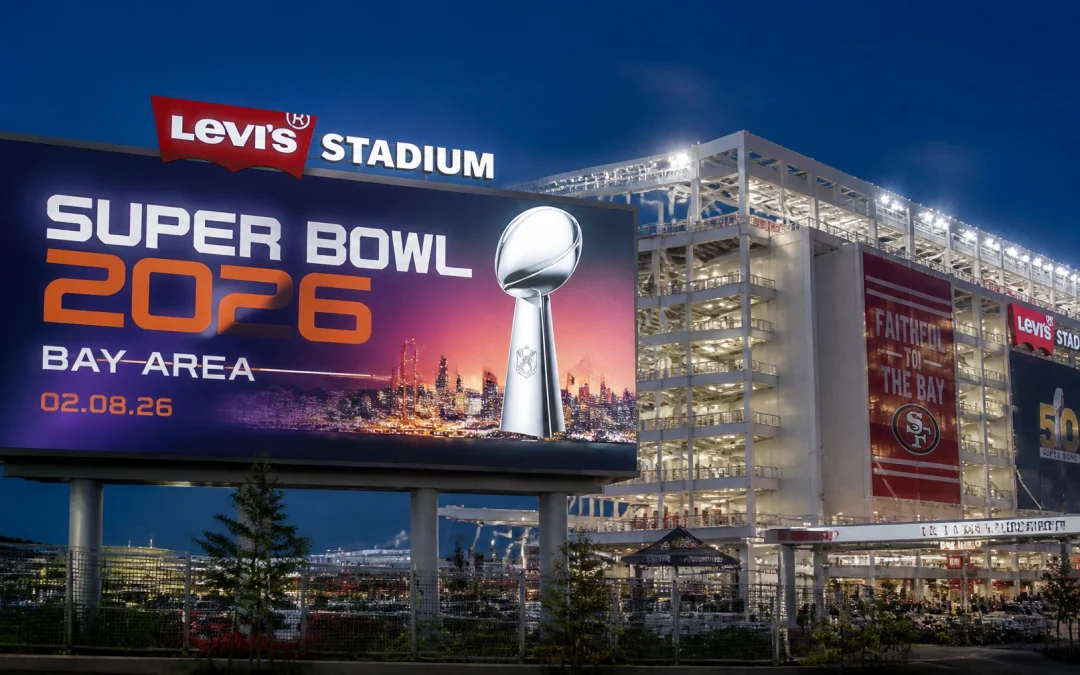
Super Bowl LX, scheduled for February 8, 2026, at Levi’s Stadium in Santa Clara, California, represents one of the most significant advertising opportunities in the modern era. For Creative Directors and media planners, the challenge lies in breaking through a saturated media environment. Achieving dominance requires a strategic shift from traditional spot buying to a comprehensive, venue-wide coverage model. This guide outlines the execution of an integrated Out-of-Home (OOH) and Digital Out-of-Home (DOOH) strategy that spans from stadium floors to massive regional billboards, leveraging forty years of industry leadership.
Forty Years of Advertising Leadership
The landscape of sports marketing has evolved from static signage to dynamic, data-driven experiences. OOH Sports, a division of the Sports Media Inc. family, brings four decades of expertise to the Super Bowl LX arena. This tenure has allowed for the development of a network that transcends simple visibility, focusing instead on immersive brand storytelling.
By utilizing a legacy of relationships with major sports venues and municipal authorities, the network provides access to premium placements that are typically inaccessible to standard media buys. This leadership is built on a foundation of reliability and a deep understanding of fan psychology, ensuring that brand messages are not just seen but integrated into the ritual of the game day experience.
Objective and Strategy: The 10-Mile Radius Rule
The primary objective for any brand targeting Super Bowl 2026 is total brand saturation within a 10-mile radius of Levi’s Stadium and the surrounding San Francisco Bay Area fan zones. The strategy focuses on capturing the attention of fans at every touchpoint of their journey, from their arrival at San Francisco International Airport (SFO) to their final seat in the stadium.
Key Strategic Pillars:
- Geographic Dominance: Concentrating media spend within the high-traffic corridors of Santa Clara and San Jose, as well as the event hubs in downtown San Francisco.
- Contextual Relevance: Aligning creative assets with the specific location of the screen, such as transit-specific messaging for BART riders and high-energy visuals for those in the stadium parking lots.
- Sequential Storytelling: Using a series of screens across the fans' travel path to build a narrative arc that culminates at the venue.
Venue-Wide Coverage: From Floors to Billboards
A truly dominant campaign leaves no surface untouched. Modern advertising technology allows brands to claim ownership of the physical environment in ways that were previously impossible.
Stadium Floor Graphics
High-impact floor graphics represent an underutilized but highly effective medium for the Super Bowl. Strategically placed in high-footfall areas such as concourses, entry gates, and luxury suite corridors, these decals provide a literal foundation for brand presence.

- Impact: Floor graphics capture the "head-down" audience, often those engaged with their mobile devices or navigating crowds.
- Durability: Modern materials ensure graphics remain vibrant and slip-resistant throughout the multi-day event schedule.
Programmatic Digital Out-of-Home (pDOOH)
The integration of programmatic buying allows for real-time flexibility. Brands can adjust messaging based on the time of day, weather conditions, or live game updates. This is particularly effective for large-format billboards lining the 101 and 880 freeways leading to Levi’s Stadium.
For instance, a campaign for a beverage brand might shift from "Pre-Game Hype" creative in the morning to "Post-Game Celebration" visuals immediately following the final whistle. This level of agility has been shown to drive significant results, such as the 119% lift in positive brand image seen in programmatic campaigns for major beverage brands.
Technology Partners and Strategic Execution
Success in the Super Bowl environment depends heavily on the caliber of technology partners and the precision of the media buy. OOH Sports utilizes a network of digital video boards and LED displays that are managed through advanced programmatic platforms.
Strategic Tactics for 2026:
- Audience Retargeting: Using mobile location data to identify devices exposed to OOH placements. These users are then retargeted with digital ads, creating an omnichannel loop that reinforces the physical message.
- Anamorphic 3D Displays: Utilizing high-definition LED screens in urban centers like Union Square to showcase 3D content that generates organic social media buzz.
- Sportrons Integration: Deploying the Sportrons platform to synchronize in-stadium LED screens with exterior digital boards, ensuring a seamless brand transition for fans moving between environments.

Video: The Future of In-Stadium Engagement
The following video demonstrates the power of integrating video advertising within the sports venue environment. This technology allows for dynamic, high-definition content that captures fan attention during critical breaks in play.
https://www.youtube.com/watch?v=l6J-0zileKE
Creative Execution: Mastering the "Second Screen"
While the game is played on the field, the "second screen" experience (mobile devices) is where much of the engagement occurs. Creative Directors must design OOH assets that encourage digital interaction.
- QR Code Integration: Strategically placed QR codes on static and digital displays can drive immediate action, such as app downloads or entry into Super Bowl sweepstakes.
- Real-Time Data Feeds: Incorporating live scores, social media feeds, or player statistics into the DOOH creative to maintain relevance during the heat of the game.
- Implied Sponsorship: Brands that are not official NFL sponsors can utilize "Implied Sponsorship" tactics by securing placements within the 10-mile radius of the stadium, effectively aligning themselves with the event without the official price tag.
Results and Measurement
In the past, OOH was considered a "top-of-funnel" awareness play with difficult attribution. Today, the use of exposed-versus-control studies and mobile footfall tracking allows for precise measurement of campaign success.
Based on historical data from similar high-profile sporting events, a venue-wide OOH strategy can yield substantial increases in key performance indicators:
- Purchase Consideration: Campaigns utilizing integrated DOOH have seen purchase consideration increases of up to 144%, as demonstrated in recent sports-focused marketing case studies.
- Brand Recall: The repetition of floor graphics, transit screens, and massive billboards across the 10-mile radius ensures maximum recall among both local residents and visiting fans.
- Digital Lift: Brands often see a direct correlation between high-impact OOH placements and a spike in search volume and social media mentions within the targeted geographic area.

Conclusion for Media Buyers and Planners
Dominating Super Bowl 2026 requires more than a single high-priced TV spot. It requires a physical presence that mirrors the scale and intensity of the event itself. By leveraging forty years of expertise and a network that blankets the San Francisco Bay Area from floors to billboards, brands can ensure their message is the most memorable part of the Super Bowl experience.
The window for securing premium inventory around Levi's Stadium for February 2026 is narrowing. Strategic planning now allows for the coordination of floor graphics, transit displays, and programmatic DOOH into a cohesive force that commands the attention of millions.