
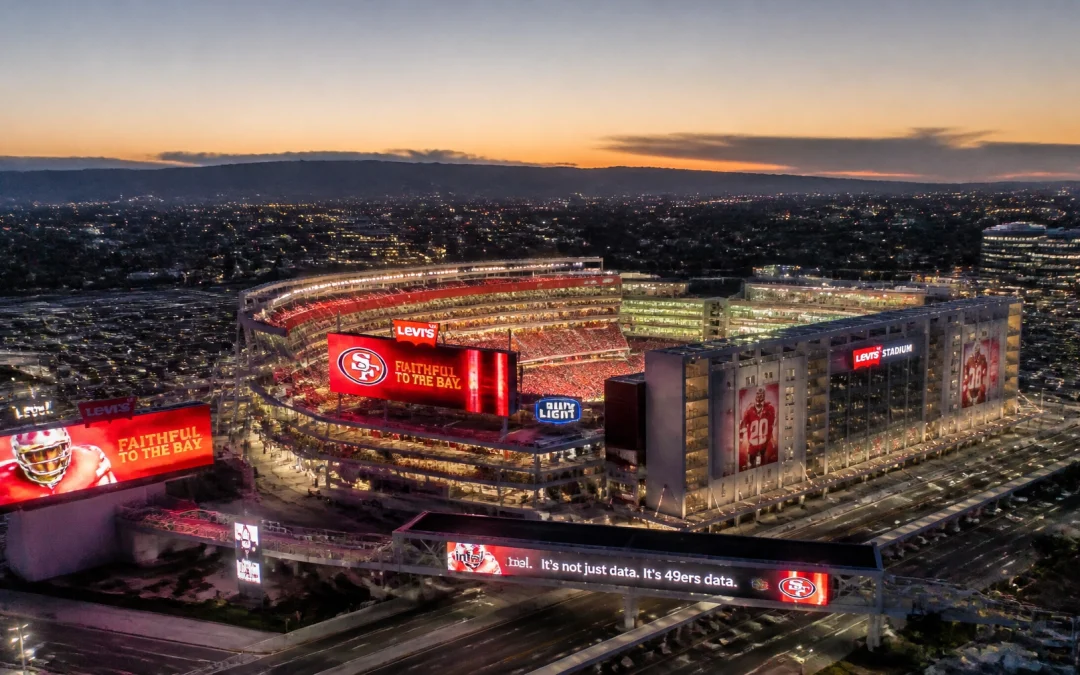
The countdown to Super Bowl LX has officially begun. Scheduled for February 8, 2026, at Levi’s Stadium in Santa Clara, California, this event represents the pinnacle of sports marketing and brand exposure. For advertisers, the challenge is no longer just about securing a thirty second television spot. Instead, the focus has shifted to the physical and digital perimeter surrounding the venue. With over 40 years of advertising leadership, Sports Media Inc. and its division, OOH Sports, have perfected the art of stadium wide saturation. This specialized approach ensures that a brand is not just seen, but experienced by every fan from the moment they enter the ten mile radius of the arena.
The strategy for 2026 involves a sophisticated blend of traditional out of home (OOH) media and cutting edge digital technology. By leveraging a network that covers everything from floor graphics to massive highway billboards, brands can establish a dominant presence that persists long after the final whistle. The following five strategies outline how to master the Super Bowl 2026 perimeter.
1. Hyper-Local Perimeter Saturation (The 10-Mile Radius)
The concept of the "perimeter" in modern sports marketing extends far beyond the stadium walls. OOH Sports utilizes a ten mile geofenced radius to capture the attention of fans as they commute, shop, and celebrate in the days leading up to the game.
Objective & Strategy
The primary objective is to create a sense of omnipresence. By securing digital video advertising boards within this ten mile zone, a brand can maintain a constant dialogue with the target audience. The strategy involves a tiered approach. First, high impact billboards on major arteries like Highway 101 and I-880 in the Bay Area capture travelers. Second, street level digital units in Santa Clara and San Jose engage pedestrians and local commuters. This saturation ensures that the brand becomes synonymous with the Super Bowl experience in the local market.
Technology Partners
Execution of this strategy relies on programmatic platforms like StackAdapt, which allow for precise delivery of ad creative across a diverse network of digital screens. These platforms enable advertisers to bid on inventory in real time, ensuring that the message is delivered when and where it will have the most impact.
2. Multi-Surface Integration: From Floors to Billboards
Total venue dominance requires thinking beyond the screen. OOH Sports has pioneered the use of non traditional surfaces to increase brand touchpoints. This "floor to sky" approach ensures that there are no gaps in the visual landscape.

Strategy
Within the stadium concourses and entry points, floor graphics provide an unexpected and high impact medium. When combined with traditional Sportrons and large scale digital displays, the result is a fully immersive environment. These floor graphics are particularly effective at high traffic bottleneck areas, such as security lines and concession stands, where dwell time is high.
Execution Logistics
Logistical planning for such a campaign begins months in advance. The process includes site surveys to identify high visibility surfaces and the selection of durable, slip resistant materials for floor applications. The goal is a seamless integration that complements the stadium’s architecture while projecting a bold brand message.
3. Programmatic Agility and Real-Time Contextual Creative
The Super Bowl is a dynamic event, and static advertising is no longer sufficient for high tier brands. Programmatic Digital Out of Home (pDOOH) allows for creative changes based on real time events.
Objective & Strategy
The strategy is to utilize dynamic creative triggers. For example, if a specific play occurs or a team takes a significant lead, the digital boards across the Santa Clara perimeter can update within seconds to reflect the current state of the game. This level of relevance significantly increases audience engagement and brand recall. It transforms a standard advertisement into a piece of real time commentary.
Results and Impact
Previous campaigns utilizing programmatic agility have shown remarkable success. For instance, AB InBev’s Mike’s Hard Iced Tea saw a 119 percent lift in positive brand image through a pDOOH campaign that emphasized timing and relevance. By applying these lessons to the 2026 Super Bowl, advertisers can achieve similar surges in brand sentiment.
4. Audience Retargeting and Omnichannel Flow
The impact of a billboard should not end once a consumer walks past it. The most effective strategies for Super Bowl 2026 will bridge the gap between physical visibility and digital engagement.

Objective & Strategy
The objective is to create an "omnichannel flow." As fans pass by digital OOH boards in the Santa Clara perimeter, their mobile device IDs are anonymously captured (compliant with all privacy regulations). These exposed audiences are then retargeted with mobile advertisements, social media content, or special offers. This reinforces the OOH message and provides a direct path to conversion.
Technology Partners
By working with specialized data partners, OOH Sports can identify these "exposed" audiences and deliver a follow up message on their smartphones. This strategy was highly effective for Sea-Doo, whose first digital OOH campaign resulted in a 144 percent increase in purchase consideration.
5. Data-Driven Attribution and Performance Measurement
In the past, OOH advertising was often criticized for a lack of measurable ROI. Today, however, data driven attribution is at the core of the OOH Sports methodology.
Strategy
For the 2026 Super Bowl, every placement is backed by a robust measurement framework. This includes brand lift studies, foot traffic attribution, and sales lift analysis. By setting clear KPIs before the campaign begins, advertisers can move away from "hype" and focus on verifiable data.
Results and Analysis
Data from recent major campaigns highlights the power of this approach. A campaign for White Claw drove a 74 percent lift in purchase consideration for their vodka launch by targeting the right audience at the right time. For Super Bowl LX, the use of control and exposed groups will allow brands to see exactly how much their perimeter dominance contributed to their bottom line.

40 Years of Innovation in Sports Marketing
The success of these strategies is built upon a foundation of four decades of experience. Sports Media Inc. has witnessed the evolution of sports advertising from simple static signs to the complex, data driven ecosystems of today. This history provides a unique perspective on what truly works in high pressure environments like the Super Bowl.
The venue wide coverage offered for 2026 is the culmination of these forty years. It represents a deep understanding of fan behavior and a commitment to utilizing the best technology available. Whether it is a floor graphic in the concourse or a massive digital board overlooking the stadium, every element is designed to work in harmony.
To see how these elements come together in a real world environment, view the following overview of sports media capabilities:
https://www.youtube.com/watch?v=l6J-0zileKE
Strategic Execution and Planning
Dominating the Super Bowl 2026 perimeter is not a task for the faint of heart. It requires early planning, a deep understanding of the Bay Area geography, and a willingness to embrace new technologies. The move from traditional buying to programmatic execution is no longer optional for brands that wish to lead the conversation.

By focusing on the ten mile radius, integrating multiple surfaces, utilizing programmatic agility, retargeting audiences, and measuring every interaction, brands can ensure their Super Bowl investment delivers maximum value. The perimeter is where the battle for consumer attention is won or lost. With the right strategy and the right partners, 2026 can be the year of total brand dominance.
For more information on how to secure your place in the Super Bowl 2026 perimeter, visit the OOH Sports contact page to begin the strategic planning process.