
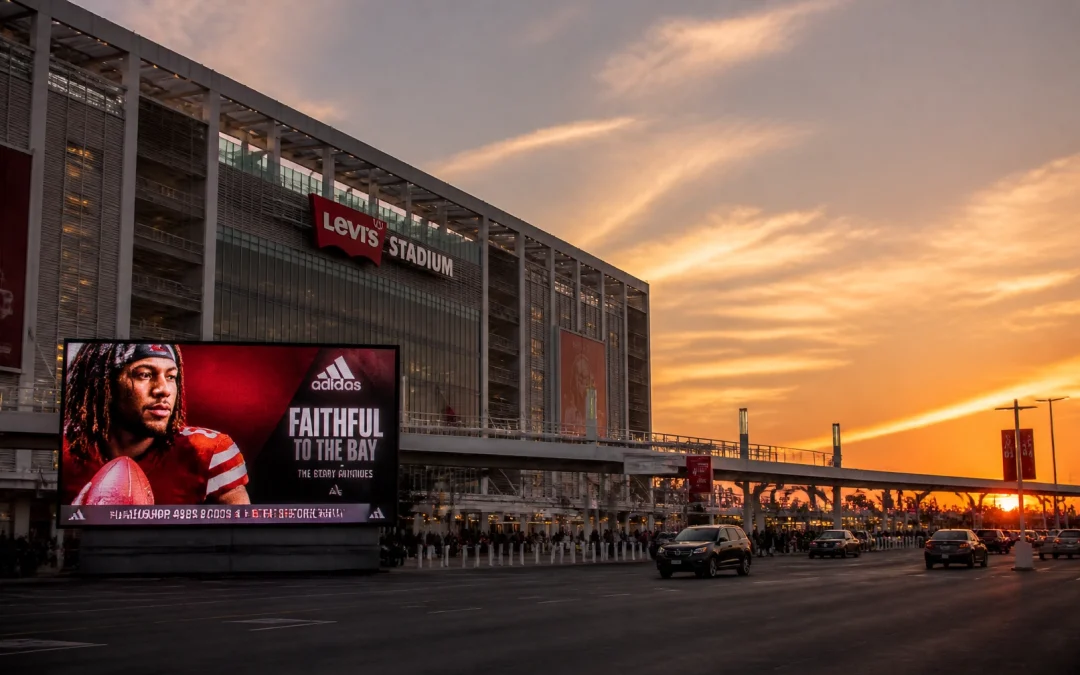
The countdown to Super Bowl LX in 2026 has officially begun, and for media buyers, the playbook is being completely rewritten. The traditional 30-second television spot, while still a titan of reach, no longer stands alone. In its place, a new paradigm of authenticity and hyper-local precision has emerged. This shift is driven by the unprecedented scale of the Name, Image, and Likeness (NIL) landscape, where over 20,000 student-athlete voices are being mobilized to create a "surround-sound" branding experience that bridges the gap between digital screens and physical streets.
For brands looking to dominate the San Francisco Bay Area and beyond, the secret lies in the integration of these authentic voices with a massive Digital Out-of-Home (DOOH) network. This strategy moves away from the "one-size-fits-all" broadcast and toward a decentralized, community-focused approach that captures attention exactly where sports fans live, travel, and celebrate.
Objective & Strategy
The primary objective for Super Bowl 2026 branding is to transcend the noise of a crowded media market by leveraging human-centric storytelling at a massive scale. By combining the OOH Sports Sportrons network with a robust NIL platform, media planners can ensure that a brand's message is not just seen, but felt.
The strategy focuses on three core pillars:
- Authenticity at Scale: Utilizing 20,000+ student-athletes to create peer-to-peer trust.
- Physical Dominance: Saturating the 10-mile perimeter around Levi's Stadium and key metropolitan hubs with DOOH.
- Omnichannel Synergy: Aligning social media NIL content with physical digital billboards to create a unified brand narrative.
This approach ensures that when a fan sees a student-athlete's post on their phone, they encounter the same face and message on a digital street kiosk moments later, reinforcing brand recall through multiple touchpoints.

The Power of 20,000+ Voices
The sheer volume of 20,000 student-athletes provides a level of market penetration that was previously impossible. To manage this scale effectively, the strategy employs a tiered athlete portfolio that allows brands to be both national and hyper-local simultaneously.
- National Anchors (5-10 Athletes): These are the high-profile stars who appear in hero creative. Their faces dominate large-format billboards in the San Francisco Bay Area and appear in national digital campaigns.
- Regional Specialists (200-500 Athletes): These athletes drive localized buzz in specific DMAs (Designated Market Areas). They are featured on transit shelters and street furniture in markets where the brand has a strong retail presence.
- Micro/Campus Creators (Up to 20,000+ Athletes): This group represents the "ground game." They flood social ecosystems with authentic, low-polish content. By pairing these voices with local DOOH near campuses and sports bars, brands create a sense of omnipresence within the student and young alumni demographics.
This tiered structure allows for a diversified investment, where the aggregate performance of thousands of micro-influencers provides a higher ROI than a single celebrity endorsement. It is about moving from "star power" to "community power."
Strategy: Perimeter and Campus Targeting
Precision is the hallmark of the Super Bowl 2026 branding strategy. OOH Sports utilizes programmatic technology to activate all digital video advertising boards within a 10-mile radius of Levi's Stadium. This "perimeter targeting" ensures that the brand owns the conversation in the host city during the week of the game.
However, the strategy extends far beyond Santa Clara. By identifying key university campuses and high-traffic sports corridors across the country, media buyers can deploy a "campus-to-stadium" pipeline. This involves:
- Proximity Marketing: Placing digital ads within 500 feet of sports bars, gyms, and retail centers where fans congregate.
- Transit Domination: Catching fans on their journey to the stadium via digital screens in airports, train stations, and rideshare vehicles.
- Event-Based Triggers: Synchronizing DOOH creative to change in real-time based on game events, halftime performances, or viral social moments.

Technology Partners
Execution at this scale requires sophisticated technology partners. The use of advanced Demand Side Platforms (DSPs), such as the StackAdapt DSP, allows for the seamless buying and planning of DOOH inventory. These platforms enable media buyers to:
- Set Real-Time Bids: Adjusting spend based on audience density and time of day.
- Dynamic Creative Optimization (DCO): Automatically swapping out visuals of student-athletes based on the specific location of the digital board.
- Data Integration: Merging mobile location data with DOOH exposure to measure how many people saw a billboard and subsequently engaged with the NIL content on their devices.
The integration of NIL platforms with these programmatic DOOH tools creates a "closed-loop" ecosystem where digital and physical assets work in concert, rather than in silos.
Logistics & Execution
The timeline for a Super Bowl campaign of this magnitude is divided into three distinct phases to ensure maximum impact:
Phase 1: The Build-Up (October 2025 – January 2026)
During this phase, the focus is on storytelling. Student-athletes share behind-the-scenes content of their training and campus life. Digital billboards in their respective college towns highlight these stories, building local pride and brand association long before the first whistle in Santa Clara.
Phase 2: Game Week Saturation (February 2 – February 8, 2026)
This is the "blitz" phase. The 10-mile perimeter around the stadium is activated. All 20,000+ athletes are scheduled to post content that mirrors the creative on the physical DOOH screens. The goal is to ensure that no matter where a fan looks: up at a billboard or down at their phone: the brand is present.
Phase 3: The Post-Game Echo (February 9 – February 12, 2026)
The 72 hours following the Super Bowl are critical. Research has shown that brand recall is highest during this window. Athletes share recap content, while DOOH boards transition to "Thank You" messages or promotional offers, driving fans toward a final conversion or loyalty action.
Results & Measurement
The success of this 20,000-voice strategy is measured through a combination of traditional and innovative metrics. By using device ID tracking and brand lift studies, OOH Sports can quantify the impact of the campaign with precision.
Previous campaigns using similar programmatic DOOH tactics have seen significant results. For example, a White Claw programmatic campaign drove a 74% lift in purchase consideration. For the 2026 Super Bowl initiative, the projected outcomes include:
- Reach: Exposure to over 100 million fans across digital and physical channels.
- Engagement: A 2x increase in social media engagement compared to traditional influencer campaigns, due to the physical reinforcement of DOOH.
- Brand Sentiment: A measurable shift in "authenticity" ratings among Gen Z and Millennial audiences, who prioritize peer recommendations over corporate advertisements.

Innovation in Action
To understand the full scope of how OOH Sports is revolutionizing the industry, view the following presentation on the future of sports media and out-of-home advertising.
https://www.youtube.com/watch?v=l6J-0zileKE
Conclusion
The 2026 Super Bowl branding strategy represents a fundamental shift in how brands interact with fans. By harnessing the authentic voices of 20,000+ student-athletes and amplifying them through a massive, programmatic DOOH network, media buyers can achieve a level of resonance that traditional media simply cannot match. It is a strategy built on scale, precision, and the power of the human voice.
For those ready to move beyond the 30-second spot and into the hearts of the fans, the blueprint is clear. The future of sports marketing is not just a commercial on a screen; it is a conversation that happens everywhere. To learn more about how to join this revolution, visit the OOH Sports About Page or explore our latest Case Studies.