
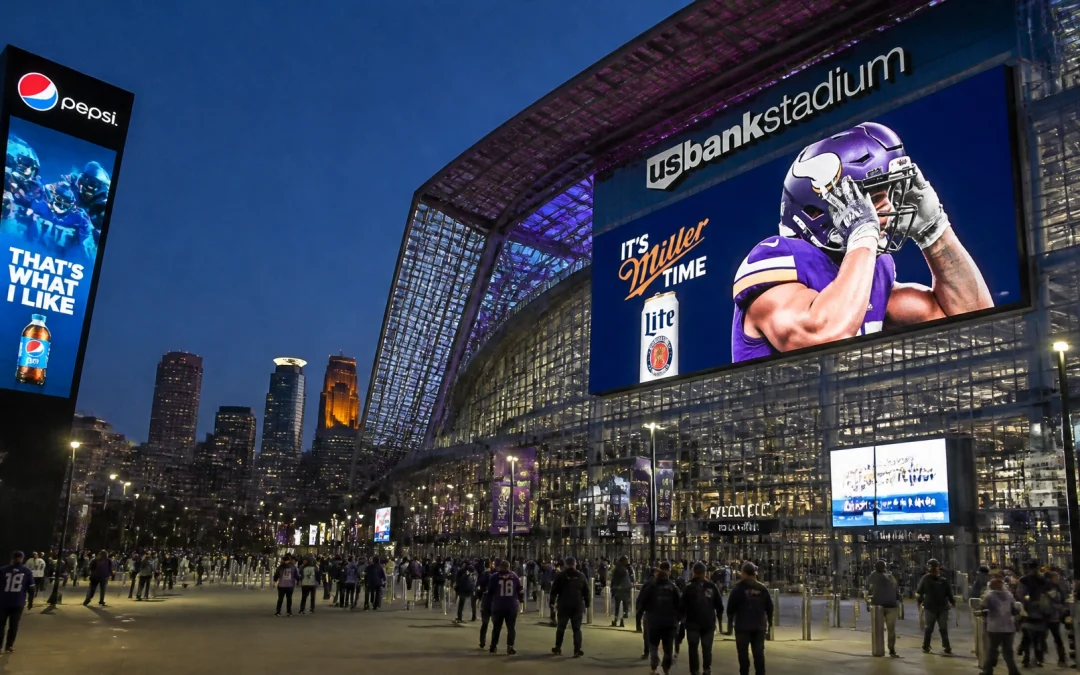
The landscape of sports marketing is undergoing a significant transformation. Traditional, static billboards are being replaced by high-definition, data-driven displays that react to the pulse of the game. For media buyers and brand managers, the shift toward Digital Out-Of-Home (DOOH) advertising represents a strategic move from simple visibility to measurable engagement.
Innovation in this space is no longer just about the brightness of a screen. It is about the precision of the location, the timing of the message, and the ability to connect the physical world to a digital consumer journey. By leveraging a network that covers the perimeter around major sports venues, brands are finding new ways to stay top-of-mind when fan attention is at its peak.
The Strategy of Proximity: The 10-Mile Perimeter
One of the most effective tactics in modern sports marketing is the use of proximity-based targeting. OOH Sports provides access to digital video advertising boards within a 10-mile radius of sports arenas and stadiums across America. This strategy ensures that a brand message is not confined to the interior of a stadium but instead follows the fan throughout their entire game-day experience.
The fan journey typically begins hours before kickoff and continues long after the final whistle. By placing advertisements in high-traffic areas such as transit hubs, sports bars, retail centers, and main thoroughfares leading to the venue, a brand can establish a dominant presence in the local environment.
Tactical Advantages of Proximity Targeting
- High Frequency: Fans often pass multiple screens on their way to a game, creating a compounding effect on brand recall.
- Contextual Relevance: Messaging can be tailored to the specific event happening that day, making the advertisement feel like a part of the local atmosphere.
- Extended Reach: This approach captures not only the ticket holders but also the thousands of fans gathering in the vicinity to watch the game at local establishments.

Real-Time Innovation: Data-Driven Content Triggers
The true innovation in sports DOOH lies in the integration of real-time data. Technology now allows for "moment-based" targeting, where creative content changes automatically based on live events. If a team scores a goal, takes the lead, or wins in overtime, the digital displays in the surrounding 10-mile radius can update instantly to reflect that outcome.
This level of responsiveness creates a deeper connection between the brand and the audience. When a brand celebrates a victory alongside the fans in real time, it transcends traditional advertising and becomes a participant in the fan experience.
Implementation of Live Triggers
The execution of these campaigns relies on sports data APIs that feed live information to the OOH Sports network. Media buyers can set predefined triggers, such as:
- Score-Based Updates: Changing the creative when a certain score threshold is met.
- Weather Triggers: Promoting specific products (e.g., cold beverages or warm apparel) based on local weather conditions around the stadium.
- Time-of-Day Shifts: Transitioning from "pre-game hype" messaging in the morning to "celebratory" or "post-game" content in the evening.
Programmatic DOOH and Omnichannel Integration
The integration of DOOH into the programmatic ecosystem has simplified the buying process for brand managers. Programmatic DOOH allows for more flexibility and efficiency, enabling buyers to purchase inventory based on specific audience segments and environmental conditions rather than just buying a fixed loop of time.
Furthermore, DOOH is no longer a siloed channel. It functions as a critical node in an omnichannel strategy. By using device IDs exposed to specific DOOH screens, brands can retarget those same fans on their mobile devices or through Connected TV (CTV) later that day. This sequential messaging ensures that the initial physical exposure leads to a digital action, such as visiting a website or making a purchase.

Measurable Outcomes: Data-Backed Success
The shift toward digital formats has brought a new level of accountability to out-of-home advertising. Through brand lift studies and attribution modeling, the impact of sports DOOH campaigns can be quantified with precision.
Recent campaigns across the OOH Sports network have demonstrated the power of this medium:
- White Claw: To support the launch of its new vodka, White Claw utilized a programmatic DOOH strategy. The campaign resulted in a 74% lift in purchase consideration, proving that high-visibility digital screens can move the needle for established brands entering new categories.
- Sea-Doo: In its first digital OOH campaign, Sea-Doo targeted specific regional markets. The strategic placement of ads led to a 144% increase in purchase consideration, highlighting the effectiveness of reaching outdoor enthusiasts in relevant contexts.
- Mike's Hard Iced Tea: This campaign focused on brand image and sentiment. By leveraging the dynamic nature of DOOH, the brand saw a 119% lift in positive brand image.
These results indicate that when DOOH is executed with a focus on proximity and timing, the return on investment is substantial. The ability to measure these outcomes allows media planners to justify budget allocations and optimize future campaigns based on historical performance data.

The Role of AI and Creative Elasticity
Artificial Intelligence is playing an increasing role in how creative assets are managed for sports DOOH. AI-driven platforms can generate hundreds of creative variations to match different teams, cities, and game scenarios. This "creative elasticity" means a single campaign can feel hyper-local and personalized across dozens of different stadium perimeters simultaneously.
For example, a national beverage brand can run a single campaign that automatically displays the local team's colors and names on screens in Chicago, New York, and Los Angeles. This automation reduces production costs while increasing the relevance of the ad for each local audience.
Strategy and Execution Checklist
For media buyers looking to capitalize on these innovations, several key factors should be considered during the planning phase:
- Identify High-Impact Zones: Focus on the 10-mile radius around venues to capture the concentrated fan base.
- Integrate Live Data: Use triggers to ensure the creative remains relevant to the current state of the game or environment.
- Leverage Programmatic Buying: Utilize platforms like StackAdapt to gain better control over inventory and audience targeting.
- Plan for Retargeting: Use DOOH exposure as a trigger for mobile or social media follow-ups to drive conversions.
- Measure Everything: Utilize brand lift studies to track changes in awareness, consideration, and purchase intent.
Conclusion
Innovation in sports DOOH is redefining the relationship between brands and fans. By moving beyond the stadium walls and into the surrounding community, advertisers can engage with an audience that is already in a state of high emotional engagement. The combination of proximity targeting, real-time data triggers, and programmatic efficiency makes sports DOOH a necessary component of any modern marketing mix.
As the technology continues to evolve, the brands that succeed will be those that treat DOOH not as a static backdrop, but as a dynamic, interactive, and measurable part of the sports experience. OOH Sports remains at the forefront of this revolution, providing the tools and the network necessary to turn brand messages into lasting fan impressions.