
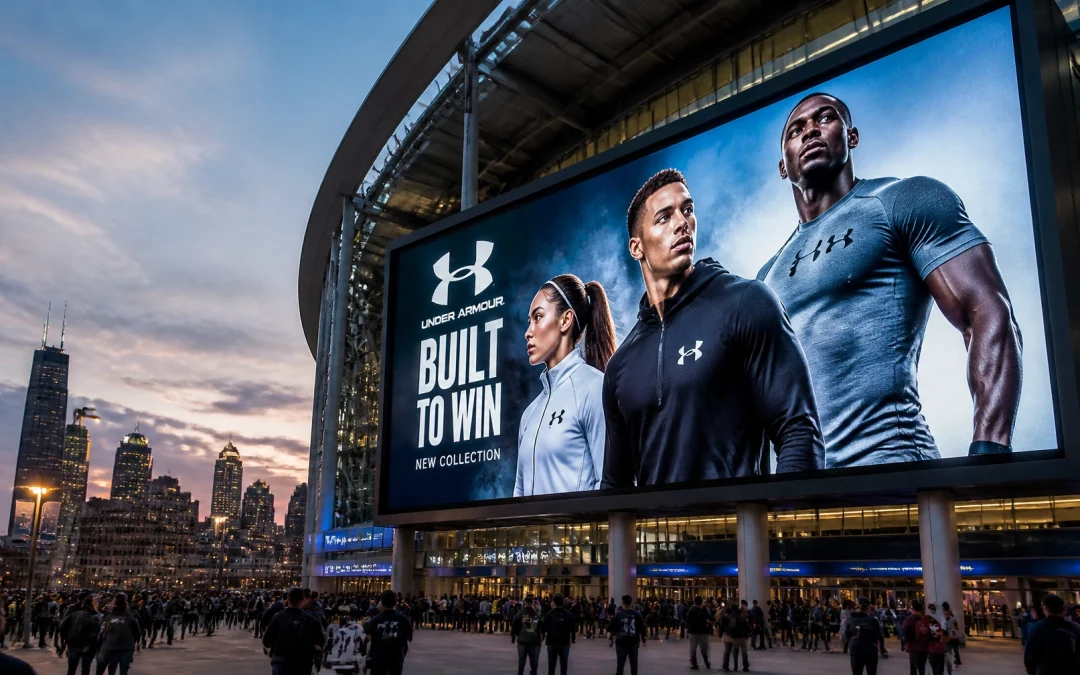
The landscape of advertising near sports venues is undergoing a fundamental transformation. Digital Out-of-Home (DOOH) advertising has moved beyond the era of static loops and pre-scheduled placements. Today, the integration of advanced technologies allows brands to engage with fans in ways that were previously impossible. As the industry moves toward a more data-centric model, four primary trends have emerged as the catalysts for this revolution: Artificial Intelligence (AI), Programmatic buying, Real-Time Data activation, and Omnichannel integration.
For media buyers and brand managers, understanding these shifts is essential for capturing the attention of passionate sports audiences. The goal is no longer just to be seen, but to be relevant at the exact moment a fan’s emotional engagement is at its peak. This post explores the mechanics of these trends and how they are being deployed to drive measurable business outcomes.
1. AI-Powered Creative and Optimization
Artificial Intelligence is no longer a futuristic concept in the world of outdoor advertising. It is now embedded across the entire workflow, from initial predictive forecasting to the final creative output. AI is currently utilized in a significant majority of programmatic DOOH campaigns to automate complex tasks and enhance the precision of ad delivery.
One of the most impactful applications is the transition from Dynamic Creative Optimization (DCO) to Generative Creative Optimization (GCO). While DCO relied on pre-built templates and sets of assets, GCO leverages AI to generate thousands of hyper-personalized ad variations in real time. For instance, an apparel brand can use AI to instantly adjust the colors, messaging, and featured athletes in an ad based on the demographics of the crowd entering a stadium.
Furthermore, AI-driven predictive modeling helps brands understand fan sentiment and foot traffic patterns before a campaign even begins. By analyzing historical data and current event schedules, advertisers can identify the optimal times and locations to reach their target audience. This level of intelligence ensures that creative assets are not just visually stunning, but strategically aligned with the specific environment of the venue.

2. The Programmatic Shift (pDOOH)
The rise of Programmatic Digital Out-of-Home (pDOOH) has fundamentally changed how inventory is bought and sold. This automated approach allows for real-time ad placement, bringing the same level of targeting and flexibility found in online advertising to the physical world. Programmatic adoption is accelerating, with a growing percentage of campaigns now being executed through specialized Demand-Side Platforms (DSPs).
A key advantage of pDOOH is the ability to implement "perimeter" targeting. In a sports context, this involves activating digital video advertising boards within a specific radius, often up to 10 miles, around sports venues. This ensures that a brand’s message follows the fan journey from the moment they leave their home, through their transit to the game, and even as they move through the venue’s concourses.
The use of platforms like StackAdapt has been instrumental in driving this adoption. By utilizing pDOOH, advertisers can pivot their strategies instantly, shifting budgets to the most effective screens or adjusting bid prices based on audience density. For a deeper look at how these platforms are being used, the spotlight on StackAdapt DSP provides valuable insights into the technical execution of these campaigns.
3. Real-Time Data and Dynamic Content
The true power of DOOH lies in its ability to respond to the world around it. Real-time data integration allows screens to become environment-aware, turning them into a responsive medium rather than just a digital version of a paper billboard. This is achieved through the use of external data triggers such as weather conditions, live game scores, and local mobility data.
Imagine a scenario where a beverage brand triggers an ad for a cold drink when the temperature at the stadium exceeds 85 degrees. Conversely, if the home team wins, the creative can instantly switch to a celebratory message, tapping into the collective euphoria of the crowd. This level of contextual relevance is a primary factor in enhancing fan engagement and brand recall.
Through the Sporttron digital network, advertisers can access ribbon boards and jumbotrons in over 780 venues nationwide. This network enables the delivery of dynamic content that mirrors the intensity of the game itself. Whether it is a "last minute" offer triggered by a game's fourth-quarter start or a traffic-responsive ad for fans leaving the parking lot, real-time data ensures the message is always timely.

4. Omnichannel Integration: The Cross-Screen Story
DOOH does not exist in a vacuum. The most successful modern campaigns are those that integrate digital outdoor screens into a broader omnichannel strategy. By connecting DOOH with social media, mobile advertising, and Connected TV (CTV), brands can maintain a continuous narrative throughout the consumer's day.
One common tactic is to use mobile device IDs that were exposed to a specific DOOH screen for retargeting. If a fan sees a brand’s message on a massive stadium billboard, they might later receive a related offer on their mobile device or see a sponsored post on their social feed. This reinforces the message and provides a direct path to conversion.
This integration also extends to the growing world of Name, Image, and Likeness (NIL). By leveraging NIL platforms, brands can align their DOOH creative with the authentic voices of student athletes who define culture for the next generation. Bridging the gap between the physical screen in the arena and the digital screen in the fan's pocket creates a powerful, high-touch experience.

Strategy and Logistics: How Campaigns Are Built
Executing a modern DOOH campaign requires a sophisticated understanding of both technology and physical logistics. The process typically begins with objective setting, such as increasing brand awareness or driving foot traffic to a nearby retail location. Once the objective is defined, media planners use location-based data to select the inventory that best aligns with the target demographic.
Key steps in the execution process include:
- Inventory Selection: Identifying high-impact screens near stadiums, transportation hubs, and fan zones.
- Trigger Definition: Setting the parameters for real-time data, such as specific weather thresholds or game events.
- Creative Versioning: Using AI tools to create multiple variations of the creative to match different triggers and environments.
- Measurement Setup: Establishing the methodology for tracking success, including brand lift studies and foot traffic attribution.
For brands looking to move quickly, launching hyperlocal sports DOOH campaigns can now be accomplished in a remarkably short timeframe, allowing for agility in a fast-paced sports environment.
Measuring Success: Results from the Field
The shift toward digital and programmatic DOOH has brought a new level of accountability to the medium. Success is no longer measured solely by estimated impressions, but by clear, data-driven outcomes. Recent studies and campaign results highlight the significant impact of these technologies on brand metrics.
For example, a programmatic DOOH campaign for White Claw’s vodka launch resulted in a 74% lift in purchase consideration. This was achieved by using data to identify and reach target consumers in high-intent environments. Detailed findings of this success can be found in the White Claw case study.
Similarly, AB InBev’s Mike’s Hard Iced Tea saw a 119% lift in positive brand image through a pDOOH campaign that utilized precise targeting and contextually relevant creative. These results demonstrate that when DOOH is treated as a performance-driven channel, it can deliver results that rival or exceed traditional digital media. As the industry continues to evolve, it is estimated that DOOH sports advertising will reach $50 billion by 2030.
Conclusion
The revolution in DOOH is being driven by the convergence of intelligence and agility. By embracing AI, programmatic buying, real-time data, and omnichannel strategies, advertisers can create moments that define their brands in the eyes of the most passionate fans in the world. As technology continues to advance, the boundary between the physical and digital worlds will continue to blur, offering even more opportunities for innovation in sports marketing.
For more information on how to dominate the arena and own your brand's environment, watch the overview of our capabilities and strategies below: