
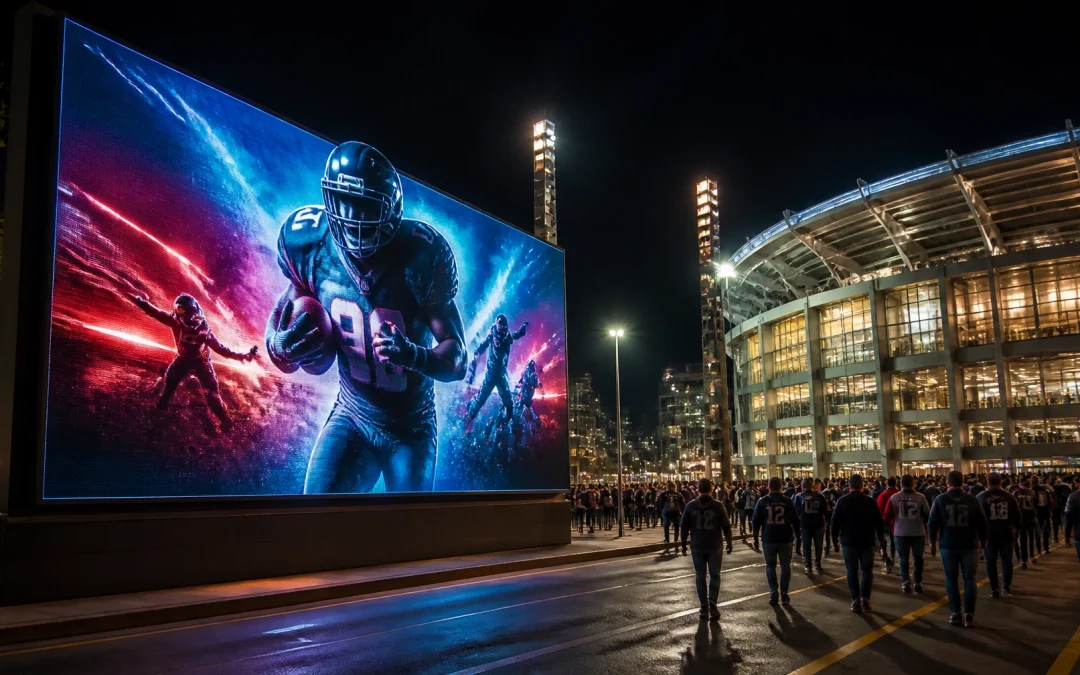
The landscape of sports marketing is undergoing a significant transformation. As fan attention becomes increasingly fragmented across multiple devices, the physical environment surrounding sports venues has emerged as a critical site for high-impact brand storytelling. Digital Out-of-Home (DOOH) advertising is no longer just a backdrop to the game. It is now a dynamic, data-driven channel that bridges the gap between the physical stadium experience and the digital lives of millions of fans.
Modern sports marketing strategies now prioritize precision and context. By leveraging the latest innovations in programmatic DOOH and real-time data integration, brands can engage fans when their emotional investment is at its peak. This shift represents a move away from passive reach toward active relevance, ensuring that every impression contributes to a measurable impact on brand preference and purchase intent.
Strategy: The 10-Mile Digital Perimeter
The core of effective sports DOOH lies in the concept of the digital perimeter. This strategy involves securing all available digital video advertising boards within a 10-mile radius of a sports venue. This approach creates a cohesive brand narrative that follows the fan journey from the moment they leave home until they enter the arena.

Objective & Strategy
The primary objective of a perimeter-based campaign is to dominate the local environment during high-traffic game days. This is achieved through several strategic layers:
- Transit and Hub Targeting: Capturing fans at airports, train stations, and parking structures as they arrive in the host city.
- Social and Retail Proximity: Placing ads in bars, restaurants, and shopping centers where fans gather before and after the event.
- Last-Mile Influence: Using street-level displays and large-format billboards to maintain brand presence as fans approach the stadium gates.
By establishing this 10-mile stadium strategy, brands ensure they are part of the fan experience rather than an external interruption. This proximity-driven relevance is essential for driving last-mile decisions, such as retail visits or mobile app interactions.
Tactics: Real-Time Data and Moment-Based Marketing
Innovation in sports DOOH is defined by the ability to react to live events. Static creative has been replaced by dynamic content that updates based on real-time data feeds. This "moment-based" marketing approach allows brands to align their messaging with the immediate emotional state of the audience.

Dynamic Creative Execution
Successful campaigns utilize various data triggers to keep content fresh and relevant:
- Live Score Updates: Displaying current match scores directly on the DOOH network, positioning the brand as a helpful source of information.
- Emotional Synchronization: Adjusting creative based on game outcomes. For example, a celebratory message can be triggered automatically following a home team victory.
- Countdown Clocks: Building anticipation in the hours leading up to kickoff with real-time countdowns.
- Localized Offers: Triggering specific promotions at nearby quick-service restaurants or retail outlets based on the time of day or match status.
These tactics transform digital billboards into interactive touchpoints. When a fan sees a brand celebrating a last-minute goal alongside them, the connection formed is far more powerful than a standard advertisement. This level of redefining fan engagement is what sets modern DOOH apart from traditional outdoor media.
Technology and Programmatic Precision
The rapid evolution of sports DOOH is supported by sophisticated technology platforms. Programmatic buying has revolutionized how media planners access sports-adjacent inventory. Instead of manual negotiations for individual boards, brands can now use AI-driven platforms to automate the buying process across thousands of screens simultaneously.

Technology Partners
Collaboration with specialized technology partners allows for a level of granular targeting that was previously impossible. Key technological advantages include:
- AI-Enabled Planning: Artificial intelligence is used to analyze crowd density patterns and historical fan behavior to determine the optimal screens for a campaign.
- Omnichannel Integration: DOOH is treated as the "connective tissue" between various channels. By capturing anonymized device IDs of fans exposed to a billboard, brands can retarget those same individuals with mobile or CTV ads later in the day.
- Creative Elasticity: AI and programmatic tools allow creative assets to be automatically resized and adapted for different screen formats, ensuring a consistent look across the entire network.
This technological backbone ensures that budgets are spent efficiently, targeting fans exactly when and where they are most likely to be receptive to the brand message.
Results: Quantifying Fan Engagement and Brand Impact
The success of sports DOOH is increasingly measured through hard data rather than just estimated impressions. Modern measurement methodologies, including brand lift studies and foot traffic attribution, provide a clear picture of the return on investment.

Quantifiable Outcomes
Research and campaign data from 2026 highlight the significant impact of well-executed sports DOOH strategies:
- Purchase Consideration: Integrated DOOH campaigns have demonstrated the ability to increase purchase consideration by up to 144 percent when combined with other digital channels.
- Brand Connection: Approximately 47 percent of fans report that seeing a brand during a sporting event strengthens their connection to that brand.
- Purchase Probability: Fans who are exposed to consistent branding across multiple platforms (DOOH, mobile, CTV) are 49 percent more likely to complete a purchase.
- Foot Traffic Lift: Brands using perimeter-based DOOH often see a double-digit percentage increase in visits to nearby retail locations on match days compared to non-game days.
These results indicate that sports DOOH is a performance-driven channel. It is capable of moving the needle on critical KPIs, from top-of-funnel awareness to bottom-of-funnel conversions. By focusing on the emotional intensity and high attention levels of the sports environment, brands can achieve a level of impact that is difficult to replicate in any other medium.
Conclusion
The new playbook for sports marketing is built on the foundations of innovation, data, and emotional resonance. As the industry moves forward, the integration of DOOH into the broader marketing mix will only deepen. The ability to surround stadiums with a digital perimeter and engage fans through real-time, context-aware content has redefined what it means to be a sponsor. For media buyers and brand managers, the opportunity lies in embracing these new technologies to create memorable, impactful experiences that resonate long after the final whistle has blown.
Engagement Prompts:
- How is your brand currently integrating real-time data into your out-of-home advertising strategy?
- What are the biggest challenges you face when trying to connect with fans in the high-energy environment of a live sports event?
Ready to dominate the stadium perimeter?
OOH Sports provides unparalleled access to the digital out-of-home sports network, offering a 10-mile digital perimeter around every major sports venue in America. Our programmatic solutions and real-time data integration ensure your brand is seen by the fans who matter most.
- Website: www.oohsports.com
- AI Receptionist: +1 (970) 703-0102
- Contact: Dan Kost, CEO