
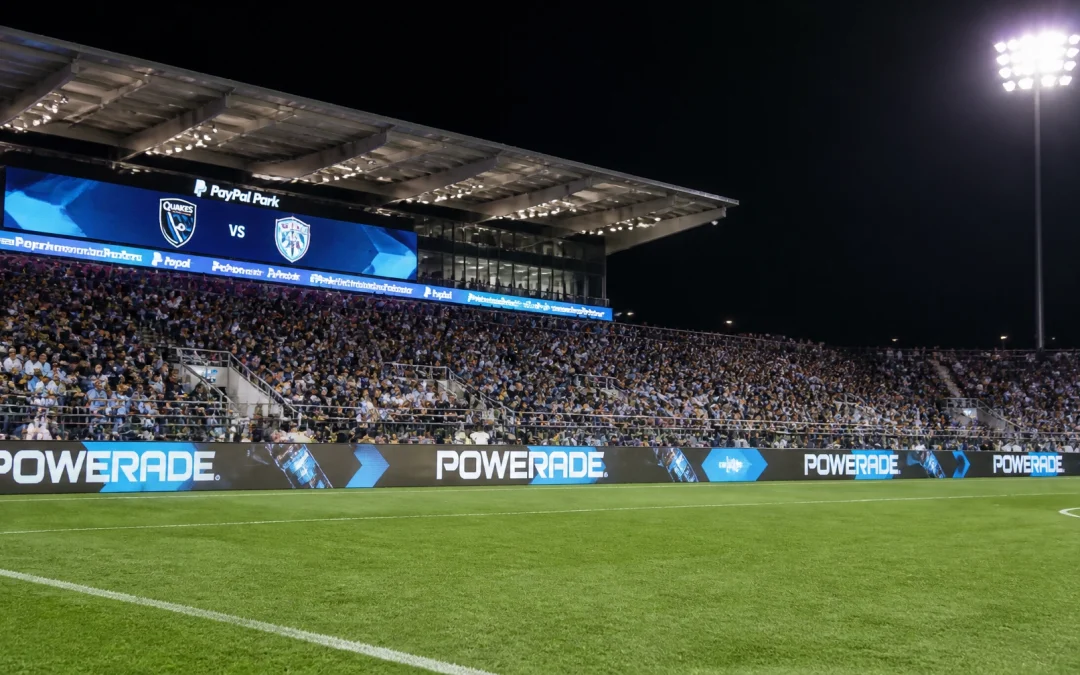
The landscape of sports marketing is undergoing a fundamental transformation. Traditional static billboards and fixed stadium signage are rapidly giving way to dynamic, data-driven digital out of home (DOOH) networks. For media buyers, brand managers, and chief marketing officers, understanding these shifts is essential for capturing modern audiences. As technology converges with live sports, DOOH has emerged as a premier channel for driving brand awareness, consumer trust, and active participation.
The Evolution from Static Signage to Real-Time Context
Historically, sports branding relied on static displays that remained unchanged throughout an entire season. Today, digital technology allows marketers to deploy real-time, trigger-based content that responds directly to live events, environmental conditions, and audience demographics.
- Contextual Relevance: Screens update instantly with live scores, social media reactions, and local weather updates to maintain relevance.
- Moment Marketing: Campaigns react instantly to in-game milestones, such as goals, overtime periods, or rivalry wins.
- Audience Adaptation: Advanced systems automatically adjust creative copy and imagery based on the immediate demographic profile of viewers near a screen.
This shift elevates outdoor advertising from passive background decoration to an active narrative participant. By aligning brand messaging with the exact emotional state of spectators, advertisers achieve significantly higher attention rates and deeper emotional resonance. Detailed insights on this evolution can be found in our overview of sports DOOH innovation.

Programmatic DOOH and Precision Targeting
The integration of programmatic buying into out of home advertising represents a major milestone for media planning. Programmatic DOOH (prDOOH) enables advertisers to secure screen inventory with the same data-driven precision used in digital display or connected TV (CTV) campaigns.
Rather than committing to rigid seasonal contracts, brands can execute flexible campaigns driven by specific parameters:
- Audience Data: Targeting specific consumer segments based on mobility patterns and purchasing behaviors.
- Temporal Triggers: Activating inventory during peak windows such as pre-game arrivals, halftime intervals, or post-match celebrations.
- Geographic Precision: Focusing media spend on stadium perimeter advertising zones and surrounding transit hubs.
This flexibility allows brands to coordinate multi-channel strategies seamlessly. When integrated with mobile apps, social media, and broadcast media, programmatic DOOH reinforces campaign touchpoints across the entire consumer journey. For strategic frameworks on media purchasing, review our guide on mastering sports media buying.
AI, Automation, and Creative Optimization
Artificial intelligence is accelerating the shift toward automated, hyper-targeted sports advertising. Predictive AI models anticipate fan movements, stadium arrivals, and betting spikes, enabling automated DOOH systems to deliver tailored messages at precisely the right moments.
Dynamic creative optimization (DCO) allows campaigns to test and refine variations of messaging in real time. Instead of running a single static creative, brands can deploy localized offers, team-specific graphics, or timely promotional prompts across thousands of screens simultaneously. This level of automation reduces manual overhead while maximizing campaign relevance across diverse markets.

Measurement, Attribution, and Verified Impact
One of the historical challenges of out of home advertising was quantifying direct return on investment. Modern DOOH technology solves this by integrating robust attribution models that connect ad exposure to tangible consumer actions.
Industry studies underscore the effectiveness of this medium:
- Research from the Out of Home Advertising Association of America (OAAA) and The Harris Poll indicates that nearly 60 percent of United States adults recalled seeing an out of home advertisement for a major sporting event.
- Of those who recalled the ads, 90 percent took a subsequent action, such as watching the broadcast, discussing the event, or visiting a related digital platform.
- Kantar research demonstrates that out of home advertising can drive a 13 percent increase in ad awareness compared to other traditional media channels.
- Consumer trust remains high, with nearly half of surveyed audiences viewing digital outdoor advertising as more trustworthy than social media channels.
By utilizing device ID tracking, footfall attribution, and online search correlation, advertisers can measure top-of-mind awareness and direct conversion metrics with high statistical confidence.
Enhancing Fan Engagement in Urban Ecosystems
Sports fandom extends far beyond the stadium walls. Modern DOOH networks capture fans throughout the entire urban ecosystem, covering sports bars, transit stations, and city center fan zones before and after events.
- Immersive Experiences: Interactive formats invite fans to participate via QR codes, live leaderboards, and social media integrations.
- Expanded Access: Non-endemic brands and local businesses can leverage programmatic networks to participate in major sporting events without securing expensive official sponsorships.
- Economic Impact: Studies show that a vast majority of fans exposed to sports out of home advertising spend money locally within the host city, driving regional economic activity.
Additional strategies for maximizing audience interaction through physical media placements are detailed in our analysis of stadium perimeter advertising.

Strategic Takeaways for Advertisers
To capitalize on the future of sports advertising, marketing leaders must adopt a forward-thinking approach to DOOH integration. Key execution steps include:
- Embrace Programmatic Workflows: Shift portions of media budgets to programmatic DOOH platforms to enable real-time optimization and flexible pacing.
- Prioritize Contextual Relevance: Design creative assets that respond dynamically to live data feeds, weather conditions, and game milestones.
- Expand Geographic Footprint: Combine in-venue screens with high-traffic perimeter zones and urban transit hubs to capture the complete fan journey.
- Implement Rigorous Attribution: Utilize modern measurement tools to link physical ad exposure directly to digital engagement and sales conversions.
As sports media continues to evolve, digital out of home advertising offers an unmatched combination of massive visual scale and surgical geographic precision. Brands that harness these trends will secure a lasting competitive advantage in connecting with passionate sports audiences worldwide.