
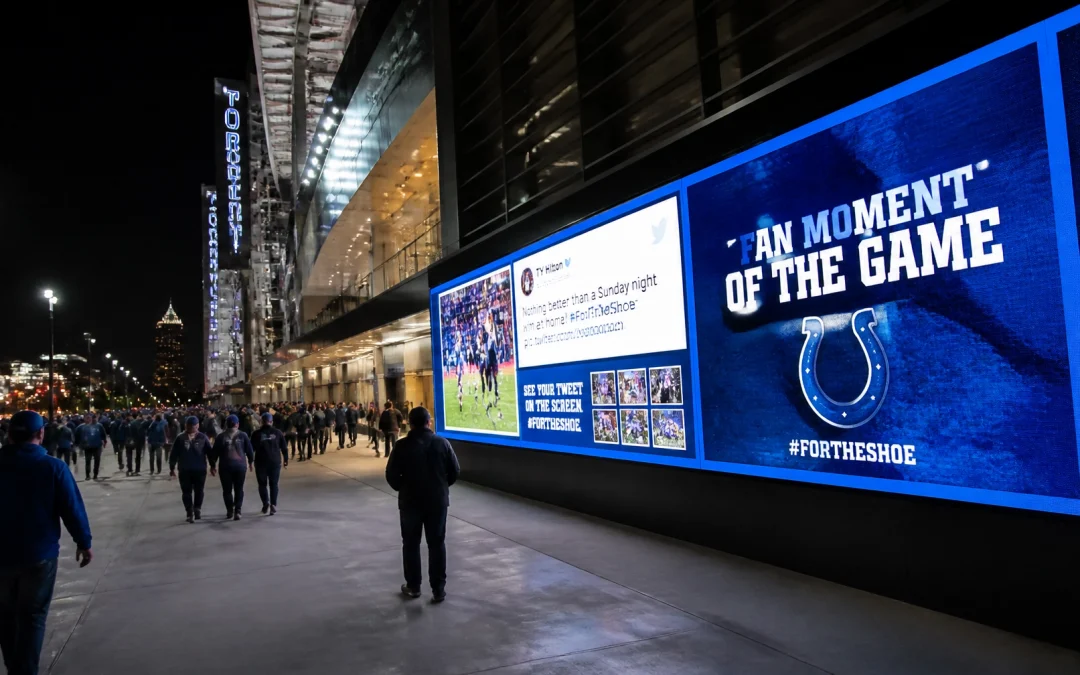
The landscape of sports marketing is undergoing a fundamental transformation. Traditional static billboards and standard sponsorship packages no longer suffice for brands seeking meaningful connections with modern audiences. Instead, OOH Sports highlights how Digital Out-of-Home (DOOH) innovation is rewriting the playbook. By merging real-time data with high-impact visual displays, brands can now turn game day into a powerful catalyst for fan engagement, deep branding, and measurable commercial success.
This guide explores the strategies, tactical executions, and technological frameworks that define modern sports DOOH campaigns. Through advanced programmatic buying and targeted stadium perimeter advertising, brands can capture peak emotional moments and drive long-term value. For more background on company initiatives, visit the about page or review recent industry benchmarks in the case study section.
Objective and Strategy: Mapping the Fan Journey
Successful sports campaigns rely on precise audience targeting and strategic geographic placement. Rather than casting a wide, untargeted net, modern media buyers focus on the entire fan journey. This journey spans three distinct phases: arrival, participation, and aftermath.
- Arrival Phase (Pre-Game Hype): Fans travel from residential areas through transit hubs and city centers toward the stadium. Campaigns utilize high-impact DOOH screens in metro stations and major thoroughfares to build anticipation.
- Participation Phase (Stadium Perimeter): As crowds gather within a ten-mile radius of the arena, attention shifts directly to stadium perimeter advertising and local fan zones. This environment achieves exceptional ad recall because audiences are in an elevated state of excitement.
- Aftermath Phase (Post-Game Reflection): Following the final whistle, screens near hospitality venues and transit corridors pivot in real time to deliver outcome-based messaging, capturing immediate consumer intent.
By aligning creative assets with each phase of the fan journey, brands ensure continuous relevance without fatiguing the audience.
Technology Partners and Programmatic DOOH Mechanics

Executing large-scale sports campaigns requires robust technology partners and sophisticated programmatic execution. Programmatic DOOH (pDOOH) empowers media buyers to automate screen purchases, optimize budgets, and adjust messaging dynamically.
- Audience Segmentation: Campaigns differentiate between season ticket holders, visiting supporters, and casual viewers through mobile location data and audience graphs.
- Dynamic Triggers: Software integrations allow creatives to update automatically based on weather conditions, time of day, ticket sales milestones, or live match statistics.
- Flexible Scaling: Media planners can lock in premium inventory months in advance while retaining the agility to scale impressions up or down as tournaments or playoff races unfold.
This technical infrastructure removes manual inefficiencies, allowing brand managers to deploy targeted campaigns across thousands of screens simultaneously.
Driving Fan Engagement Through Real-Time Data

Static advertisements speak at an audience, whereas innovative DOOH frameworks converse with them. Integrating live data feeds into outdoor displays converts passive viewers into active participants.
- Live Stat Integration: Perimeter boards display live scores, win probability metrics, and player milestones alongside contextual brand messaging.
- Interactive Mobile Triggers: QR codes embedded in stadium-adjacent screens invite fans to participate in digital quizzes, vote for the player of the match, or unlock exclusive augmented reality filters.
- Social Amplification: User-generated content and hashtag feeds from stadium attendees appear on surrounding outdoor networks, creating a cohesive bridge between physical and digital worlds.
These mechanisms elevate standard branding into memorable experiences. When advertisements mirror the drama on the field, brand affinity rises significantly.
Amplifying Branding and Measurable Results

Accountability remains a top priority for chief marketing officers and media buyers. Modern sports DOOH delivers quantifiable metrics that justify advertising expenditures and prove return on investment.
- Ad Recall and Awareness: Industry studies consistently demonstrate that sports-venue DOOH achieves ad recall rates approaching 86 percent, alongside fifteen to twenty-five percent lifts in aided brand awareness.
- Attribution and Footfall: By tracking device IDs exposed to stadium perimeter advertising, analysts measure subsequent footfall into nearby retail locations, bars, and official team stores.
- Omnichannel Retargeting: Consumers exposed to physical game-day DOOH are subsequently retargeted across connected television (CTV), digital audio, and social channels to close the conversion loop.
These measurement methodologies provide clear visibility into campaign performance, shifting outdoor advertising from a traditional top-of-funnel guess into a precision-targeted growth channel.
Conclusion
Sports DOOH innovation represents a permanent shift in how brands engage with passionate sports audiences. By combining programmatic flexibility, real-time data feeds, and strategic stadium perimeter placement, media buyers can transcend ordinary advertising limitations. As the ecosystem continues to evolve, brands that embrace this data-driven playbook will secure a decisive competitive advantage, turning every game day into their most successful win.