
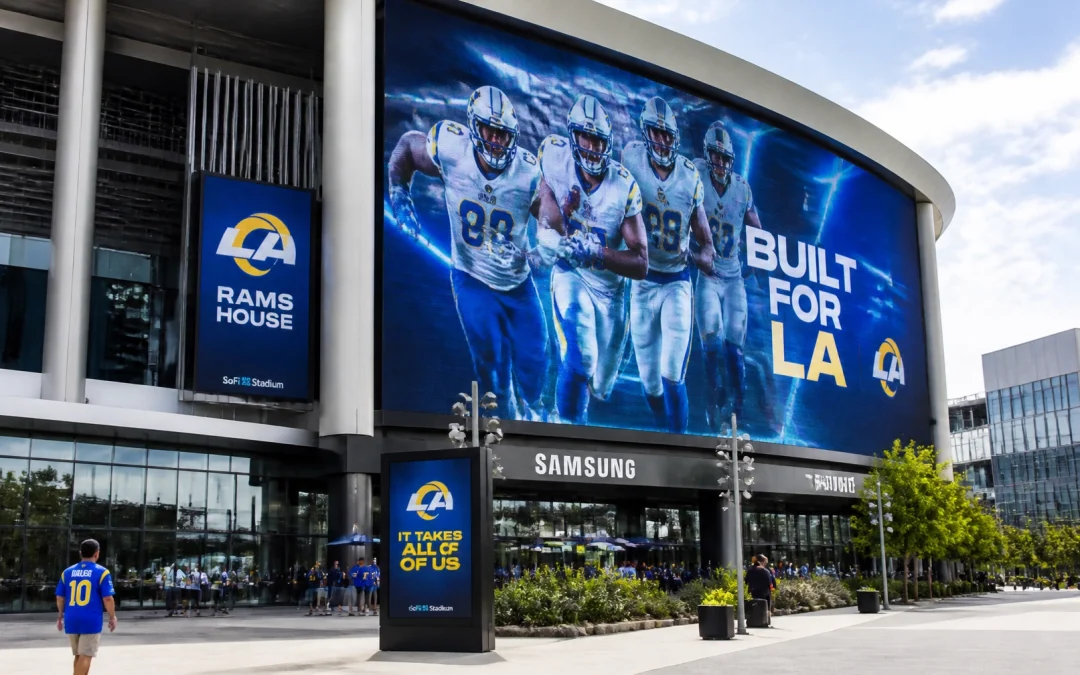
Digital out-of-home advertising has transformed from a traditional awareness medium into a sophisticated, data-driven channel. Within the sports industry, digital out-of-home, or DOOH, represents a major shift in how brands reach consumers. By combining the scale of physical outdoor media with the precision of programmatic buying, sports marketers can now engage fans in real time across arenas, transit networks, and urban corridors.
This evolution opens new avenues for brand managers and media buyers seeking high-impact environments. Through OOH Sports, campaigns integrate seamlessly into the physical fan journey, maximizing visibility before, during, and after major sporting events.
Objective and Strategy
The primary objective of modern sports DOOH campaigns is to capture peak fan emotion and translate it into measurable brand preference. Traditional static billboards are increasingly replaced by dynamic networks capable of adapting to context, location, and schedule.
Strategic execution relies on a multi-layered approach:
- Proximity Targeting: Deploying creative within a defined perimeter around sports venues, capturing audiences arriving at or departing from games.
- Audience Segmentation: Aligning media placements with specific demographic and behavioral cohorts, such as commuters, sports bettors, and club members.
- Contextual Alignment: Synchronizing campaign messaging with live game schedules, weather conditions, and key tournament milestones.
By mapping the physical journey of the fan, brands establish continuous touchpoints that extend far beyond the stadium seating bowl. This methodology ensures that marketing investments reach consumers at moments of heightened excitement and receptivity.

Technology and Programmatic Capabilities
The growth of programmatic DOOH has revolutionized media planning and execution. Programmatic platforms allow advertisers to automate inventory purchasing and activate screens based on real-time triggers.
Key technological pillars driving this sector include:
- Demand-Side Platforms (DSPs): Enabling media buyers to manage multi-market screen networks through unified interfaces.
- Automated Triggers: Utilizing live data feeds to update ad delivery based on scores, odds shifts, or time-of-day parameters.
- Flexible Scheduling: Reserving premium placements in advance for major fixtures while retaining the agility to adjust budgets dynamically.
These capabilities reduce operational friction and provide precise control over ad delivery. Advertisers can scale campaigns across thousands of screens nationwide without manual intervention, ensuring optimal efficiency for every dollar spent.
Dynamic Creative Optimization in Action
Delivering static messages during fast-moving sports events limits engagement. Modern campaigns utilize dynamic creative optimization, known as DCO, to serve contextually relevant content that evolves alongside the game.
Practical applications of DCO include:
- Live Score Integration: Displaying real-time updates and team statistics on urban screens to maintain relevance.
- Conditional Messaging: Automatically shifting ad copy depending on whether a team is leading, trailing, or entering overtime.
- Sponsor Activations: Highlighting exclusive merchandise offers or digital sign-up bonuses immediately following key match events.
This responsiveness transforms standard displays into interactive elements of the urban landscape. Fans experience advertising that mirrors the excitement and unpredictability of the sport itself, fostering deeper emotional connections with sponsoring brands. Additional insights on these tactics are regularly explored on the OOH Sports Blog.

Results and Impact Measurement
Quantifying the effectiveness of outdoor advertising has historically presented challenges. However, modern sports DOOH integrates advanced attribution methodologies to prove return on investment.
Industry data and attribution studies consistently highlight strong performance metrics:
- Brand Lift: Campaigns executed through programmatic sports networks frequently generate double-digit percentage increases in purchase consideration and positive brand perception.
- Audience Receptivity: Consumer studies indicate that over seventy percent of audiences view digital outdoor ads favorably, particularly when tied to live entertainment and sports.
- Omnichannel Synergy: Combining physical DOOH exposure with digital retargeting across connected TV and mobile devices strengthens overall campaign recall and conversion rates.
As documented in various Case Studies, brands leveraging precise perimeter strategies and real-time triggers achieve superior engagement compared to traditional broadcast-only efforts. Measuring device IDs exposed near venues allows marketers to analyze subsequent online behaviors and store visits with high accuracy.

Conclusion
Sports DOOH innovation bridges the gap between physical environments and digital precision. By leveraging programmatic workflows, dynamic creative optimization, and strategic proximity targeting, brand managers can cut through market noise and engage sports fans where their passions run highest.
As media buyers continue to seek efficient alternatives to fragmenting traditional channels, digital out-of-home remains a cornerstone of modern sports marketing. Embracing these advanced methodologies ensures that brand messages are not only seen, but remembered and acted upon long after the final whistle.