
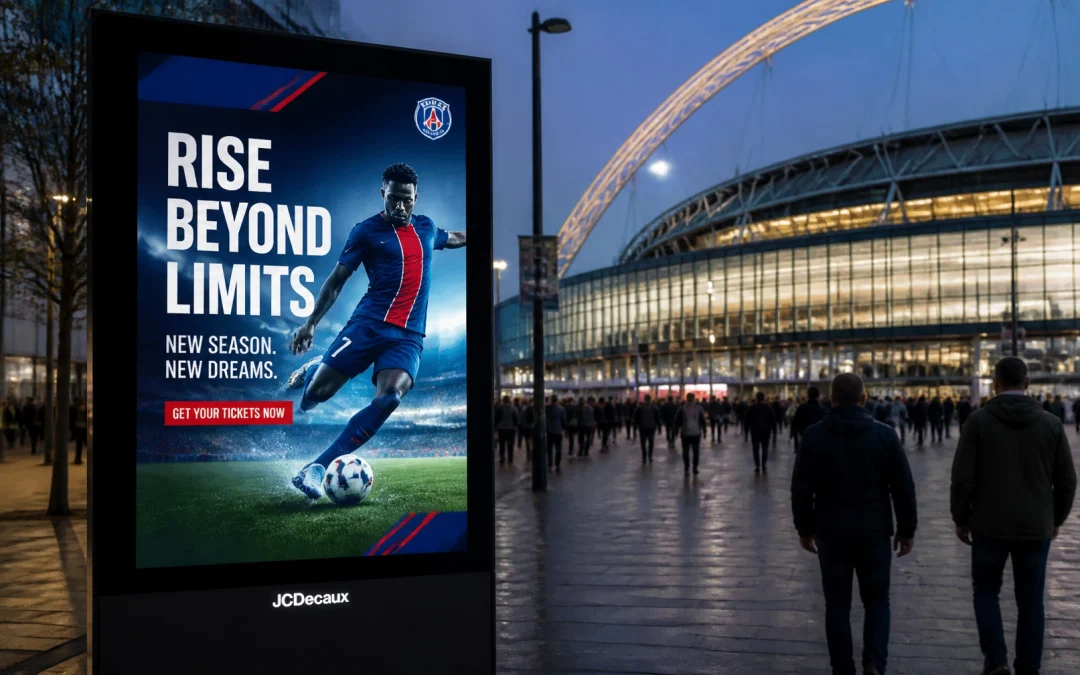
Welcome back to the OOH Sports newsletter, a practical roundup for subscribers, media buyers, brand marketers, agency teams, and partners tracking what matters in sports-focused DOOH.
This edition looks at where momentum is building right now and how advertisers can turn that momentum into smarter campaign planning. The focus is not just on new tools, but on how those tools can improve timing, targeting, creative relevance, and fan engagement across the sports environment.
Programmatic DOOH Is Reshaping Sports Media Planning
Programmatic DOOH continues to move sports advertising toward more flexible, audience-led execution. Instead of locking campaigns into fixed placements far in advance, buyers can increasingly activate inventory based on audience movement, venue schedules, time of day, and contextual signals.

Why this matters in sports:
- Fan traffic is concentrated, but not static.
- Audience density changes before, during, and after games.
- Different screens can serve different roles across the same campaign.
Helpful takeaway:
- Build media plans that separate pre-arrival, in-district, and post-event messaging. Programmatic DOOH works best when each phase has its own objective.
The 10-Mile Stadium Perimeter Strategy Is Still Undervalued
One of the most useful planning frameworks in sports DOOH remains the 10-mile radius around the venue. This perimeter captures more of the fan journey than in-venue media alone and opens up valuable reach across surrounding districts.

A strong perimeter strategy can include:
- Transit corridors used on the way to the venue
- Entertainment districts where fans gather before and after the event
- Retail and dining zones with high dwell time
- Key commuter routes within the venue trade area
Why it works:
- It extends campaign visibility beyond the game window.
- It creates multiple touchpoints across the same audience journey.
- It supports sequential messaging instead of relying on a single exposure.
Helpful takeaway:
- Audit venue-area inventory by fan behavior, not just by map location. The best screens are often the ones that match dwell time, crowd buildup, and repeat exposure.
Dynamic Creative Optimization Is Becoming More Practical
Dynamic creative optimization, or DCO, is increasingly relevant in DOOH sports campaigns because it helps one campaign produce many context-aware versions of the same message.
In practice, that can mean creative that changes based on:
- Team matchup
- Venue location
- Weather
- Time of day
- Audience segment
- Event phase, such as pre-game or post-game
This makes campaigns more useful to the audience and more efficient for the advertiser. Instead of producing unrelated assets for every screen or situation, creative teams can build flexible templates that update automatically.
Helpful takeaway:
- Start with a modular creative system. Keep the core visual identity consistent, then vary headline, offer, CTA, or background element based on context.
Real-Time Score-Triggered Ads Are a Strong Fit for Live Sports
Few environments are better suited to real-time creative than sports. Score-triggered ads allow brands to align with the pace and emotion of the game in a way that feels timely rather than interruptive.
Common examples include:
- Creative that updates when the home team scores
- Promotions that trigger after a lead change
- Messaging tied to halftime, overtime, or final results
- Sponsor creative linked to player milestones or game stats
This kind of execution works because fans are already tuned into the moment. A relevant message shown at the right time can feel like part of the live environment rather than background media.
Helpful takeaway:
- Keep score-triggered creative simple. The most effective executions usually rely on one live trigger, one concise message, and one clear brand cue.
Interactive Fan Engagement Is Expanding Beyond the Screen
DOOH in sports is also becoming more participatory. QR codes and WebAR are giving brands more ways to turn passive exposure into active engagement, especially in high-energy fan zones.

Strong use cases include:
- QR codes that unlock contest entries, offers, or exclusive content
- WebAR activations tied to team moments or brand experiences
- Mobile landing pages that extend a DOOH message into a measurable next step
- Fan-vote experiences tied to predictions, MVP picks, or giveaways
The key is utility. Fans are more likely to engage when the interaction is fast, obvious, and worth the effort.
Helpful takeaway:
- If using QR codes, make the value exchange immediate. Fans should know exactly what they get before they scan.
Mobile DOOH Wearables Are Adding Another Layer of Flexibility
Mobile DOOH wearables are gaining attention as brands look for ways to bring digital messaging closer to fan movement. In sports districts, these formats can help bridge fixed-screen media with on-the-ground visibility.
Potential advantages include:
- High visibility in crowded pedestrian areas
- Flexible deployment near entrances, tailgates, and sponsor activations
- Useful support for product launches, street teams, and short-term bursts
- Strong complement to fixed digital screens in the same perimeter plan
These formats are not a replacement for larger-screen DOOH, but they can be effective as a supporting layer, particularly when the goal is proximity, mobility, and repetition.
Helpful takeaway:
- Use mobile DOOH wearables as part of a coordinated plan, not a standalone tactic. They work best when the message matches nearby fixed screens or mobile follow-up.
Actionable Takeaways for Subscribers and Partners
For teams planning upcoming sports campaigns, the most practical next steps are clear:
- Use programmatic DOOH to add flexibility. Align screen activations with crowd movement, scheduling shifts, and event timing.
- Plan around the 10-mile perimeter. Treat the venue district as a full audience ecosystem, not a single destination.
- Build DCO-ready creative. Develop templates that can adapt by audience, timing, score state, or venue context.
- Test score-triggered messaging. Start with one live condition and measure whether contextual timing improves engagement or recall.
- Add interactive elements carefully. QR codes and WebAR should support a simple fan action, not add friction.
- Evaluate mobile DOOH wearables as a support format. Use them where foot traffic, dwell time, and event energy are strongest.
Until the Next Edition
Sports DOOH continues to reward advertisers that combine timing, context, and useful creative. The brands seeing the most value are not necessarily doing the most complicated work. They are building campaigns that fit how fans actually move, watch, and engage around live events.
If there is a topic readers and partners would like covered in a future edition, such as measurement, attribution, creative best practices, venue planning, or programmatic activation strategies, send it in. What would be most helpful to explore next?