
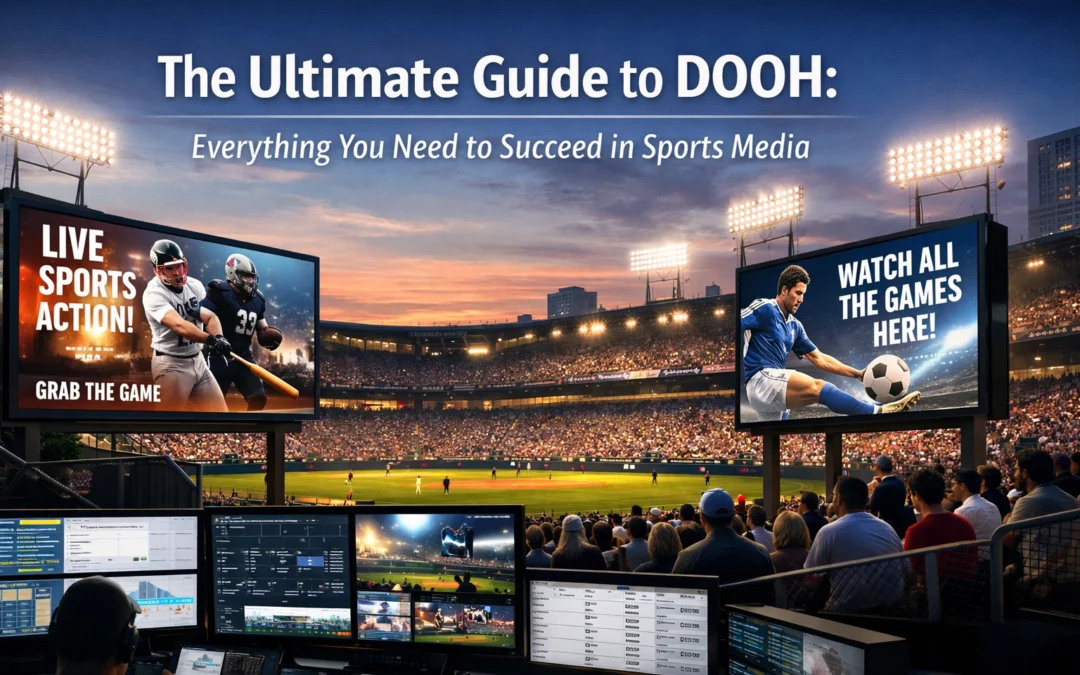

Digital Out-of-Home (DOOH) advertising has evolved far beyond the simple digital billboard by the highway. In the high stakes world of sports media, it has become the connective tissue that links a brand to a fan's daily life. Whether a fan is commuting to work, grabbing a drink before the game, or walking toward the stadium gates, DOOH ensures your message is part of their excitement.
At OOH Sports, we see a massive shift in how brands approach the "big game." It is no longer just about the 30-second TV spot or the static banner inside the arena. It is about capturing the 99% of fan attention that exists outside the stadium walls. This guide breaks down how to navigate this landscape, leverage the latest technology, and drive real-world results that go beyond simple impressions.
Why DOOH is the MVP of Sports Marketing
Sports fans are a unique audience. They are mobile, emotionally invested, and highly receptive to brands that support their favorite teams. Research shows that 81% of fans feel more positive toward sports sponsoring brands. Even more impressive is that over 40% of consumers discuss sporting events with friends or family after seeing an out-of-home ad.
Traditional stadium sponsorships often come with a heavy price tag and limited inventory. However, the rise of 25,000 digital screens is changing sports marketing by allowing brands to scale their presence for significantly less investment. By using DOOH, you are not just buying a screen. You are buying a moment in a fan's routine.
The Three-Moment Framework for Fan Engagement
To succeed in sports media, your campaign needs to be as dynamic as the game itself. We recommend a three-phase approach that follows the fan journey.
1. The Pre-Game Build-Up
The 48 hours before kickoff are critical. This is when fans are planning their logistics, checking betting lines, and building anticipation. During this phase, screens in transit hubs, office districts, and retail centers are your best assets.
Brands can use these screens to deliver practical value. Think broadcast schedules, countdown clocks, or real-time betting odds. In fact, many successful brands now launch real-time sports betting DOOH campaigns that convert in under 24 hours by tapping into this pre-game excitement.
2. During the Game: Peak Emotion
When the whistle blows, attention shifts toward the venue and entertainment districts. This is the window of highest emotional intensity. While competition for inventory is high, the impact is unparalleled.
Successful campaigns during this window use "stadium perimeter targeting." This involves activating screens in a tight radius around the arena or in popular sports bars where fans gather to watch. This ensures your brand is part of the collective experience as it happens.

3. Post-Game: The Dispersal
The post-game window is often overlooked, but it is a goldmine for engagement. As fans leave the stadium or the bar, they move through commuter corridors and transit hubs. This is the perfect time to refresh your messaging. If the home team won, your creative should celebrate with them. If they lost, your message can offer a "consolation" retail offer or a reason to look forward to the next game.
Strategy and Omnichannel Integration
The most effective DOOH campaigns do not exist in a vacuum. They are part of a broader omnichannel strategy. When a fan sees a short version of a TV ad on a digital urban panel during their commute, it reinforces the memory of the larger campaign. This is known as the "priming effect."
To maximize this, you should consider:
- Streaming Alignment: Modern fans watch games on mobile devices and connected TVs simultaneously. Coordinating your DOOH messaging with these streaming schedules creates a unified brand voice across all screens.
- Dynamic Creative Optimization (DCO): This technology allows your ads to change based on external triggers. For example, a beverage brand might trigger a "cold beer" ad when the temperature hits a certain point, or an apparel brand might promote rain gear the moment a storm cloud appears over the stadium.
Data-Driven Targeting and Technology
Gone are the days of "spray and pray" advertising. Modern DOOH is powered by location intelligence and mobility data. We can now understand exactly who is passing a screen, how often they pass it, and what their behavioral patterns are.
By using programmatic DOOH, brands can bid on inventory in real-time, ensuring they only show ads when their target audience is most likely to be present. This level of precision is why 67% of media planners are shifting budgets toward digital out-of-home platforms. It allows for a level of agility that traditional static billboards simply cannot match.

Measuring Success: Moving Beyond Impressions
One of the biggest hurdles in OOH history was measurement. How do you know if the person who saw your ad actually bought your product? Today, AI-powered analytics have solved this problem.
We can now track "exposed device IDs" to see if a person who passed a digital screen later visited a retail location or made a purchase online. This provides a clear picture of ROI. For instance, we have seen campaigns like White Claw's programmatic DOOH drive a 74% lift in purchase consideration. Similarly, Sea-Doo saw a 144% increase in purchase consideration by using geographically targeted screens.
If you are not using these tools, you are leaving money on the table. It is important to stop wasting time on guesswork and start using the data that proves your campaign's success.
Avoiding Common Pitfalls
While the opportunities are vast, there are common mistakes that can derail a sports DOOH campaign.
- Static Creative in a Dynamic World: Using the same creative for the entire season is a missed opportunity. Fans' moods change with every win and loss.
- Poor Timing: If your ad for a specific game is still running three hours after the game ended, it looks out of touch.
- Ignoring the Context: An ad that works in a quiet office lobby might not work on a noisy, crowded subway platform.
By focusing on real-time strategies and geographic targeting, you can avoid these errors and ensure your budget is used effectively.

The Future of Sports Media is Digital and Physical
As we look toward the future, the line between the digital world and the physical world will continue to blur. Smart venues are already integrating DOOH screens with fan mobile apps to create interactive experiences. Brands that embrace this immersion will be the ones that win the loyalty of the next generation of sports fans.
Whether you are a large sponsor looking to protect your investment or a growing brand looking to make a splash, DOOH offers the flexibility and impact you need. It is about being there for the fan, not just during the game, but throughout the entire journey.
Final Tactics for Your Next Campaign
To get started, focus on these actionable steps:
- Identify your key moments: Decide if you want to build anticipation (pre-game), capture peak emotion (during-game), or drive retail traffic (post-game).
- Leverage programmatic buying: Use a DSP to target specific audiences and locations with precision.
- Use dynamic feeds: Integrate live scores or weather data to make your creative more relevant.
- Measure everything: Work with partners who can provide brand lift studies and attribution reports.
The sports marketing landscape is more competitive than ever, but with the right DOOH strategy, your brand can stay ahead of the pack. If you want to dive deeper into specific tactics, check out our insights on how geographically targeted DOOH can boost fan engagement by 90%.
At OOH Sports, we are dedicated to helping you navigate this shift. The game is changing, and it is time for your advertising to change with it. Reach out to see how we can help you scale your sports media presence and connect with fans in a way that truly moves the needle.