
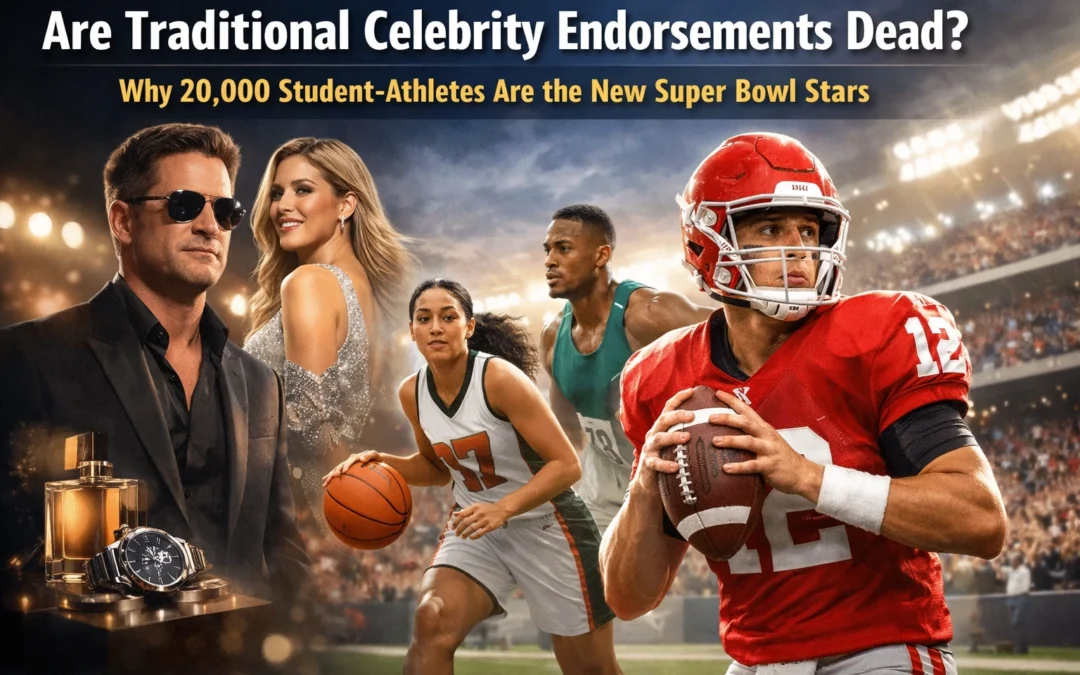
The landscape of sports marketing has shifted. As we look back at the advertising blitz of Super Bowl 2026, one trend stands out more than any other. The era of the singular, high-priced celebrity endorsement is facing a significant challenge. For decades, brands would pour millions into a 30-second spot featuring a Hollywood A-lister or a retired hall-of-famer. However, recent data suggests that the return on investment for these traditional celebrity deals fell by 22 percent in 2025. Today, the real stars of the show are the 20,000 student-athletes who represent the next frontier of authentic connection.
For media buyers, the question is no longer about which celebrity to hire. It is about how to harness the collective power of thousands of authentic voices. At OOH Sports, we have seen this transition firsthand. The move from celebrity-centric campaigns to athlete-driven, programmatic strategies is not just a trend. It is a fundamental change in how consumers, particularly Gen Z, interact with brands.
The Decline of the Traditional Celebrity
Traditional celebrity endorsements contributed only 27 percent of total television ad airings this past year. This is a marked decrease from previous cycles. The reasons are clear. High costs and a lack of perceived authenticity are driving brands toward different solutions. A single celebrity can demand millions for a few hours of work, yet only 23 percent of Gen Z consumers believe these promotions are genuine.
In contrast, 64 percent of that same demographic trusts micro-influencers and student-athletes. These individuals provide a relatable voice and a direct connection to engaged communities. They are not just faces on a screen. They are active members of their campus communities. When a student-athlete shares a product, their followers perceive it as a personal recommendation rather than a paid script. This level of trust is something a traditional celebrity simply cannot replicate at scale.
Why 20,000 Voices Beat One Superstar
The OOH Sports NIL (Name, Image, and Likeness) platform allows brands to connect with over 20,000 student-athletes simultaneously. This scale is what makes the strategy a "Super Bowl star" in its own right. Instead of putting all your eggs in one basket with a single superstar, you distribute your message across thousands of hyper-local influencers.
This strategy offers several logistical advantages:
- Hyper-Local Targeting: You can activate athletes in specific regions, cities, or even around specific campus stadiums.
- Diversity of Content: 20,000 athletes create 20,000 unique pieces of content. This provides a library of authentic material that can be repurposed across various channels.
- Cost Efficiency: Influencers and student-athletes often charge less than a fourth of what a traditional celebrity demands. This allows media buyers to allocate budgets more effectively across multiple creators.
- Agility: Campaigns can be launched and adjusted in real-time. Unlike a high-production TV commercial that takes months to film, NIL content can be produced and distributed in days.
To see how this level of engagement looks in action, watch this overview of our sports marketing approach:
https://www.youtube.com/watch?v=l6J-0zileKE
Integrating NIL with Programmatic DOOH
The real magic happens when you combine these 20,000 voices with Digital Out of Home (DOOH) advertising. At OOH Sports, we specialize in bridging the gap between social influence and the physical world. Imagine a fan walking toward a stadium on game day. They see a social post from their favorite local quarterback, and then they see that same athlete on a digital billboard right outside the stadium gates.
This omnichannel approach creates a seamless brand experience. We have seen this work effectively for major brands. For example, White Claw used programmatic DOOH to drive a 74 percent lift in purchase consideration for their vodka launch. By using real-time data and targeted placements, they reached consumers at the precise moment they were making purchasing decisions.

Strategy and Execution: The OOH Sports Methodology
When planning a Super Bowl or major sporting event campaign, we follow a strict strategic framework to ensure maximum ROI. The goal is to move beyond simple "brand awareness" and focus on measurable outcomes like purchase consideration and brand lift.
Objective and Strategy
The primary objective is to saturate the environment around the sporting event with authentic athlete voices. We do not just buy billboards. We buy moments. By using the ultimate guide to sports DOOH, we map out the consumer journey from the parking lot to the stadium seat.
Technology Partners and Measurement
We utilize advanced platforms like the StackAdapt DSP to drive programmatic adoption. This allows us to target specific audience segments based on real-world behavior. We track device IDs exposed to our ads and use retargeting to continue the conversation on social media.
Measurement is handled through AI-powered analytics. We move away from guesswork and focus on 7 AI-powered DOOH analytics that prove campaign success. This includes foot traffic studies, brand lift surveys, and conversion tracking.
Quantifiable Results in Sports Marketing
The results of shifting to an athlete-led, programmatic approach are significant. We have seen historical success with various brands in the sports space:
- AB InBev’s Mike’s Hard Iced Tea: This campaign saw a 119 percent lift in positive brand image using programmatic DOOH.
- Sea-Doo: Their first digital OOH campaign increased purchase consideration by 144 percent.
- Nike: Even without being an official sponsor, Nike dominated the conversation during the NYC Marathon by using clever ambush marketing tactics powered by DOOH.
These numbers prove that you do not need to spend $7 million on a single 30-second spot to make an impact. You can achieve better results by being smarter with your spend and leveraging the voices that fans actually trust.

Future Outlook: The $50 Billion Shift
By 2030, DOOH sports advertising is projected to hit $50 billion. This growth is driven by the shift from traditional stadium sponsorships to more flexible, digital alternatives. Over 67 percent of media planners are expected to shift their budgets by 2026 to account for these new technologies.
The decline of the traditional stadium ad is well-documented. Static signs are being replaced by over 25,000 digital screens that can change creative in an instant based on the score of the game or the weather outside. This flexibility is essential for modern marketers who need to be "always on" and relevant.
Tips for Media Buyers for the Next Big Game
If you are looking to capture your share of the sports market, keep these strategies in mind:
- Prioritize Fan-Centric Content: Move away from brand-centric messages. Focus on what the fans care about. A fan-centric campaign consistently delivers better ROI.
- Utilize Real-Time Triggers: In sports betting, for example, you can launch real-time campaigns that convert in under 24 hours based on live odds.
- Avoid Common Pitfalls: Don't waste your budget on guesswork. Learn from the 7 mistakes you are making with sports DOOH and focus on stadium perimeter targeting instead.

Conclusion
The Super Bowl will always be a massive platform for brands. However, the definition of a "star" has changed. In 2026, the 20,000 student-athletes on the OOH Sports platform are providing more value, more trust, and better ROI than the traditional celebrity ever could. By combining the power of NIL with the precision of programmatic DOOH, media buyers can create campaigns that are not only seen but believed.
The era of the $7 million gamble on a single face is ending. The era of 20,000 authentic voices is just beginning. For more information on how to navigate this changing landscape, visit our sitemap to explore our full range of sports marketing resources. At OOH Sports, we are ready to help you win the next big game.