
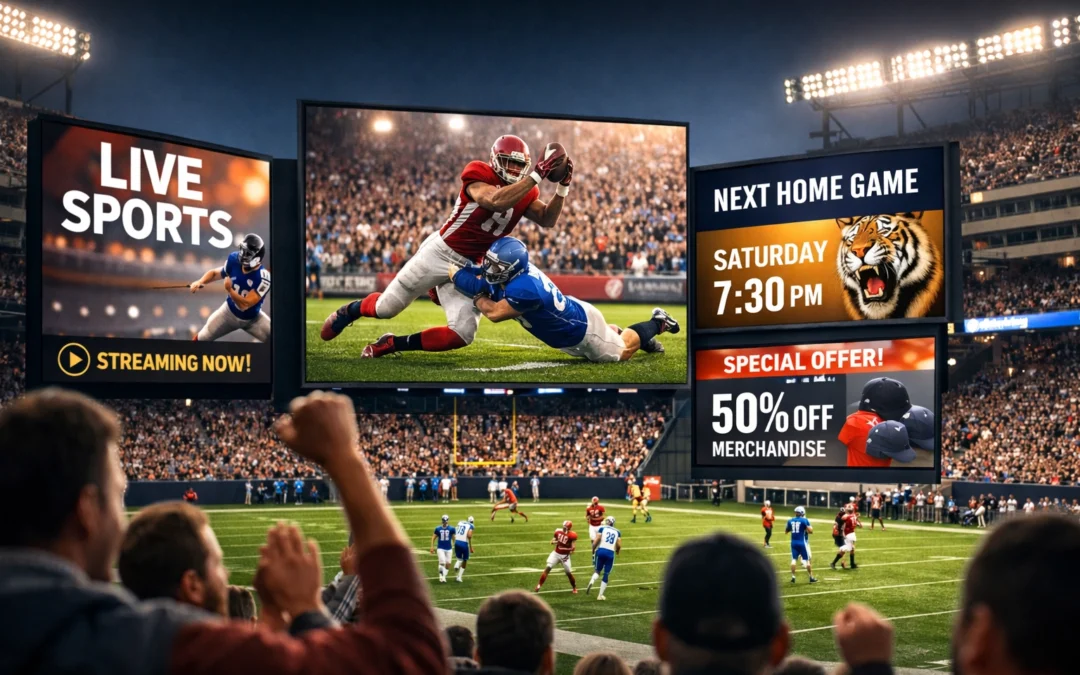
Live sports represent one of the few remaining environments where audiences are truly captive and emotionally invested in real time. For media buyers and brand managers, this high stakes environment offers a unique opportunity to connect with consumers. However, traditional stadium sponsorships often come with high price tags and static messaging that cannot adapt to the flow of a game.
The integration of Digital Out of Home (DOOH) innovation is changing how brands approach sports marketing. By moving beyond static signs and embracing a data driven, omnichannel strategy, marketers can reach fans at every stage of their journey. This shift is significant as the market continues to expand. Industry projections suggest that DOOH sports advertising will hit $50 billion by 2030, making it essential for brands to understand how to capture their share of this growing pie.
Building an Omnichannel Ecosystem
Successful sports marketing is no longer about a single touchpoint. It requires an ecosystem that connects digital screens with other media channels to create a unified experience. This full-funnel approach ensures that a brand stays top of mind before, during, and after the whistle blows.
The strategy begins with upper-funnel awareness. Marketers often use connected TV (CTV) or social media to build anticipation before a major sporting event. When fans leave their homes and head toward the stadium or a sports bar, DOOH takes over. Digital billboards along transit routes and screens in high traffic areas reinforce the message when excitement is at its peak.
The final piece of the ecosystem is retargeting. By capturing anonymized device IDs of fans exposed to DOOH ads, brands can deliver follow-up messages via mobile display or digital audio. This ensures the conversation continues long after the fans have left the venue. Integrating these channels through a specialized platform, such as the StackAdapt DSP, allows for seamless execution and better frequency control across the entire campaign.

Strategic Placement Across the Fan Journey
To maximize impact, DOOH placements must be timed and located according to fan behavior. The journey is divided into three distinct phases: pre-game, during the game, and post-game.
Pre-Game Excitement
In the hours leading up to a matchup, fans are in a high state of anticipation. Digital screens at airports, train stations, and along major highways are ideal for capturing this energy. Brands can use these placements to build excitement or direct fans to nearby retail locations for last minute purchases.
During the Game
When the game is underway, the focus shifts to environments where fans gather. This includes screens inside stadium concourses, parking areas, and elevators. However, the reach extends far beyond the stadium walls. Sports bars and restaurants are critical touchpoints where fans remain highly engaged for several hours. Choosing between sports bars and stadium gates depends on the specific campaign goals, but both offer high dwell times and an emotionally charged atmosphere.

Post-Game Reinforcement
The period immediately following a game is a prime window for conversion. Whether a fan is celebrating a win or commiserating a loss, they are likely headed to a restaurant or looking for a way to extend the experience. DOOH screens can be updated in real time to offer congratulatory messages or limited time promotions that capitalize on the game's outcome.
Leveraging Real-Time Dynamic Content
One of the most powerful innovations in DOOH is the ability to use dynamic creative triggers. Static billboards are limited to a single message, but digital screens can change based on live game data. This relevance is what drives higher engagement levels.
Dynamic content can include:
- Live score updates and countdowns to tip-off or kickoff.
- Real time betting odds for sports gaming brands.
- Weather triggered creative, such as promoting cold beverages on a hot game day.
- Social media feeds showing fan reactions in real time.
For sports betting operators, the ability to launch real-time DOOH campaigns that convert quickly is a game changer. It allows them to adjust their messaging based on shifts in the game, such as a star player getting injured or a sudden change in the score.

The Efficiency of Programmatic DOOH
Traditional sports sponsorships often require long term commitments and massive budgets. While these have their place, many brands are finding better ROI through programmatic DOOH (prDOOH). This technology allows media buyers to purchase screen time with the same flexibility as online display ads.
By using programmatic platforms, brands can avoid the pitfalls of expensive stadium sponsorships. Instead of paying millions for a season long sign that might only be seen by people in certain seats, marketers can buy thousands of digital screens surrounding the venue for a fraction of the cost. This "perimeter targeting" ensures that every dollar spent is reaching an active fan in a relevant location.
Programmatic execution also allows for rapid adjustments. If a campaign is performing exceptionally well in one city but lagging in another, budgets can be reallocated instantly. This level of control is impossible with traditional out of home advertising.
Proving Success With Data and Attribution
The biggest challenge in traditional out of home has always been measurement. Innovation in AI and data analytics has solved this problem. Modern DOOH campaigns provide granular insights that prove the impact of every dollar spent.
Brands can now track:
- Brand Lift: Measuring changes in brand awareness and perception. For example, AB InBev's Mike's Hard Iced Tea saw a 119% lift in positive brand image through a targeted DOOH strategy.
- Purchase Consideration: Determining if a campaign moved the needle on consumer intent. White Claw achieved a 74% lift in purchase consideration for a new product launch using these methods.
- Foot Traffic Attribution: Linking screen exposure to physical visits to retail stores or stadiums.
- Sales Lift: Directly correlating DOOH exposure with increases in sales volume.
Utilizing AI powered analytics removes the guesswork from sports marketing. Media planners can see exactly which screens, times, and creatives are delivering the best results, allowing for constant optimization.

Strategic Integration Summary
Integrating DOOH into a live sports strategy is not just about putting an ad on a big screen. It is about understanding the fan experience and using technology to become a part of that experience. By focusing on an omnichannel framework, leveraging real-time data, and utilizing the flexibility of programmatic buying, brands can achieve levels of engagement that were previously impossible.
The data consistently shows that fans are receptive to these messages. Research indicates that a large majority of fans feel more positive toward brands that sponsor or engage with their favorite sports. When that engagement is delivered through smart, relevant, and timely digital screens, the impact is amplified.

As the landscape of sports media continues to evolve, the brands that succeed will be those that embrace innovation. Moving away from static, "one size fits all" messaging toward a dynamic, fan-centric approach is the key to winning in the modern sports arena. Whether the goal is to drive awareness for a new product or to dominate the conversation during the championship game, DOOH provides the tools necessary to reach fans where they live, play, and cheer.