
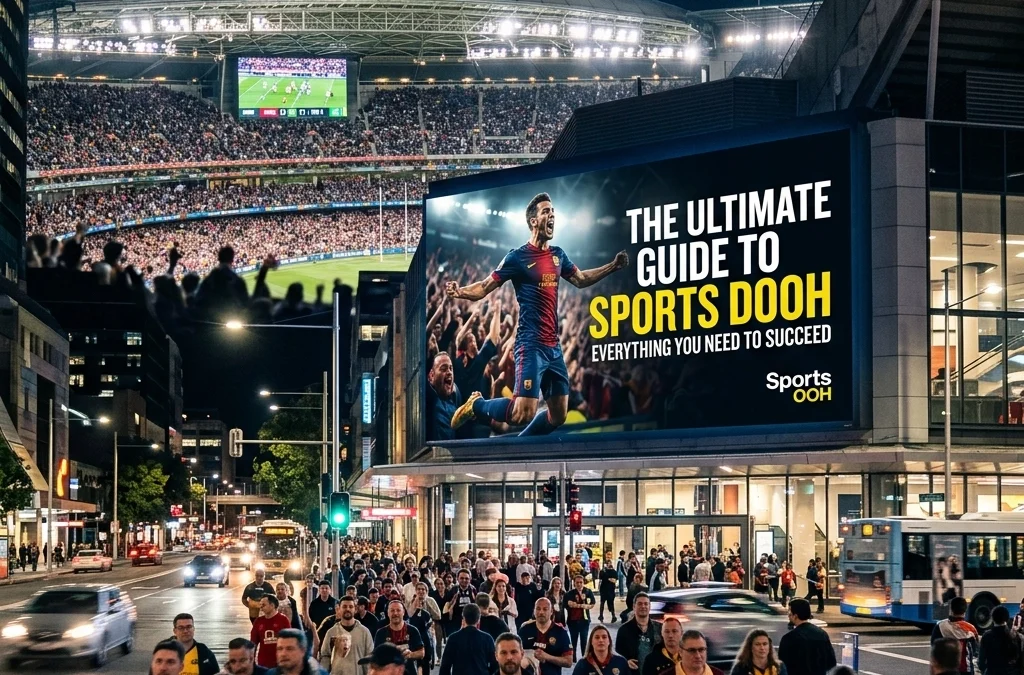
Digital Out of Home (DOOH) advertising has transformed the way brands interact with sports fans. Historically, sports marketing was confined to the physical boundaries of a stadium or the commercial breaks of a television broadcast. Today, technology allows marketers to reach fans throughout their entire journey, from the moment they leave their homes to the post-game celebration. This shift represents a move toward a year-round, routine-based engagement strategy that utilizes high-traffic touchpoints and real-time data.
The Strategic Shift Beyond Stadium Walls
Traditional sports marketing often relies on high-visibility inventory like jumbotrons or dasher boards. While these placements offer prestige, they are often limited by high costs and static messaging. Modern sports marketing utilizes DOOH to bridge the gap between physical and digital spaces. By placing ads in grocery stores, transit hubs, and sports bars, brands can maintain visibility long after the final whistle.
The core advantage of this approach is the ability to capture fans in everyday environments. Rather than competing for limited attention within a crowded stadium, DOOH allows for precision targeting in spaces where fans are already making purchasing decisions. This strategy democratizes access for smaller brands that might be priced out of major stadium sponsorships while providing major sponsors with a way to extend their reach beyond the venue.
Mapping the Fan Journey
Successful sports DOOH campaigns are built on an understanding of fan behavior. This behavior generally falls into three distinct phases. Each phase requires a different messaging strategy and placement type to be effective.
Phase 1: Pre-game Preparation
In the hours leading up to a game, fans occupy "prep spaces." These include grocery stores, convenience stores, and liquor stores. In these environments, dwell time is relatively low, but purchase intent is high. Messaging should focus on logistics, such as game-day snacks, beverages, and supplies. This is a critical time for brands to drive impulse purchases.
Phase 2: During-game Engagement
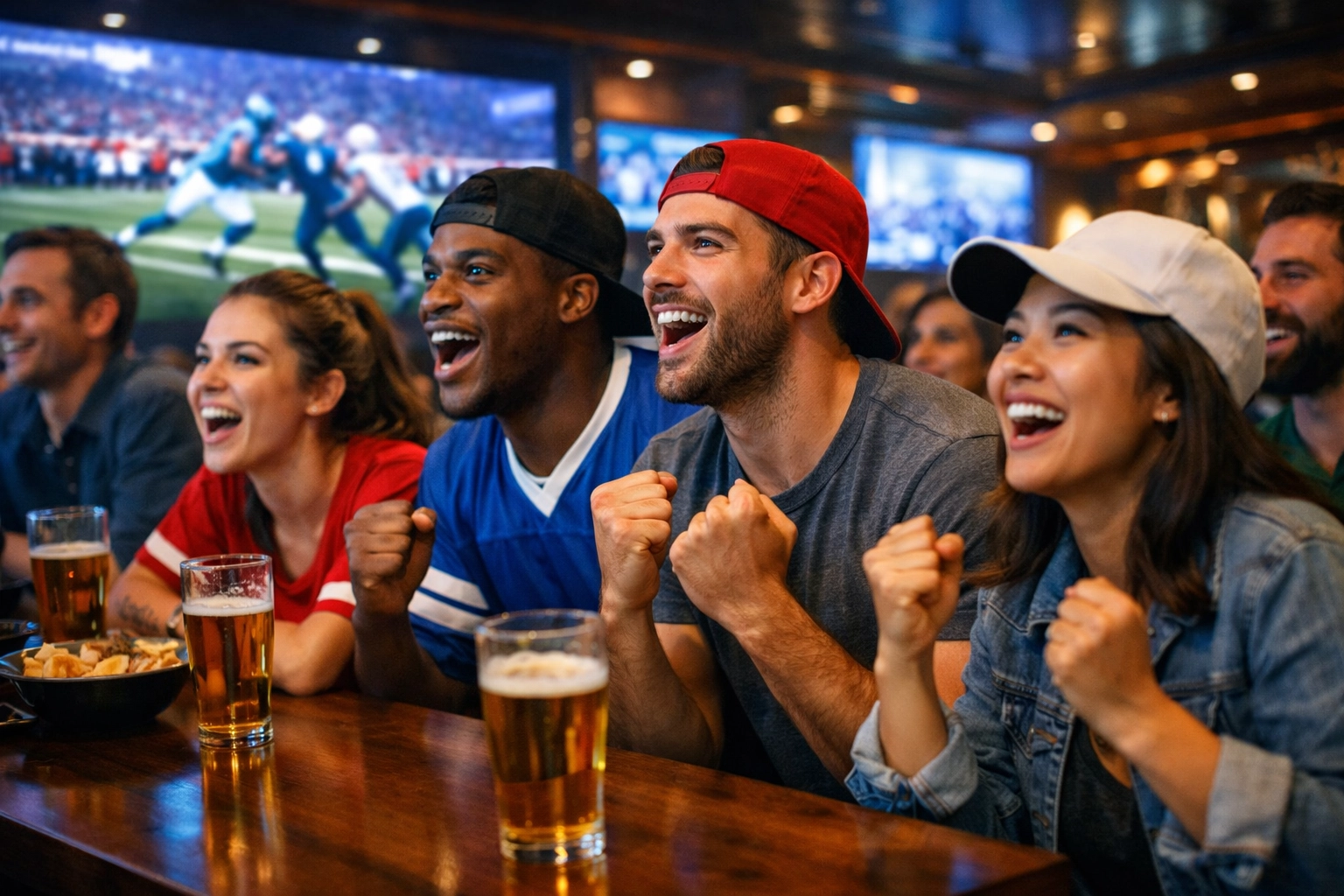
During the game, fans gather in "watch spaces" like sports bars, casual dining restaurants, and Quick Service Restaurant (QSR) lobbies. These environments mirror the communal energy of a stadium. Because dwell times are higher in these locations, brands can utilize more detailed creative content. Screens in these spaces serve as active environmental elements, often being viewed as part of the entertainment rather than background noise.
Phase 3: Post-game Follow-up
The post-game phase offers an opportunity to reinforce brand loyalty or drive digital engagement. Whether a fan is celebrating a win or commiserating a loss, roadside digital billboards and transit displays can provide follow-up messaging or promote upcoming events and merchandise.
Strategic Placements and Creative Execution
The effectiveness of DOOH is largely dependent on where the ad is shown and how the creative adapts to the environment. Unlike traditional billboards, digital screens allow for Dynamic Creative Optimization (DCO). This technology enables brands to change their messaging based on real-time triggers such as weather, game scores, or time of day.
Real-Time Betting Integration: Betting partners can stream live odds directly to screens in sports bars. This transforms an advertisement into a useful piece of content for the viewer, increasing the likelihood of engagement.
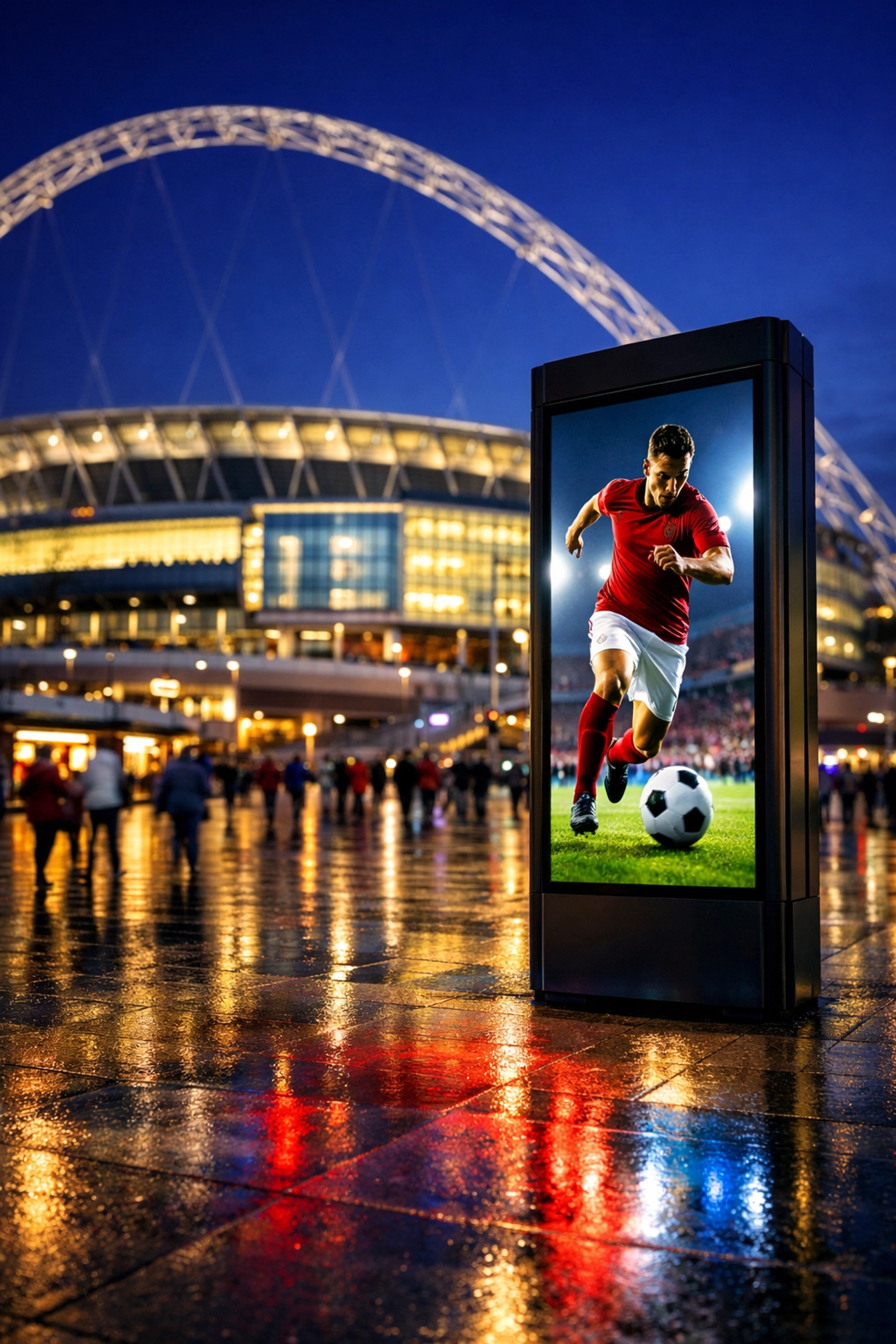
Weather-Responsive Content: Apparel brands can use weather triggers to show specific products. For example, if rain is detected near a stadium, the creative can automatically switch to promoting rain gear or jackets.
Contextual Relevance: High-resolution files and bold, readable fonts are essential. Industry standards suggest a minimum of 100pt for headlines and high contrast ratios to ensure visibility in high-traffic areas. Simple and clear messaging often outperforms complex designs in the outdoor environment.
Quantifying the Impact: Case Studies in DOOH
Data from recent campaigns illustrates the significant impact of programmatic DOOH. For instance, a campaign for White Claw saw a 74 percent lift in purchase consideration during a product launch. This was achieved by targeting fans in high-intent environments where the product was readily available for purchase. Detailed insights on this campaign can be found here: White Claw Programmatic DOOH Results.
Similarly, AB InBev utilized programmatic DOOH to boost brand image for its Mike’s Hard Iced Tea line. The campaign resulted in a 119 percent lift in positive brand image, demonstrating that DOOH is as effective for brand building as it is for direct sales. More details on the strategic execution of this campaign are available at: AB InBev Brand Image Lift.
These results are not isolated incidents. Other sectors, such as the marine industry, have seen similar success. Sea-Doo achieved a 144 percent increase in purchase consideration through its first digital OOH campaign, proving the versatility of the medium across different categories. Sea-Doo Campaign Analysis.
Programmatic DOOH vs. Traditional Stadium Ads
One of the most frequent questions for brand managers is whether to invest in traditional stadium sponsorships or programmatic DOOH. While stadium sponsorships offer high prestige, they often come with a high price tag and fixed durations. Programmatic DOOH provides a more flexible and often more cost-effective alternative.
Studies show that a month-long DOOH campaign in top markets can deliver 7.5 times greater reach and 10 times better Cost Per Thousand (CPM) compared to traditional stadium methods. Furthermore, the ability to scale campaigns up or down in real time allows for better budget management. Smart brands are increasingly shifting budgets toward perimeter DOOH and neighborhood-specific placements to maximize ROI. A comparison of these strategies can be found here: Stadium Sponsorships vs. Perimeter DOOH.
Targeting and Measurement Logistics
The shift toward DOOH is fueled by the availability of sophisticated data. Marketers no longer have to guess who is seeing their ads. Modern measurement focuses on three key areas:
- Impressions: This is the opportunity to see, calculated based on traffic patterns and screen visibility.
- Reach: The number of unique visitors, often determined via anonymized mobile and camera data.
- Frequency: The number of times a single visitor is exposed to the campaign, which helps in understanding brand recall.
Mobile and location data allow brands to target specific audience segments such as commuters, shoppers, or sports bettors. This level of precision ensures that ad spend is not wasted on irrelevant audiences. To avoid common pitfalls in data interpretation, it is helpful to review best practices for measurement: 7 Mistakes in Sports DOOH Measurement.
Using AI-powered analytics also allows for more accurate attribution. By tracking device IDs exposed to an ad and monitoring subsequent foot traffic or online activity, brands can prove the success of their campaigns with concrete data. AI-Powered DOOH Analytics.
The Future Landscape of Sports Advertising
The growth of the DOOH market is consistent and significant. Research indicates that the global programmatic DOOH market is expanding rapidly, with projections suggesting it will reach tens of billions of dollars in the coming years. Approximately half of all DOOH campaigns now utilize programmatic channels at least partially, indicating a major shift in how media is bought and sold.
For media buyers, this means more opportunities for omnichannel integration. DOOH can be used to reinforce mobile ads, social media campaigns, and television spots, creating a cohesive brand experience. As the market grows, the brands that succeed will be those that use real-time strategies to capture their share of fan attention. 7 Real-Time Strategies for Market Growth.
Implementation Best Practices
To succeed in sports DOOH, follow these logical steps:
- Define the Objective: Determine if the goal is immediate sales in prep spaces or long-term brand building in watch spaces.
- Select the Right DSP: Use a Demand-Side Platform (DSP) that specializes in OOH to access the best inventory.
- Keep Creative Simple: Ensure high contrast and large fonts for maximum readability.
- Utilize Dynamic Triggers: Incorporate live scores or weather data to make the ad more relevant to the current moment.
- Measure and Adjust: Use attribution data to refine targeting and creative strategy throughout the campaign.
By following these strategies, media buyers and brand managers can navigate the complexities of the modern sports marketing landscape. DOOH is not just a replacement for traditional billboards. It is a powerful, data-driven tool that brings brands closer to the fans, wherever they may be.