
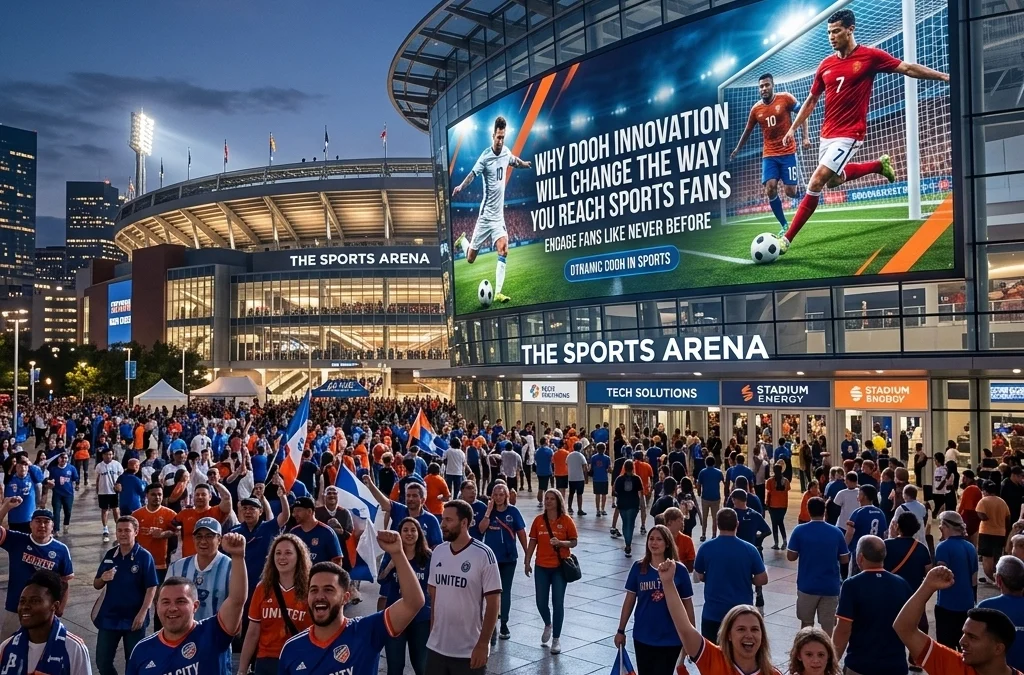
Sports fans are a unique audience. They are passionate, loyal, and constantly moving. They do not just sit on a couch for three hours once a week. They are checking scores on their commutes, meeting friends at sports bars, and traveling to stadiums. For years, reaching these fans meant buying expensive, static stadium sponsorships or hoping they did not skip your TV commercial.
But things are changing. Digital Out of Home (DOOH) advertising has undergone a massive shift. Innovation in this space is not just about putting a TV screen on a wall. It is about using real time data, smart targeting, and programmatic technology to reach fans at every step of their journey. For media buyers and brand managers, this shift offers a way to be more precise, more creative, and much more efficient with their budgets.
The Shift from Static to Dynamic Engagement
Traditional sports marketing often relied on the "billboard and a prayer" method. A brand would buy a sign in a stadium and hope the right people saw it. While that still has some value, it is a static approach in a world that is moving faster than ever. DOOH innovation allows for dynamic engagement. This means the content of an ad can change based on what is happening in the real world.
Imagine a brand running a campaign for a new energy drink. With modern DOOH, that ad can trigger a specific message when a game starts, update the score in real time, or even change the creative if a specific player scores a touchdown. This level of responsiveness turns an advertisement into a piece of relevant content. It stops being a distraction and starts being part of the fan experience.

Mapping the Entire Fan Journey
One of the biggest misconceptions in sports marketing is that the "moment" only happens inside the stadium. In reality, the fan journey begins hours, or even days, before the whistle blows. It continues long after the game ends.
Innovation in DOOH allows brands to map this journey. By using strategic placements across transit hubs, residential elevators, and sports bars, brands can maintain a constant presence. A fan might see a teaser for a game on a screen in their office building in the morning. They see a countdown to kickoff on a digital board in the subway during their commute. Later, they see a celebratory message at a bar after their team wins.
This continuous engagement creates a "priming effect." When a fan is exposed to a brand across multiple touchpoints, the memory of that brand becomes much stronger. This is far more effective than a single, isolated exposure. For more on how this impacts ROI, you can explore how fan centric campaigns deliver better results for your DOOH budget.
Precision Targeting and Real World Movement
For a long time, Out of Home advertising was seen as a "broad reach" tool. It was great for getting a lot of eyes on a message, but it lacked the precision of digital ads. That is no longer the case.
Modern DOOH uses real world movement data to understand where sports fans actually go. Advertisers can now target specific segments, such as "loyal basketball fans" or "frequent stadium visitors," with incredible accuracy. This means you are not just buying a location; you are buying an audience.
If a brand wants to reach fans of a specific team, they can activate screens only in the neighborhoods where those fans live and play. They can even time these ads to appear when foot traffic is at its peak. This level of precision ensures that marketing dollars are spent on the people most likely to convert. For example, White Claw saw a 74 percent lift in purchase consideration by using programmatic DOOH to target specific audiences during a product launch.

The Power of Programmatic Technology
Programmatic DOOH is perhaps the most significant innovation in the industry. It brings the ease and flexibility of online advertising to the physical world. Media buyers can now buy, manage, and optimize their OOH campaigns through the same platforms they use for their digital ads.
This technology allows for incredible agility. If a brand sees that a particular market is performing well, they can increase their spend there instantly. If a creative message is not resonating, they can swap it out in minutes. This is a far cry from the weeks of lead time required for traditional printed billboards.
Partnerships with platforms like StackAdapt have made this adoption even easier for omnichannel campaigns. You can read more about how StackAdapt is driving programmatic DOOH adoption to see how brands are integrating these tools into their broader marketing stacks.

Cost Efficiency and Scaling Success
One of the hurdles for brand managers in sports marketing has always been the high entry cost of stadium sponsorships. These deals can often run into the millions of dollars, making them inaccessible for many brands.
DOOH innovation provides a way to scale at a fraction of the cost. By using perimeter targeting and digital screens near venues, brands can achieve a similar level of "stadium association" without the massive price tag. In many cases, brands can reach the same high affinity audience for 80 percent less than the cost of a traditional sponsorship.
This is not just about saving money; it is about making that money work harder. When you spend less on the "rent" of a stadium sign, you have more budget to spend on creative variety and frequency across a wider geographic area. To understand the comparison, look at why smart brands are scaling with perimeter DOOH.
Proving Success with AI Powered Analytics
The biggest question for any brand manager is: "Did it work?" In the past, measuring the success of an outdoor ad was based on estimates and guesswork. Today, AI powered analytics have changed the game.
We can now track device IDs exposed to an ad and follow that journey to a digital purchase or a physical store visit. This provides a clear picture of attribution. We can measure brand lift, purchase consideration, and even positive brand image.
For instance, AB InBev saw a 119 percent lift in positive brand image using these advanced measurement tools. This kind of data allows media buyers to move past guesswork and prove the ROI of their campaigns to stakeholders. Using AI powered analytics proves campaign success by providing hard numbers that back up strategic choices.

Creative Flexibility and Cultural Relevance
Sports are inherently cultural. They move at the speed of social media. A meme created during a game can go viral in minutes. DOOH innovation allows brands to tap into these cultural moments while they are still relevant.
Because DOOH is digital and connected, brands can react to "the big play" or a shocking upset almost instantly. This keeps the brand relevant and shows the audience that the brand is just as invested in the game as they are. It creates a sense of shared experience that is hard to replicate with any other medium.
This flexibility also extends to localization. A national brand can run a single campaign but customize the creative for every city, team, and venue. This makes the brand feel local and personal, even at a massive scale.
The Future of Reaching the Fan
The landscape of sports marketing is no longer limited to what happens on the field. It is about the fans, their routines, and how they interact with the world around them. Innovations in DOOH have given brands the tools to be more present, more relevant, and more data driven than ever before.
For media buyers and brand managers, the message is clear. The old ways of reaching sports fans are evolving. By embracing programmatic technology, real time data, and strategic multi-touchpoint coverage, brands can create deeper connections with their audiences.
The innovation we see today is only the beginning. As technology continues to advance, the line between the physical world and digital engagement will continue to blur. For those looking to stay ahead of the curve, the time to integrate DOOH into their sports marketing strategy is now. OOH Sports is at the forefront of this change, helping brands navigate this new territory and reach fans where they are most receptive.
