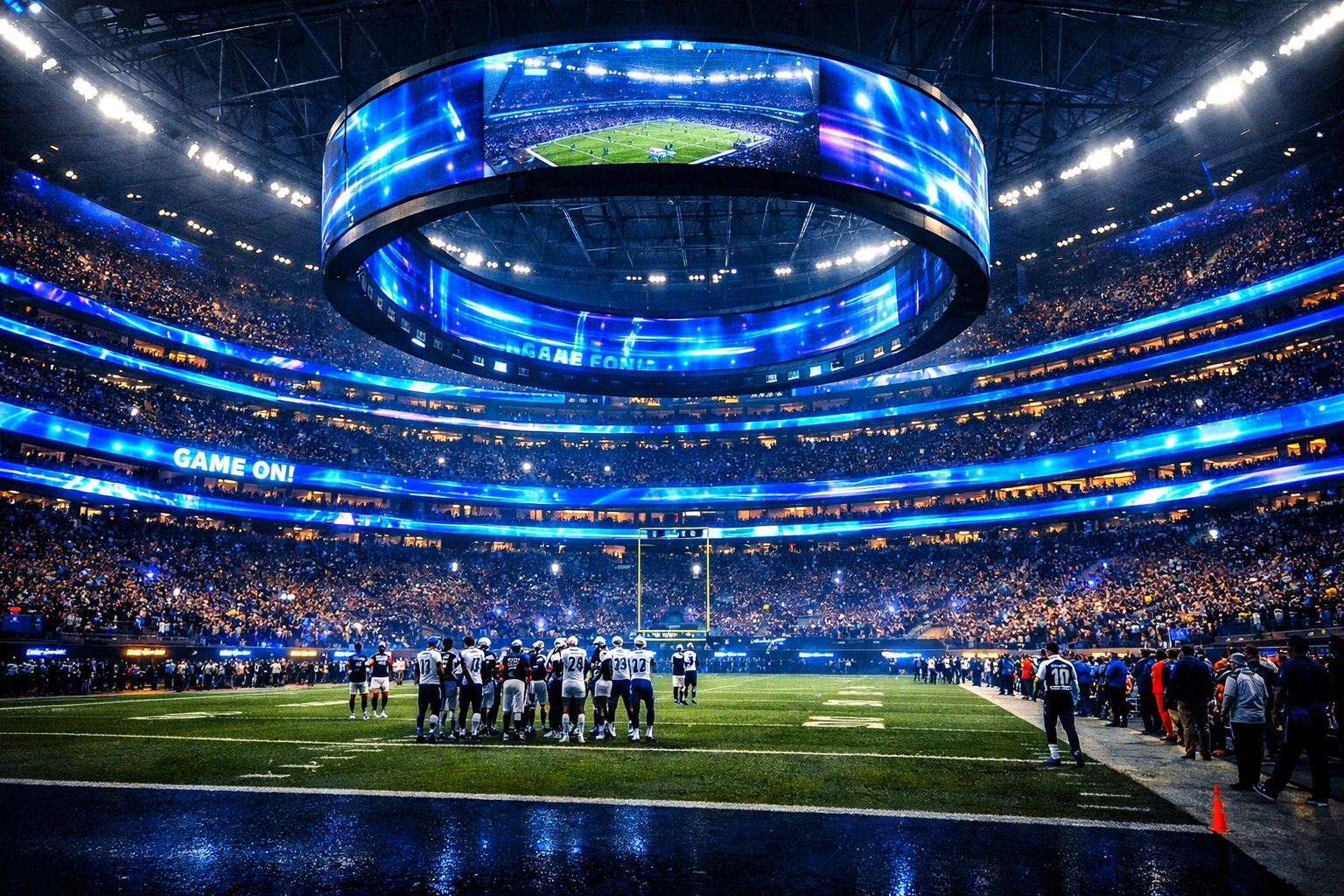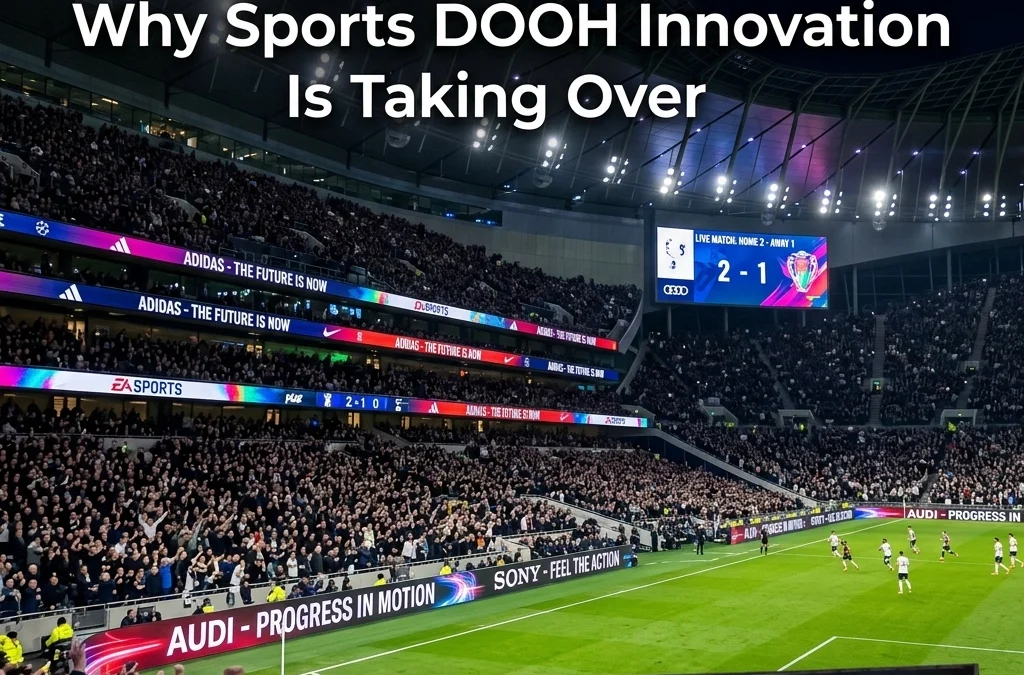
The roar of the crowd and the smell of the grass are timeless elements of the sports experience. However, the way brands speak to those fans is undergoing a massive transformation. For decades, the towering static billboard and the fixed scoreboard logo were the kings of the stadium. Today, those silent giants are being replaced by something much more powerful and much more intelligent.
Digital Out of Home (DOOH) advertising is not just a trend. It is a fundamental shift in how media buyers and brand managers approach sports marketing. As technology evolves, the limitations of traditional static signage become more apparent, while the opportunities offered by digital innovation continue to grow.
The Limitations of Static Stadium Ads
Traditional stadium advertising has long relied on visibility. The goal was simple: get a logo in front of as many eyes as possible. While this approach provided mass reach, it lacked the precision and flexibility required by modern marketing standards.
Static ads are often expensive to produce and install. Once they are up, they are locked in for the duration of a season or a specific contract. There is no way to change the creative to reflect a new promotion, a change in player roster, or a shift in brand messaging. This lack of agility is a significant drawback in a fast-paced sports environment where stories change every minute.
Furthermore, static signage is notoriously difficult to measure. While brands can estimate the number of impressions based on stadium attendance or television ratings, they cannot easily track actual engagement or follow-up actions. In an era where data is the most valuable currency in advertising, the inability to quantify the impact of a static billboard makes it a risky investment for results-oriented brands.
The Rise of Sports DOOH Innovation
The transition from static to digital is driven by the need for participation rather than just observation. The modern sports fan is constantly connected and expects an interactive experience. Digital videoboards have replaced static scoreboards to capture fan attention more effectively, offering everything from live stats to interactive trivia and virtual races.
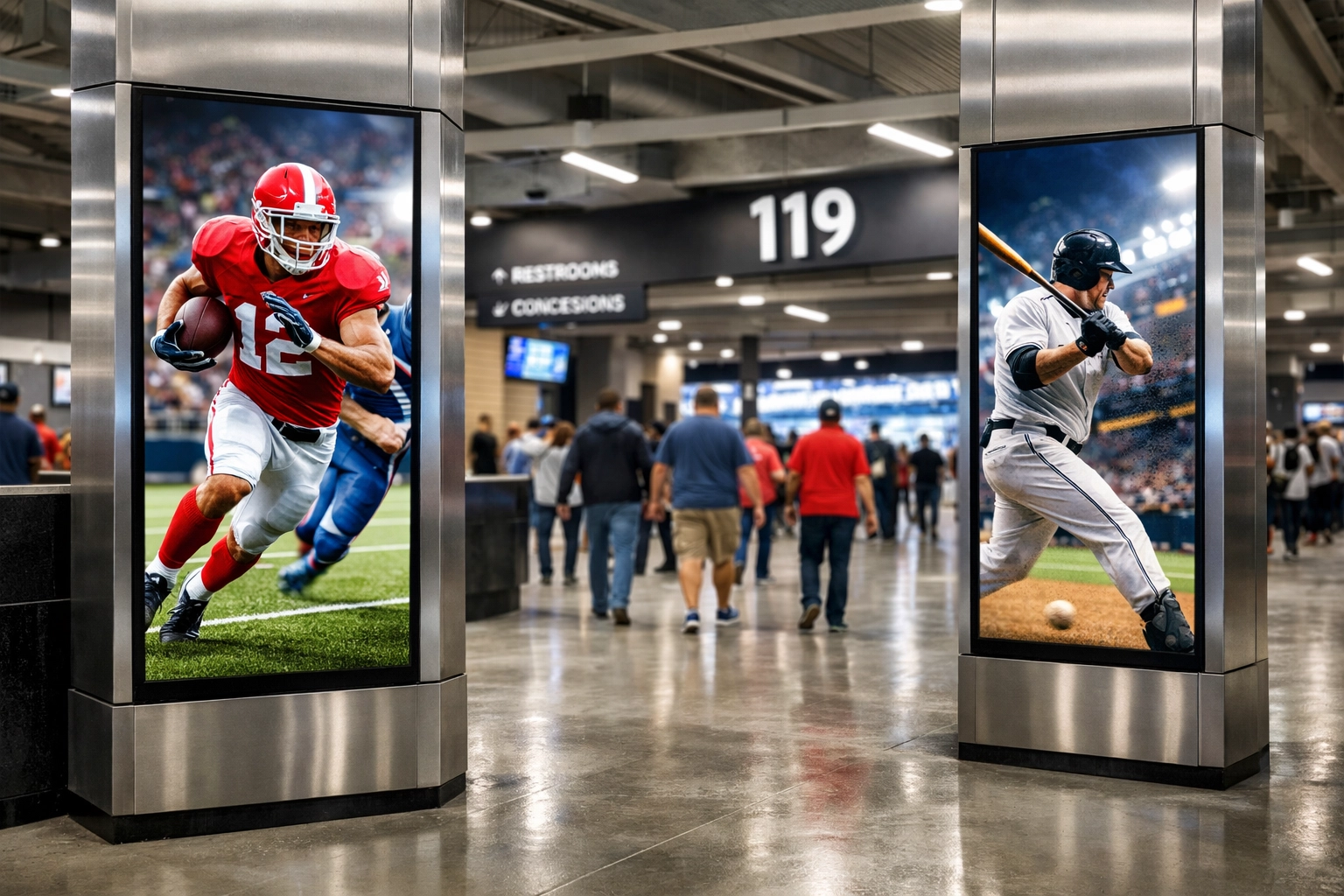
Innovation in this space is moving beyond the main jumbotron. Forward-thinking venues are identifying and monetizing underutilized spaces that were previously ignored. Digital screens are popping up in restrooms, concession stands, and entry points, turning every corner of the stadium into a potential touchpoint for a brand.
Strategy: Engagement Over Exposure
The primary reason media buyers are shifting budgets toward DOOH is the ability to drive participation. Being seen is no longer enough. Brands now want to spark a conversation.
One of the most effective strategies involves using dynamic digital displays at concession stands. Instead of a fixed menu board, digital screens can rotate between sponsorship ads, calls to action, and live game feeds. This ensures that even when fans leave their seats to grab a drink, they remain connected to the game and the brand messaging.
Another high-impact area is the stadium restroom. While it might seem unconventional, restroom signage achieves a remarkable 84 percent message recall rate and a 91 percent favorability score. Because these spaces offer a captive audience with few other distractions, the advertisements placed here often see higher engagement levels than those in the main bowl.
Objective and Strategy: Precision and Timing
DOOH allows for a level of strategic timing that static ads simply cannot match. Through programmatic DOOH (pDOOH), brands can trigger advertisements based on specific game conditions.
For instance, a beverage brand might trigger a celebratory ad immediately after a home team touchdown or a three-pointer. Conversely, a food delivery service might increase its ad frequency during a long halftime break. This level of relevance ensures that the message resonates with the fans' current emotional state, making the advertising feel like a part of the event rather than an interruption.
Brands are also using QR code integration on digital entry signage. This bridges the gap between the physical stadium and the digital world. By scanning a code, a fan can immediately download a stadium app, claim a discount, or enter a contest. This provides the brand with trackable engagement data and a direct path to the consumer's mobile device.
Technology Partners and Implementation
The success of a DOOH campaign depends heavily on the technology used to deliver it. Specialized platforms like StackAdapt allow media buyers to manage programmatic DOOH campaigns with the same ease as digital display or video ads.
These Demand-Side Platforms (DSPs) enable brands to bid on ad inventory in real-time. This means a brand manager can adjust their budget, creative, and targeting parameters on the fly. If a specific venue is underperforming, the budget can be instantly reallocated to a different location. This level of control is what makes DOOH such a formidable tool for maximizing Return on Investment (ROI).
Results: Data-Driven Proof
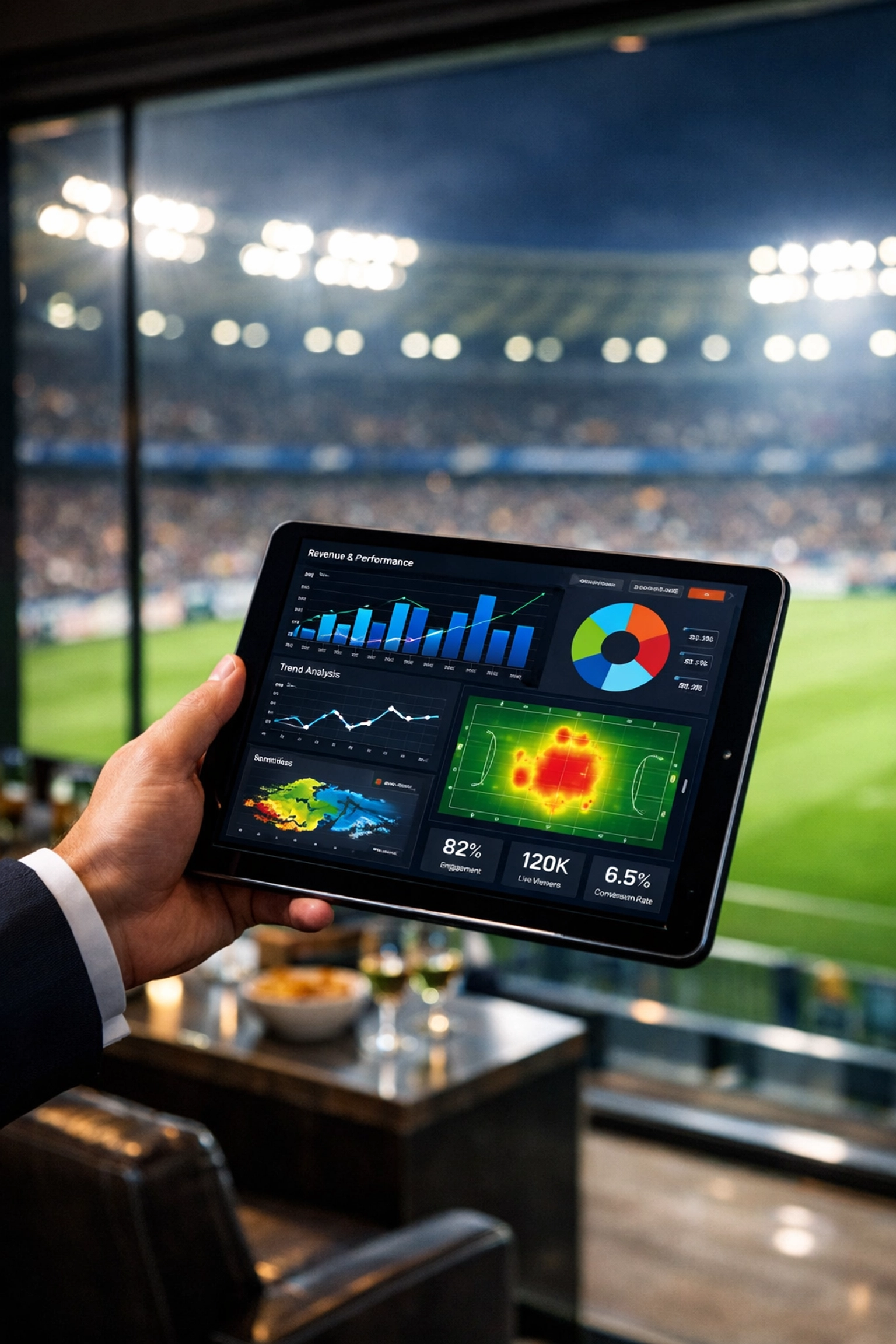
The impact of shifting from static to digital is clearly visible in campaign results across various industries. Modern measurement techniques, such as brand lift studies and device ID tracking, allow brands to see exactly how their DOOH spend influences consumer behavior.
Consider the following examples of digital innovation in action:
- Purchase Consideration: A major campaign for a vodka launch utilized programmatic DOOH to reach fans in specific high-traffic areas. This strategy resulted in a 74 percent lift in purchase consideration. You can read more about this in the White Claw case study.
- Brand Image: For brands looking to improve their perception among a target audience, digital screens offer a dynamic canvas. A campaign for a hard iced tea brand saw a 119 percent lift in positive brand image by using targeted DOOH placements during sports events. Detailed results are available in the Ab InBev case study.
- Engagement and Conversion: Even for seasonal products, the precision of DOOH is unmatched. One campaign saw a 144 percent increase in purchase consideration by focusing on digital placements that reached active, outdoor-minded fans. Check out the Sea-Doo case study for more insights.
These numbers demonstrate that when ads are relevant, timely, and interactive, fans respond. The "set it and forget it" nature of static ads cannot compete with these levels of growth and engagement.
The Future of Stadium Advertising
As we look toward the future, the integration of DOOH in sports will only deepen. We are moving toward a world where the stadium itself is a giant, interactive digital platform. Technologies like Sportrons are at the forefront of this evolution, providing the infrastructure needed to turn static environments into dynamic marketing hubs.
For media buyers, the message is clear. The era of passive visibility is ending. To capture the attention of the modern fan, brands must embrace the flexibility and measurability of digital innovation. Whether it is through high-energy videoboards or strategically placed screens in the margins of the venue, the future of sports advertising is digital, programmatic, and undeniably alive.
By leveraging the power of OOH Sports, brands can move beyond the limitations of the past and start building meaningful connections with fans that drive real-world results. The transition from static to digital is more than just an upgrade in technology. It is an upgrade in the potential for every campaign to succeed.
Conclusion
Static stadium ads may not be completely gone yet, but their dominance has certainly faded. The innovation in DOOH provides a level of agility, interactivity, and accountability that traditional billboards simply cannot provide. For brand managers looking to make an impact in the sports world, the choice is no longer between digital and static. The choice is how quickly they can adapt to the digital-first reality of sports marketing.
To learn more about how to optimize your sports marketing strategy, visit our marketing page or explore our latest blog posts for more industry insights.