
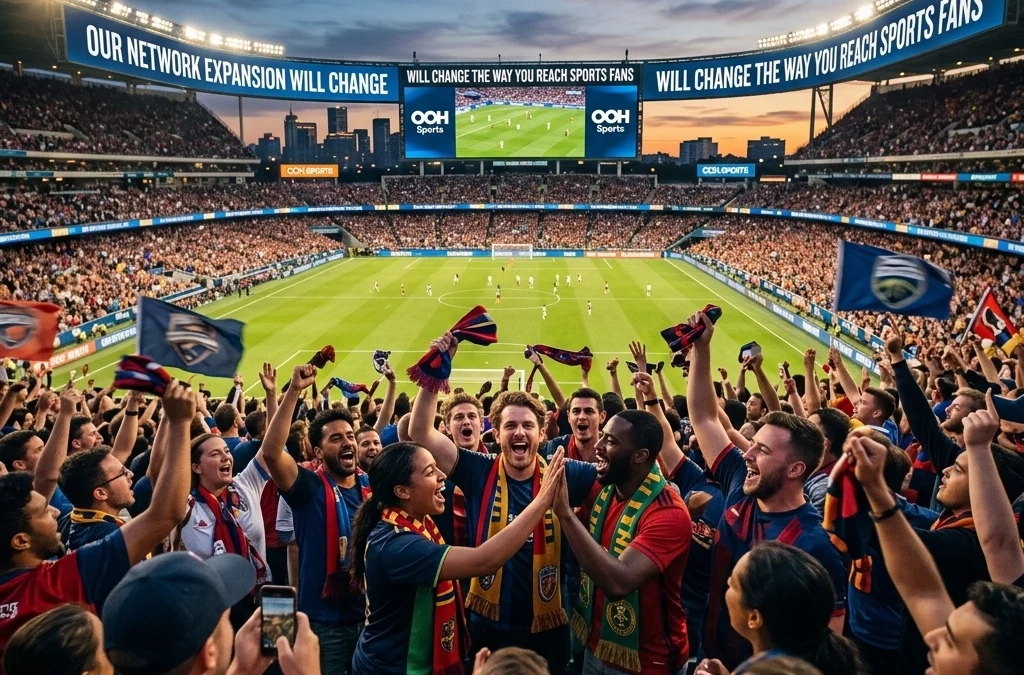
The landscape of sports marketing is undergoing a fundamental shift as traditional broadcast methods face increasing fragmentation. As audiences move away from linear television and toward diverse digital consumption, the ability to reach fans in physical environments has become a critical priority for media buyers. The expansion of the OOH Sports network represents a strategic response to this shift, offering a scalable solution that bridges the gap between digital precision and real-world impact.
The Strategic Objective of Network Expansion
The primary objective of the network expansion is to create a seamless ecosystem where brands can engage sports fans throughout their entire daily journey. While traditional stadium sponsorships are limited to the duration of a game and the physical confines of an arena, a distributed digital out-of-home (DOOH) network allows for continuous engagement.
By increasing the number of digital touchpoints in high-traffic areas such as sports bars, transit hubs, and retail environments, the network provides advertisers with the ability to maintain brand presence long after the final whistle. This expansion is designed to solve the problem of audience decay, ensuring that a brand message remains visible during the peak emotional moments of the fan experience.
Infrastructure and Inventory Growth
The expansion focuses on high-quality, high-dwell-time locations that align with fan behavior. The OOH Sports network has grown to include over 25,000 digital screens, strategically positioned to capture attention where sports fans congregate. This inventory includes:
- Stadium Perimeters and Entry Points: Capturing fans as they arrive and depart from live events.
- Sports Bars and Dedicated Viewing Centers: Leveraging long dwell times during live broadcasts.
- Transit and Urban Hubs: Reaching fans during their commute to and from games.
- Retail and Entertainment Districts: Influencing purchase decisions near the point of sale.
This diversified inventory ensures that campaigns are not dependent on a single location or event. Instead, they benefit from a broad footprint that maximizes frequency and reach across multiple demographics.

Technology Partners and Programmatic Integration
A key driver of the network expansion is the integration of advanced programmatic capabilities. By collaborating with leading technology partners, such as the StackAdapt DSP, the network allows media buyers to execute campaigns with the same level of flexibility found in online advertising.
Programmatic DOOH (pDOOH) enables real-time bidding and dynamic creative optimization. This means that ads can be triggered based on specific conditions, such as:
- Live Game Scores: Changing creative content to reflect the current state of a match.
- Weather Triggers: Promoting specific apparel or beverages based on local conditions.
- Time-of-Day Scheduling: Aligning messages with pre-game, mid-game, or post-game windows.
- Geographic Relevance: Tailoring content to specific cities or neighborhoods based on local team loyalties.
This level of technological integration transforms the network from a static medium into a dynamic communication tool that responds to the environment in real time.

Data-Driven Fan Targeting
Expansion is not merely about increasing the number of screens, it is about increasing the intelligence behind those screens. OOH Sports utilizes geospatial data and fan behavior analytics to ensure that messages reach the right audience at the right time.
Through the use of anonymized mobile location data and device IDs, the network can identify high-concentrations of sports enthusiasts. This allows for geographically targeted DOOH strategies that have been shown to boost fan engagement significantly. By understanding where fans live, work, and socialize, media buyers can move beyond broad demographic targeting and move toward behavioral precision.
Measuring Success and ROI
The expansion of the network also brings enhanced measurement capabilities. Historically, out-of-home advertising was viewed as an awareness-only play. However, the current OOH Sports infrastructure allows for sophisticated attribution modeling and brand lift studies.
Recent data indicates that programmatic DOOH delivers superior ROI compared to traditional static stadium ads. Because DOOH is flexible and measurable, it provides a clearer picture of how offline exposure leads to online or in-store action. Key performance indicators (KPIs) measured across the expanded network include:
- Brand Awareness and Recall: Measuring the percentage of fans who remember seeing the ad.
- Purchase Consideration: Tracking shifts in consumer intent following campaign exposure.
- Foot Traffic Attribution: Analyzing whether exposed audiences visited a specific retail location.
- Online Conversion: Linking DOOH exposure to website visits or app downloads.
Case studies within the network have demonstrated the power of this approach. For instance, a campaign for a prominent beverage brand resulted in a 74% lift in purchase consideration by targeting relevant fan environments. Similarly, other campaigns have seen a 119% lift in positive brand image.

Real-Time Capabilities for Modern Betting and Engagement
One of the most significant advantages of the expanded network is its utility for the sports betting industry. As sports betting continues to grow, the need for real-time communication is paramount. The OOH Sports network allows for real-time sports betting campaigns that can be launched and updated in under 24 hours.
This speed allows betting operators to display live odds, promote specific parlay boosts, and respond to breaking news instantly. In an industry where timing is everything, the ability to change a digital creative across thousands of screens in minutes provides a decisive competitive advantage.
Comparing Traditional Stadium Ads to Expanded DOOH
As the sports advertising market is projected to reach 50 billion by 2030, the limitations of traditional stadium sponsorships become more apparent. Traditional sponsorships often involve long-term contracts, static creative, and a lack of granular measurement.
In contrast, the expanded DOOH network offers:
- Flexibility: No long-term commitments are required for specific screens.
- Cost-Efficiency: Brands only pay for the impressions they deliver.
- Scale: Reach fans across an entire region rather than just those inside a single venue.
- Relevance: Update messages instantly to reflect the latest sports narratives.
The expansion of OOH Sports effectively moves the stadium experience out into the world, allowing brands to capture the "halo effect" of major sporting events without the restrictive costs of official league sponsorships.

Future-Proofing the Media Mix
The network expansion is an evergreen strategy designed to evolve alongside the sports industry. As more media planners shift their budgets toward digital channels, the availability of high-quality DOOH inventory becomes essential. Industry trends suggest that 67% of media planners are expected to shift their budgets toward DOOH by 2026.
By investing in infrastructure, data, and programmatic technology, OOH Sports provides a future-proof platform for brands. Whether the goal is to drive immediate sales for a new product launch or to build long-term brand equity among a passionate fan base, the expanded network offers the reach and precision necessary to achieve those objectives.
Conclusion: A New Standard for Sports Marketing
The growth of the OOH Sports network is more than an increase in screen count. It is a fundamental change in how the advertising industry conceptualizes fan engagement. By moving away from the "one size fits all" approach of traditional signage and moving toward a data-driven, programmatic model, the network provides media buyers with a powerful tool to navigate the complexities of the modern media landscape.
Through strategic expansion, the network ensures that the connection between fans and brands is never broken, creating a continuous loop of engagement that begins long before kickoff and extends far beyond the final play. For advertisers looking to capture their share of the growing sports market, the expanded OOH Sports network represents the most efficient and impactful path to reaching the modern fan.
