
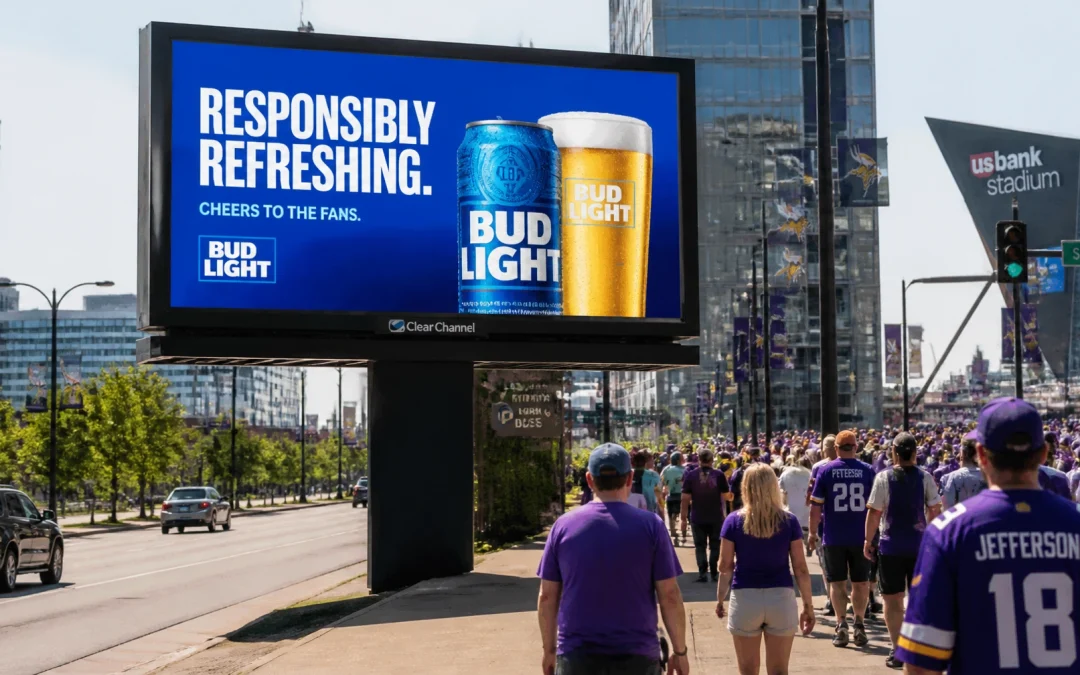
The landscape of sports viewership has undergone a fundamental shift. While the spectacle within the stadium remains the heartbeat of the industry, the economic energy surrounding major events has migrated into a phenomenon known as the watch party economy. In this evolving market, fans gather in homes, sports bars, and public plazas to experience live events collectively. This behavior creates a massive, untapped opportunity for brands to engage with passionate audiences outside the high-cost environment of in-stadium advertising.
To meet this demand, OOH Sports, a division of the Sports Media Inc. family, has achieved a significant milestone in its network expansion. The company now offers access to over 25,000 digital video advertising boards across North America. This expansion is specifically designed to provide a comprehensive 10-mile radius of coverage around every major sports venue, ensuring that brands can follow the fan journey from the driveway to the watch party and everywhere in between.
The Strategy: The 10-Mile Fan Perimeter
The core of the OOH Sports approach is the realization that the game day experience begins long before the first whistle and extends far beyond the stadium walls. Research indicates that more than 58 percent of Americans hosted or attended a sports watch party in the last year. These gatherings are not just social events; they are major economic drivers. For a single championship game, consumer spending on food, beverages, and electronics can exceed 20 billion dollars.
The OOH Sports 10-mile perimeter strategy is built to capitalize on this spending. By blanketing the area around stadiums and high-density residential zones with digital out-of-home (DOOH) screens, the network captures the attention of fans during critical decision-making moments. Whether they are picking up snacks at a local grocery store or meeting friends at a nearby bar, the brand message remains a constant part of their game day environment.

Objective & Strategy: Targeting High-Engagement Environments
The primary objective of the network expansion is to offer media buyers a way to achieve "stadium-level" impact without being limited by the physical boundaries of the arena. Traditional sports marketing often focuses on the fans who hold a ticket. However, for every fan in a seat, there are hundreds more watching in the surrounding community.
The OOH Sports strategy focuses on three key pillars:
- Contextual Relevance: Ads are placed in environments that match the fan’s mindset, such as liquor stores, supermarkets, and sports bars.
- Proximity Marketing: By maintaining a presence within 10 miles of the venue, brands leverage the local excitement and "buzz" generated by the live event.
- Saturation and Frequency: With over 25,000 screens, the network ensures that the brand remains top-of-mind throughout the entire day of the event.
This approach transforms the traditional media buy into a localized takeover. Media planners can now secure inventory that targets specific team territories, allowing for hyper-relevant creative that speaks directly to the local fan base.
Technology Partners and Programmatic Integration
The success of the expanded OOH Sports network relies on a sophisticated technological infrastructure. Through collaborations with leading programmatic platforms, the network allows for real-time bidding and dynamic creative optimization. This means that a campaign can change its messaging based on the current score of the game, weather conditions, or even the time of day.
If a local team scores a late-game victory, the digital boards can immediately pivot to celebratory messaging, such as "Victory tastes better with [Brand Name]." This level of agility was previously impossible with traditional static billboards. The use of specialized platforms enables media buyers to manage large-scale sports DOOH innovation with the same precision as a digital display campaign.

Campaign Mechanics: Capturing the Fan Journey
To effectively capture the watch party economy, a campaign must be integrated into the physical journey of the fan. OOH Sports has categorized its 25,000 screens into specific touchpoints that represent the "fan path to purchase."
The Pre-Game Prep
Before the game starts, fans are in a heavy consumption phase. Screens located in grocery stores and retail centers target those purchasing beer, chips, and hosting supplies. Data suggests that 60 percent of Gen Z and 67 percent of Millennials host monthly watch parties, making these retail locations vital for brand engagement.

The Transit Phase
Whether fans are taking the train or driving to a friend's house, transit hubs and roadside digital boards provide high-impact visibility. This phase is about maintaining brand awareness during the transition from home to the viewing location.
The Watch Party Venue
The final touchpoint is the viewing location itself. By placing screens in bars and restaurants, OOH Sports allows brands to be part of the actual "moment" of the game. These are high-dwell-time environments where fans are engaged for three to four hours at a time, providing an unparalleled opportunity for message retention.

Results and Measurement: Quantifying the Impact
The effectiveness of the OOH Sports network is measured through rigorous data analysis and brand lift studies. By using device ID exposure data, the company can track how many fans saw an ad and subsequently visited a retail location or made an online purchase.
In recent campaign analysis, the network has demonstrated significant results:
- Brand Awareness: Campaigns utilizing the full 10-mile stadium perimeter saw a 42 percent increase in brand recall compared to standard city-wide buys.
- Foot Traffic: Retailers located within the 10-mile radius experienced a 15 percent higher lift in game-day visits when supported by the DOOH network.
- Purchase Intent: Brands in the snack and beverage category reported a 28 percent increase in purchase intent among fans exposed to screens in transit and retail environments.
These results highlight the power of the watch party economy. When a brand aligns itself with the rituals of fans, the ROI extends beyond simple impressions. It creates a tangible connection between the excitement of the sport and the utility of the product.
Future Outlook for OOH Sports
The milestone of 25,000 screens is only the beginning for OOH Sports and Sports Media Inc. The network continues to grow, with a focus on integrating more interactive elements and leveraging AI-driven planning tools. These advancements will allow media buyers to further refine their stadium perimeter branding and ensure that every dollar spent is optimized for maximum fan engagement.
As the watch party economy continues to expand, the ability to reach fans beyond the stadium gates will become a requirement rather than a luxury. Brands that understand the 10-mile fan journey will be the ones that win the day, regardless of the final score on the field.
For media planners looking to explore the newest capabilities of the network, additional industry insights are available to help guide the planning of next-generation sports campaigns. The goal is clear: to bring your brand to life in a way that is as dynamic as the sports we champion.