
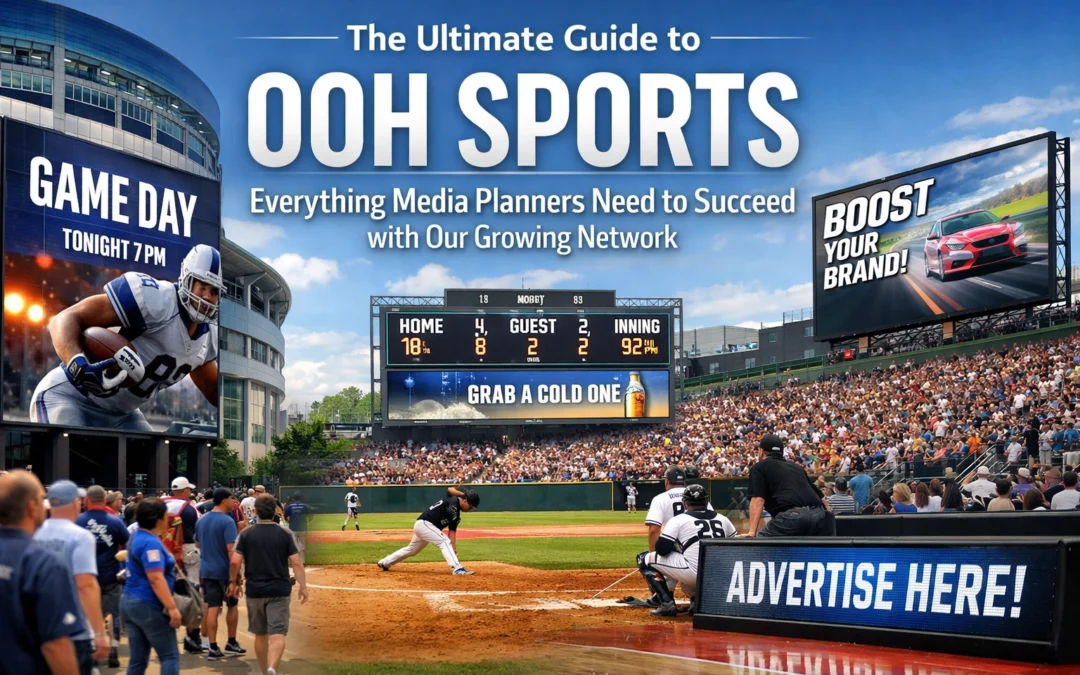
The advertising landscape is currently witnessing a significant shift in how brands connect with sports enthusiasts. As traditional television viewership becomes increasingly fragmented, the physical environments where fans gather have emerged as the premier territory for high impact brand storytelling. OOH Sports has reached a new milestone in network expansion, offering media planners a comprehensive infrastructure designed to capture the attention of fans across the entire sports ecosystem. This guide provides an analytical overview of the OOH Sports network, the strategic advantages of sports centric digital out-of-home (DOOH) advertising, and the methodology for executing successful campaigns.
The Evolution of the OOH Sports Network
OOH Sports has expanded its footprint to provide a sophisticated digital network that bridges the gap between stadium action and daily consumer routines. By integrating advanced technology with premium physical locations, the network allows advertisers to follow the fan journey from the driveway to the driveway. This expansion is not merely about increasing the number of screens, it is about creating a deliberate, data driven map of fan behavior.
The network now encompasses a diverse range of touchpoints. These include high traffic sports bars, restaurants, transit hubs, and transit routes leading to major stadiums. By securing these locations, OOH Sports ensures that brand messaging remains consistent and omnipresent during the moments of highest emotional engagement.

Strategic Value of Sports Centric Advertising
Sports environments offer a unique psychological advantage for advertisers. Unlike standard office or residential environments, sports venues and fan hubs are characterized by high levels of adrenaline, community, and focused attention. Research indicates that sports audiences are exceptionally primed for action when they encounter advertising in a relevant context.
A primary driver of this effectiveness is the group dynamic. When fans watch a game in a communal space, such as a sports bar or a stadium concourse, the shared experience amplifies the impact of the advertisement. This environment fosters immediate social discussion and collective brand recognition. Furthermore, the integration of DOOH allows for a priming effect. When a consumer sees a digital urban panel during their commute and later views a similar message in a sports bar, the memory structure of the brand is strengthened significantly.
Placement Opportunities Across the Network
The OOH Sports network is categorized into specific environments to help media planners optimize their reach.
In-Venue Placements
Inside the stadium environment, the focus is on capturing the attention of the captive audience.
- Concourse and Concessions: Digital kiosks and video screens located near food and beverage areas reach fans during dwell times.
- Entrance and Exit Points: High resolution screens capture the initial excitement of arrival and the lingering impressions of departure.
- Digital Perimeter Displays: These provide visibility for both the in-person attendees and, in many cases, the secondary broadcast audience.
Beyond-Stadium Placements
To maximize frequency and reach, OOH Sports extends its network into the daily lives of fans.
- Sports Bars and Restaurants: These locations offer high dwell times, often exceeding two hours, where fans are actively engaged with screens.
- Transit and Urban Hubs: Placements in these areas target fans as they travel to and from events, providing logistical or anticipatory content that aligns with their current mindset.
- Retail Proximity: Screens located near major retail centers allow brands to drive immediate purchase consideration for snacks, beverages, and apparel.

Mapping the Fan Journey
A successful campaign requires an understanding of the fan mindset throughout the various phases of a sporting event. OOH Sports enables media planners to deploy messaging that adapts to these shifts.
The Pre-Game Phase
During the hours leading up to a game, fans are focused on anticipation and logistics. Effective creative during this phase often includes countdown clocks, broadcast schedules, or betting lines. Screens in transit hubs and office centers are particularly effective here, as they tap into the fan's growing excitement while they are still in a functional, planning oriented state of mind.
During the Live Event
Once the game begins, the focus shifts to real time engagement. For fans in sports bars or stadium concourses, dynamic creative is essential. The OOH Sports network supports real time content updates, such as live scores or reaction based messaging. For example, a beverage brand might trigger a specific creative execution immediately following a home team score to capitalize on the positive emotional state of the crowd.
The Post-Event Phase
The conclusion of a game provides an opportunity for residual engagement. As fans exit venues or leave social viewing locations, OOH screens can provide information on post-game shows, highlights, or even transit updates. This phase is crucial for cementing brand loyalty and extending the duration of the brand's presence in the consumer's memory.
Programmatic DOOH and Technology Integration
The OOH Sports network is built on a foundation of programmatic digital out-of-home (pDOOH) technology. This shift from manual, location based buying to automated, routine based strategy has transformed how media planners approach the medium.
Through programmatic integration, planners can leverage several advanced capabilities:
- Dynamic Creative Optimization (DCO): Ads can change automatically based on variables such as weather, time of day, or the current score of a game.
- Geographic and Perimeter Targeting: Brands can scale their presence by targeting screens within a specific radius of a stadium or within high density fan neighborhoods. This approach often delivers a much higher ROI than traditional, multimillion dollar stadium sponsorships. You can read more about how smart brands scale with perimeter DOOH for 80 percent less.
- Real Time Scalability: Campaigns can be launched or adjusted in under 24 hours, allowing brands to respond to sudden shifts in the sports landscape, such as an unexpected playoff run or a trade.

Measurable Impact and Results
OOH Sports prioritizes a data driven approach to measurement, moving beyond simple impressions to track actual brand lift and purchase consideration. The network's efficacy is supported by numerous successful campaigns across various industries.
- Alcohol and Beverage: A programmatic DOOH campaign for White Claw's vodka launch resulted in a 74 percent lift in purchase consideration. You can view the full details of the White Claw campaign results here. Similarly, AB InBev's Mike's Hard Iced Tea saw a 119 percent lift in positive brand image through strategic network placement.
- Outdoor and Lifestyle: Sea-Doo utilized the network for its first digital OOH campaign, which increased purchase consideration by 144 percent.
These results are measured using a combination of device ID tracking, brand lift studies, and attribution modeling. By identifying mobile devices exposed to OOH screens and tracking subsequent digital actions or physical store visits, OOH Sports provides a clear picture of campaign success.
Best Practices for Media Planners
To achieve optimal results within the OOH Sports network, media planners should consider the following strategic guidelines:
Prioritize Context Over Reach
While reach is important, the relevance of the placement is paramount. A screen in a sports bar during a championship game is often more valuable than multiple screens in a generic retail environment. Ensure that the creative aligns with the specific environment of the screen.
Leverage Omnichannel Synergy
OOH Sports should not exist in a silo. It is most effective when used to reinforce television, social media, and mobile advertising. By using similar visual cues across all channels, brands can create a unified experience that guides the consumer toward conversion.
Utilize Data Driven Analytics
Planners should move away from guesswork and utilize the AI powered analytics provided by the OOH Sports network. These tools allow for the tracking of real time success and provide the necessary data to prove campaign ROI to stakeholders. Detailed information on these metrics can be found in our guide on AI powered DOOH analytics.
Adopt a Fan Centric Approach
The most successful campaigns are those that add value to the fan experience. Whether it is providing real time scores or offering a discount on game day essentials, the messaging should feel like a natural part of the sports culture rather than an interruption.

Future Outlook for OOH Sports
The growth of the OOH Sports network is part of a broader industry trend. Estimates suggest that the sports DOOH market will grow significantly in the coming years, driven by advancements in programmatic technology and a renewed focus on live event engagement. According to industry reports, the sports DOOH gold rush is already underway, with a large percentage of media planners shifting budgets toward these high impact environments.
OOH Sports remains committed to expanding its technological capabilities and network footprint. By focusing on the intersection of data, technology, and the unique emotional energy of sports, the network provides media planners with the tools they need to succeed in a competitive advertising landscape. Whether the objective is to launch a new product, drive stadium attendance, or increase brand preference, the OOH Sports network offers a scalable and measurable solution for modern marketers.
For more information on how to leverage our growing network for your next campaign, visit oohsports.com.