
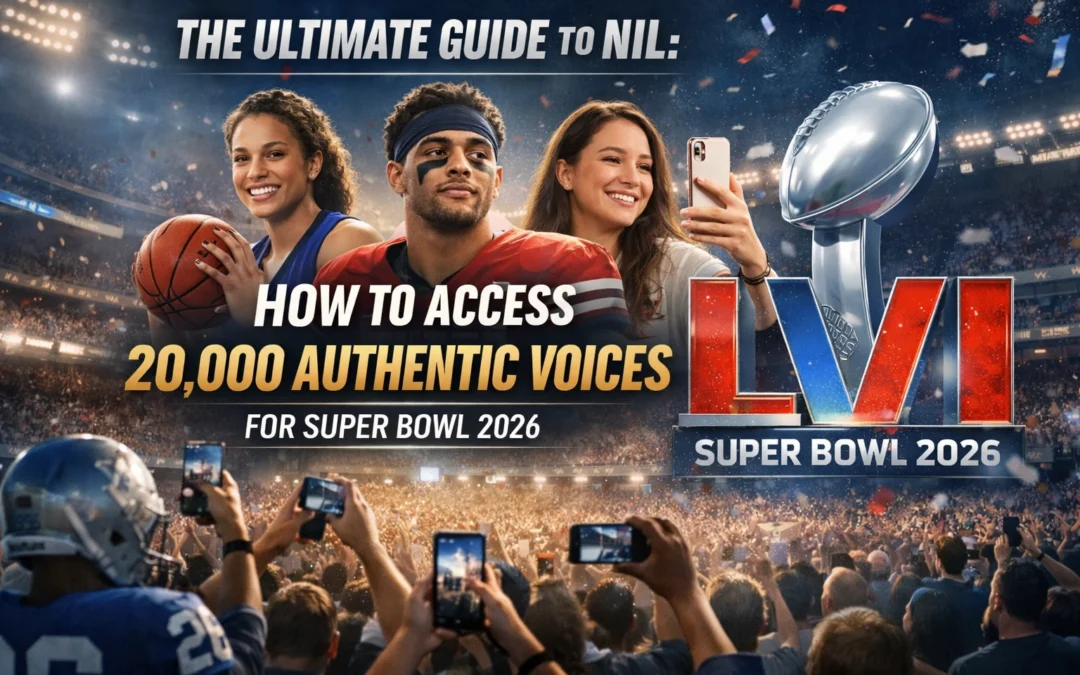
The landscape of sports marketing is undergoing a fundamental shift as the industry approaches Super Bowl 2026. While traditional television commercials and massive stadium banners remain staples of the event, a new powerhouse has emerged in the advertising space: Name, Image, and Likeness (NIL). For media buyers, the challenge is no longer just securing a spot during the big game, but rather capturing the attention of a fragmented audience that values authenticity over high production value.
The rise of NIL platforms allows brands to tap into a network of over 20,000 authentic student-athlete voices. This strategy moves marketing away from corporate-led narratives and places it in the hands of the athletes who live and breathe the sport. By leveraging these voices, brands can create a more personal connection with fans, leading to higher engagement and better return on investment (ROI).
Strategy: The Shift Toward Authentic Athlete Voices
The core objective for Super Bowl 2026 marketing campaigns is to achieve relevance in a crowded digital and physical environment. Traditional methods often rely on a top-down approach where a brand speaks to the consumer. However, data indicates that modern fans, particularly those in younger demographics, are more likely to trust recommendations from athletes they follow on social media than a polished 30-second commercial.
Research into NIL marketing trends reveals that athletes who create genuine, personal content in their own voice generate engagement rates 3-4x higher than agency-produced content. This shift is driving media buyers to reconsider how they allocate budgets. Instead of spending millions on a single high-profile celebrity, smart brands are distributing their spend across hundreds or even thousands of micro-influencers within the NIL space.

Objective & Strategy: Leveraging the 20,000 Athlete Network
Accessing a network of 20,000 athletes requires a structured approach to ensure brand safety and campaign efficiency. The strategy involves moving away from manual outreach and utilizing a centralized platform that facilitates real-time matchmaking. This technology allows brands to identify athletes whose personal brand aligns with the company’s values and target audience.
The objective is to create a "Super Bowl Blitz" that spans several weeks. Rather than a one-off post on game day, successful campaigns start during the playoffs, continue through the week of the Super Bowl, and provide post-game reflections. This multi-week approach ensures sustained visibility. Many brands are finding that are $2M stadium sponsorships dead when compared to the targeted reach and scale possible through a decentralized athlete network.
Key Components of the NIL Platform:
- Real-time Matching: Using audience data and engagement metrics to pair athletes with relevant brands.
- Verified Audience Data: Ensuring that the athlete’s followers are real and align with the brand’s target demographics.
- Compliance Automation: Handling the complex web of NCAA and state-level regulations automatically to protect both the brand and the athlete.
- Content Rights Management: Streamlining the process of repurposing athlete-generated content for other marketing channels like Digital Out-of-Home (DOOH).
Technology Partners and Integration
To execute a campaign of this magnitude, technology must be at the forefront. Media buyers utilize platforms that provide end-to-end management, from contract templates to performance analytics. This integration allows for seamless scaling. A brand can launch a campaign with 10 athletes as easily as it can with 500.
The following video provides a deeper look into how sports media and advertising are evolving to meet these new digital demands:
https://www.youtube.com/watch?v=l6J-0zileKE
Integration with DOOH is a critical part of the 2026 strategy. By taking authentic athlete content and displaying it on digital screens in sports bars, transit hubs, and near the stadium, brands create a cohesive omnichannel experience. This method bridges the gap between the digital world of social media and the physical world where the Super Bowl experience actually happens.
Detailed Execution: The Super Bowl Blitz
Executing an NIL campaign for the Super Bowl involves several logical steps. The process begins with identifying the "authentic voices" that resonate most with the desired audience.
- Audience Mapping: Determine the geographic and demographic profile of the target fan base.
- Athlete Selection: Use the platform to filter through 20,000+ profiles based on engagement rates and niche relevance.
- Creative Briefing: Provide athletes with flexible guidelines rather than rigid scripts. This allows their natural personality to shine through, which is the primary driver of engagement.
- Omnichannel Sync: Coordinate social media posts with local DOOH placements. For example, an athlete’s post about their favorite pre-game snack can be mirrored on digital screens in grocery stores near the Super Bowl venue.
- Real-time Optimization: Monitor engagement levels and shift budget toward the athletes and content pieces that are performing best.
This level of detail is necessary because 7 mistakes you are making with sports DOOH measurement often stem from a lack of integrated strategy between social voices and physical placements.

Results: Quantifying the Impact of NIL
The results of utilizing a broad network of NIL athletes are measurable and significant. Data from recent campaigns shows that multi-athlete strategies consistently outperform concentrated bets on a few "superstars."
- Impression Volume: Brands partnering with 10 or more athletes generated 67% more total impressions than those focusing their entire budget on one or two high-profile figures.
- Engagement Quality: Because micro-influencers (those with 5,000 to 50,000 followers) have more intimate relationships with their audience, their recommendations carry more weight.
- Cost Efficiency: The cost per engagement for NIL campaigns is often 50-80% lower than traditional celebrity endorsements or national TV spots.
- Brand Sentiment: Campaigns featuring authentic student-athlete voices often see a double-digit lift in positive brand image, as fans appreciate the brand’s support of younger athletes.
By analyzing these metrics, media buyers can see that the DOOH sports advertising market will hit $50 billion by 2030, and NIL integration is a major driver of that growth. The ability to prove ROI through device ID tracking and attribution modeling has made this a preferred choice for data-driven marketers.
Logistics and Compliance
The logistical side of managing 20,000 athletes is handled through automated systems. Each athlete profile is vetted for compliance with the latest NCAA rules, which frequently change. The platform provides:
- Automated Tax Documentation: Simplifying the 1099 process for brands paying hundreds of athletes.
- Verified Payment Processing: Ensuring athletes are paid promptly upon completion of their campaign milestones.
- Performance Dashboards: Giving brands a real-time view of how each athlete is contributing to the overall campaign goals.
This structured approach removes the "guesswork" and allows brands to focus on the creative and strategic elements of the campaign.

Conclusion: The Future of Super Bowl Marketing
As we look toward Super Bowl 2026, the reliance on authentic voices will only increase. The era of the "one-size-fits-all" commercial is being replaced by a more nuanced, athlete-led approach. By accessing a network of 20,000 student-athletes, brands can ensure their message is heard by the right people, in the right voice, at the right time.
The integration of these voices into a broader DOOH and digital strategy creates a powerful marketing engine. Media buyers who embrace this shift early will find themselves ahead of the curve, capturing the attention and loyalty of fans in ways that traditional advertising simply cannot match. The technology is ready, the athletes are waiting, and the stage for Super Bowl 2026 is set for a new kind of marketing success.