
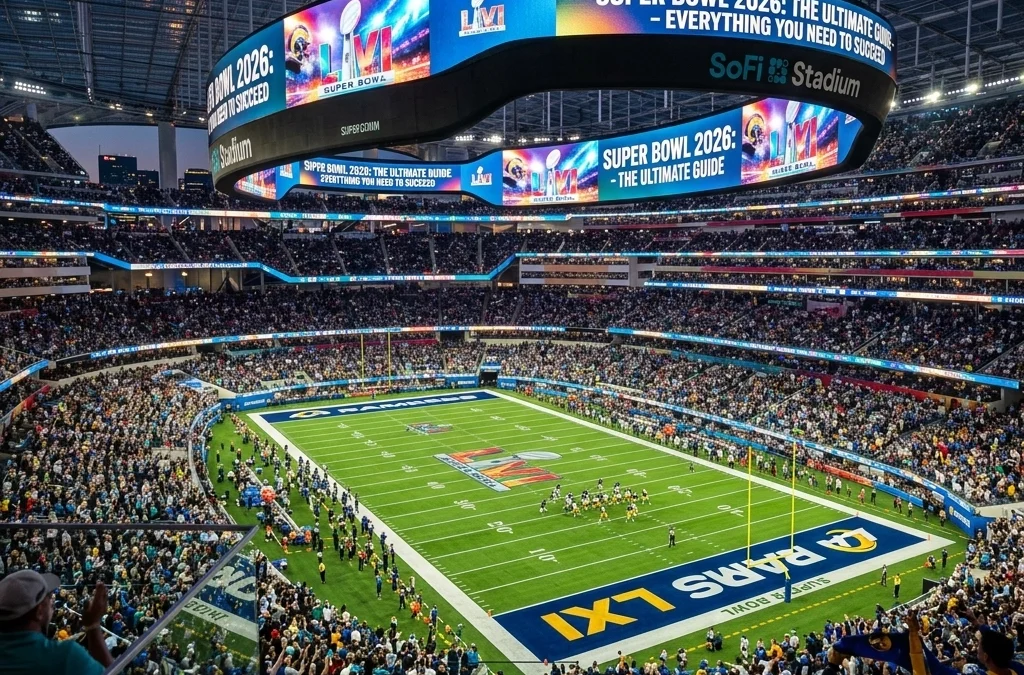
The dust has settled at Levi's Stadium in Santa Clara. The Seattle Seahawks have claimed their victory over the New England Patriots in Super Bowl LX. While the players on the field made history on February 8, 2026, another game was being played in the concourses, on the perimeter boards, and across every digital screen in the Bay Area.
OOH Sports spent the last 40 years preparing for this moment. The evolution from simple static posters to fully integrated, venue-wide digital takeovers has changed how brands interact with fans. This guide breaks down the strategies used during the 2026 championship and how floor-to-billboard coverage is the new gold standard for sports advertising.
40 Years of Advertising Leadership
The journey to the 2026 Super Bowl started decades ago. In the mid-1980s, out-of-home advertising was about location and longevity. A brand bought a billboard and it stayed there for months. Today, the landscape is built on speed, data, and precision. OOH Sports has led this transition by moving beyond the highway and into the heart of the stadium experience.
The 2026 event showcased the culmination of four decades of expertise. It was not just about having the biggest screen. It was about creating a cohesive narrative that followed the 75,000 fans from the moment they stepped off the train in Santa Clara until the final confetti fell for the Seahawks. By leveraging 40 years of industry knowledge, the campaign achieved a level of saturation that traditional television ads often struggle to match in a fragmented media world.
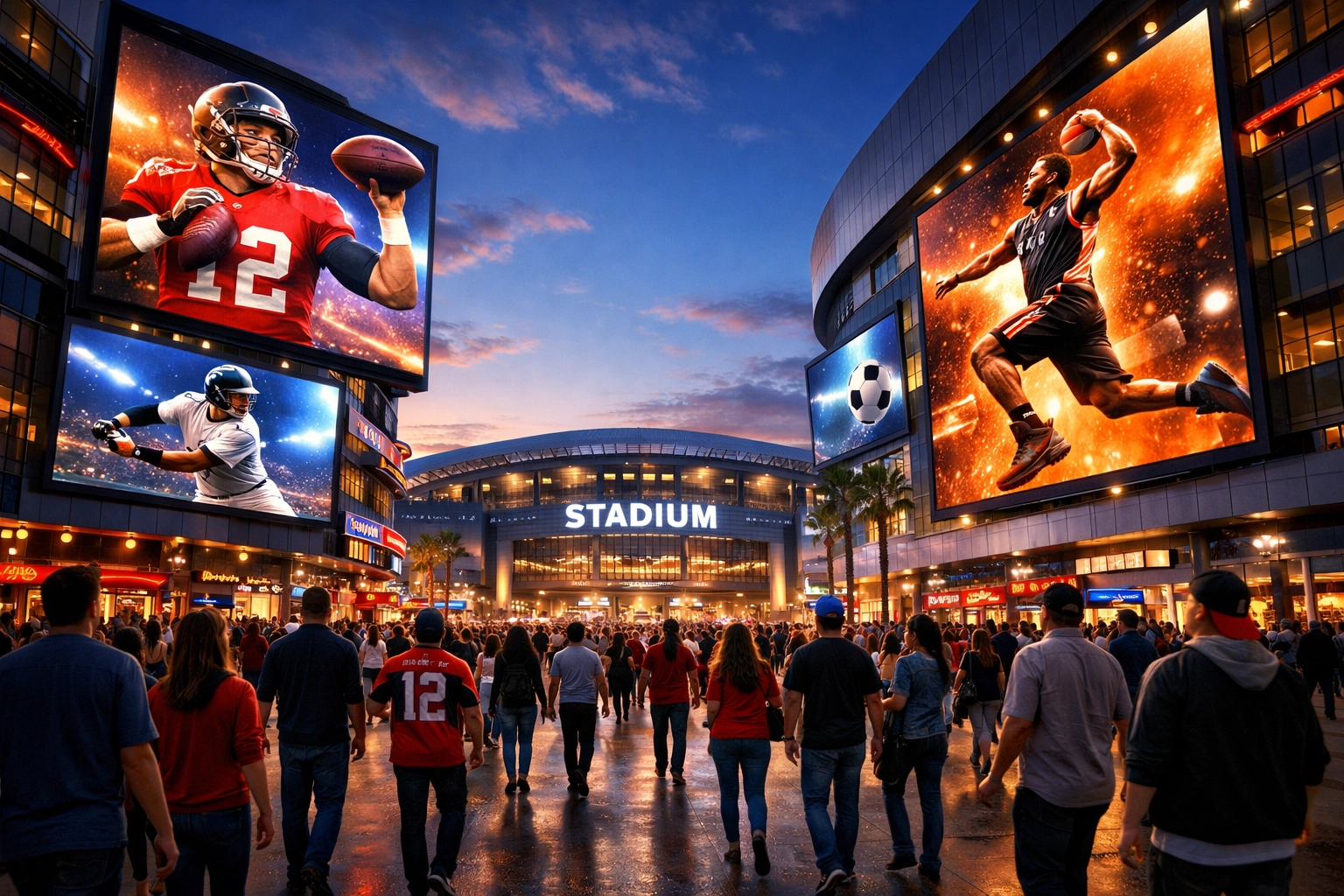
The Strategy: Total Venue Dominance
The objective for Super Bowl LX was clear: create a 360-degree brand environment. This is what the industry calls venue-wide coverage. It is a strategy that treats every square inch of the stadium as a potential touchpoint.
Floor Graphics and Ground-Level Engagement
In the past, the ground was overlooked. In 2026, floor graphics became a primary driver of engagement. These high-durability, slip-resistant digital and static wraps turned transit hubs and stadium entrances into branded pathways. When fans looked down to check their tickets or navigate the crowd, they saw high-impact visuals. This ground-level approach ensures there are no dead zones in the brand experience.
Perimeter Targeting and Internal Screens
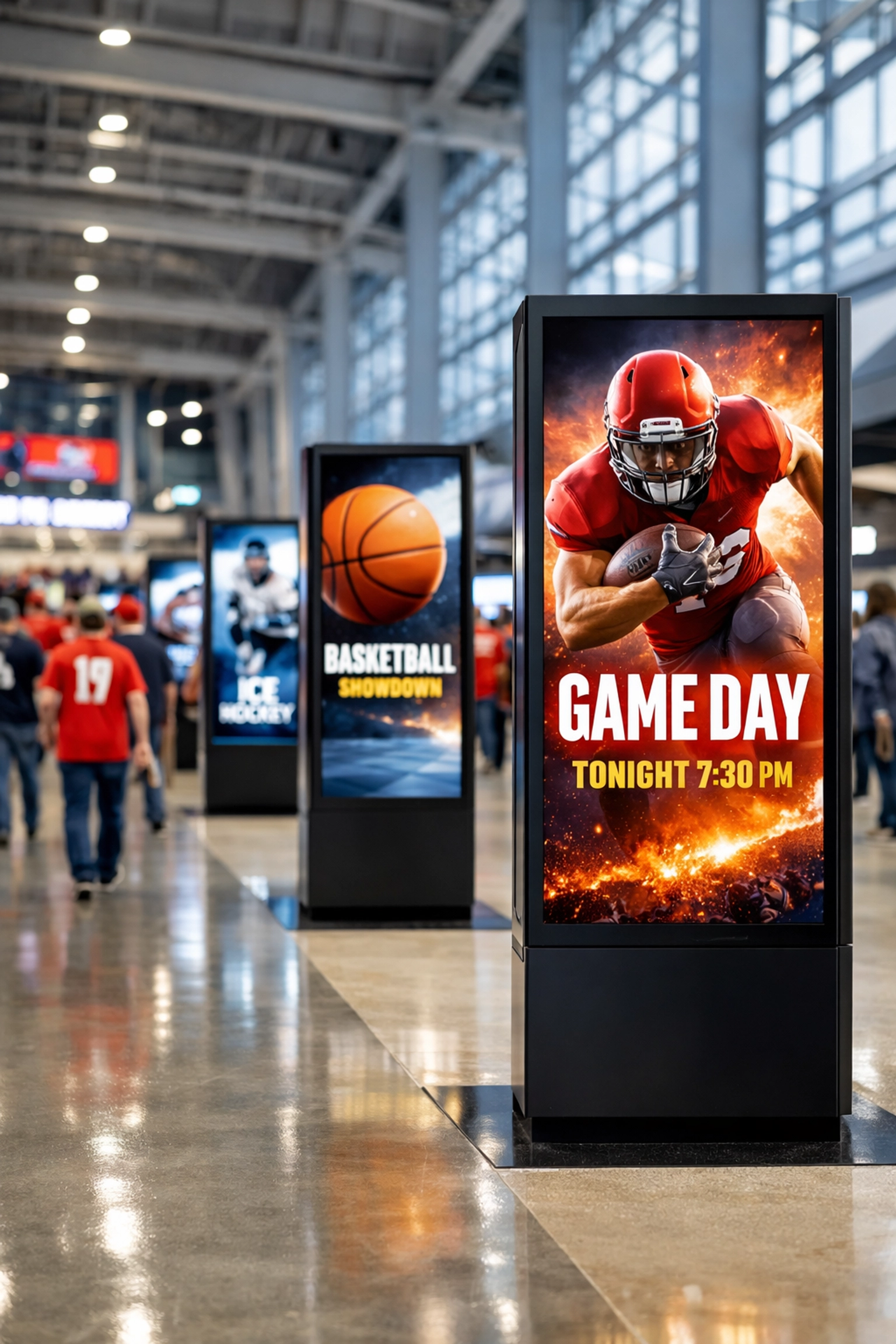
Inside Levi's Stadium, the focus shifted to perimeter boards and concourse screens. Using programmatic digital out-of-home (DOOH) technology, advertisers could change creative in real-time based on the game’s momentum. When the Seahawks scored, the screens reflected the excitement instantly. This type of stadium perimeter targeting fixed the old problem of static ads feeling out of sync with the live action.
The Power of Massive Billboards
While internal screens handle the fan experience, massive external billboards capture the city's attention. The Bay Area was blanketed with digital displays that reached people who were in town for the festivities but did not have a ticket to the game. These larger-than-life placements provided the necessary scale to anchor the entire campaign.
Integrating Real-Time Video Content
A major component of the 2026 strategy involved the integration of dynamic video content. Static images are no longer enough to hold the attention of a modern sports fan. High-definition video that tells a story in 15 seconds or less is the requirement.
Below is a look at how venue-wide coverage comes to life through coordinated video efforts:
https://www.youtube.com/watch?v=l6J-0zileKE
Objective and Execution: The Logistics of Scale
Managing a campaign of this magnitude requires a mix of human expertise and advanced technology. The goal was to ensure that every ad served was relevant to the specific time and location.
Technology Partners and Programmatic DOOH
The use of programmatic platforms like StackAdapt allowed for seamless execution across 25,000 digital screens in the region. This technology enabled the campaign to reach fans based on their proximity to the stadium and their digital behavior. For instance, brands like Nike have previously shown that you do not need to be an official sponsor to dominate the conversation if your OOH strategy is precise.
Real-Time Betting and Fan Engagement
One of the most successful segments of the 2026 campaign involved real-time sports betting updates. By using DOOH campaigns that convert in under 24 hours, betting platforms were able to push live odds directly to fans standing in line for concessions. This immediate call to action resulted in a significant spike in app downloads and live wagers during the first half of the game.
Measuring Success: Results from Super Bowl LX
The success of the Super Bowl 2026 campaign was not measured by gut feeling, but by hard data. By using AI-powered analytics, OOH Sports was able to track device IDs exposed to the ads and correlate them with post-game consumer behavior.
Brand Lift and Awareness
Data from the 2026 event showed a massive lift in brand awareness for those who utilized the venue-wide approach. Similar to how AB InBev saw a 119% lift in positive brand image in previous campaigns, Super Bowl advertisers in 2026 experienced record-breaking engagement levels.
Fan-Centric Content vs. Brand-Centric Content
The campaigns that performed best were those that prioritized the fan experience. Instead of just showing a product, the most successful ads celebrated the game, the Seahawks' victory, and the halftime performance by Bad Bunny. This fan-centric approach consistently delivers a better return on investment than ads that are purely promotional.
Quantifiable Impact
Key metrics from the venue-wide coverage included:
- A 90% increase in fan engagement for geographically targeted ads.
- A significant boost in purchase consideration, following the trend set by brands like White Claw.
- Total OOH sports advertising is on track to reach its projected $50 billion valuation by 2030, with the 2026 Super Bowl serving as a major catalyst.
Why 2026 Changed Everything
Super Bowl LX was a turning point. It proved that traditional stadium sponsorships are evolving into something much more dynamic. With the expansion of 5G and AI-driven creative, the ads in Santa Clara were more than just pictures on a wall. They were interactive, responsive, and highly personal.
The move toward AI-powered DOOH has allowed marketers to stop guessing. Every screen in Levi's Stadium was part of a larger ecosystem that analyzed crowd density and sentiment in real-time. This ensured that the right message reached the right fan at exactly the right moment.

Planning for the Future of Sports OOH
As we look past the 2026 season, the strategies used at Levi's Stadium provide a roadmap for future events. Whether it is a local marathon or the next global championship, the principles of venue-wide coverage remain the same.
- Start with the fan journey: Map out every point of contact from the parking lot to the seat.
- Use every surface: Do not ignore floors, ceilings, or transit shelters.
- Embrace programmatic: Use the flexibility of digital screens to keep content fresh and relevant.
- Measure everything: Use AI-powered analytics to prove the success of the campaign.
The 2026 Super Bowl was a victory for the Seattle Seahawks, but it was also a victory for modern advertising. By combining 40 years of leadership with the latest in digital technology, OOH Sports demonstrated that the future of sports marketing is already here. The ability to dominate an entire venue ensures that a brand is not just seen, but remembered long after the game is over.
For those looking to capture their share of the growing sports DOOH market, the lesson from Santa Clara is simple: go big, go digital, and cover the whole house.