
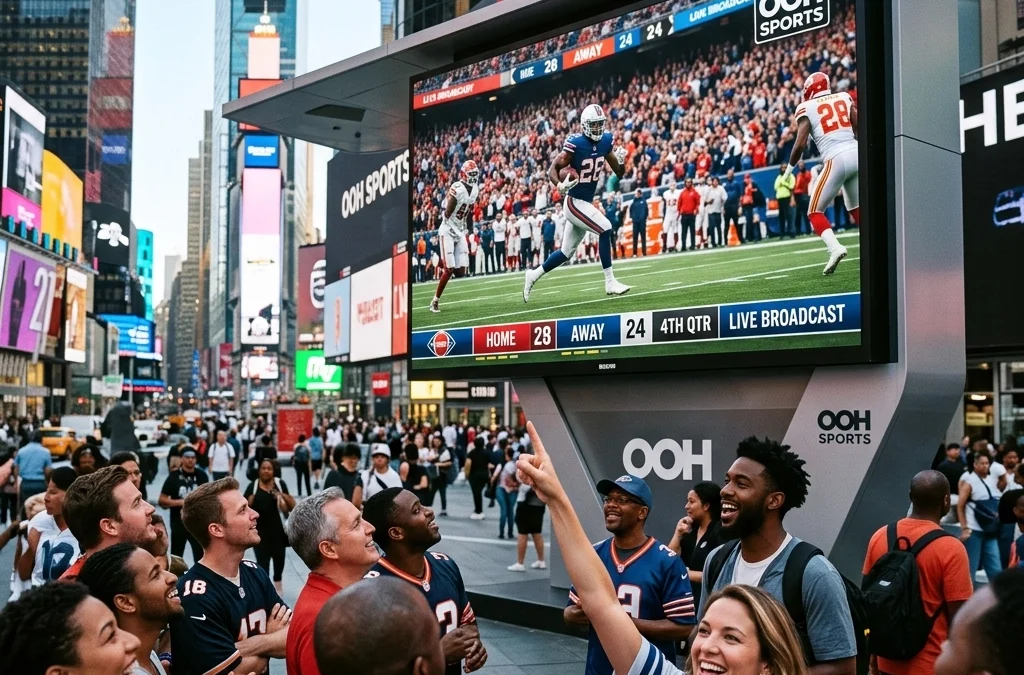
The landscape of sports marketing is undergoing a significant transformation. As traditional television viewership fragments and digital fatigue sets in, brands are seeking more impactful ways to reach fans in the physical world. OOH Sports has emerged as a central figure in this shift, recently announcing major network updates that expand its reach and technological capabilities.
The growth of the out of home (OOH) industry is not merely anecdotal. Total spending in the sector has recently crossed the $9 billion mark, with digital out of home (DOOH) accounting for nearly $3.6 billion of that total. This surge is driven by a move toward modernization and the ability to measure results with the same precision as online advertising. OOH Sports is at the forefront of this evolution, providing a bridge between massive sports audiences and data-driven brand strategies.
Strategic Network Expansion and Milestone Growth
OOH Sports has reached a new milestone in its network footprint, now facilitating access to over 25,000 digital screens located in high-traffic sports environments. This expansion focuses on venues where sports fans are most engaged, including stadiums, sports bars, gyms, and transit hubs near major athletic complexes.
The strategy behind this expansion is to surround the fan journey. By placing screens in environments where fans consume sports content or participate in fitness activities, the network ensures brand messages are delivered during moments of peak emotional engagement. This geographic and contextual relevance is a primary reason why media buyers are increasingly prioritizing the OOH Sports network.
The Objective of Universal Accessibility
One of the core objectives of the recent updates is to lower the barrier to entry for sports marketing. Traditionally, stadium sponsorships were reserved for brands with multi-million dollar budgets. The OOH Sports network updates provide an alternative, allowing local and national brands to leverage stadium-adjacent inventory without the prohibitive costs of official league sponsorships.
- Objective: Democratize access to premium sports audiences.
- Strategy: Aggregating thousands of independent digital screens into a single, unified buying platform.
- Result: Increased participation from diverse brand categories, including beverage, automotive, and sports betting.
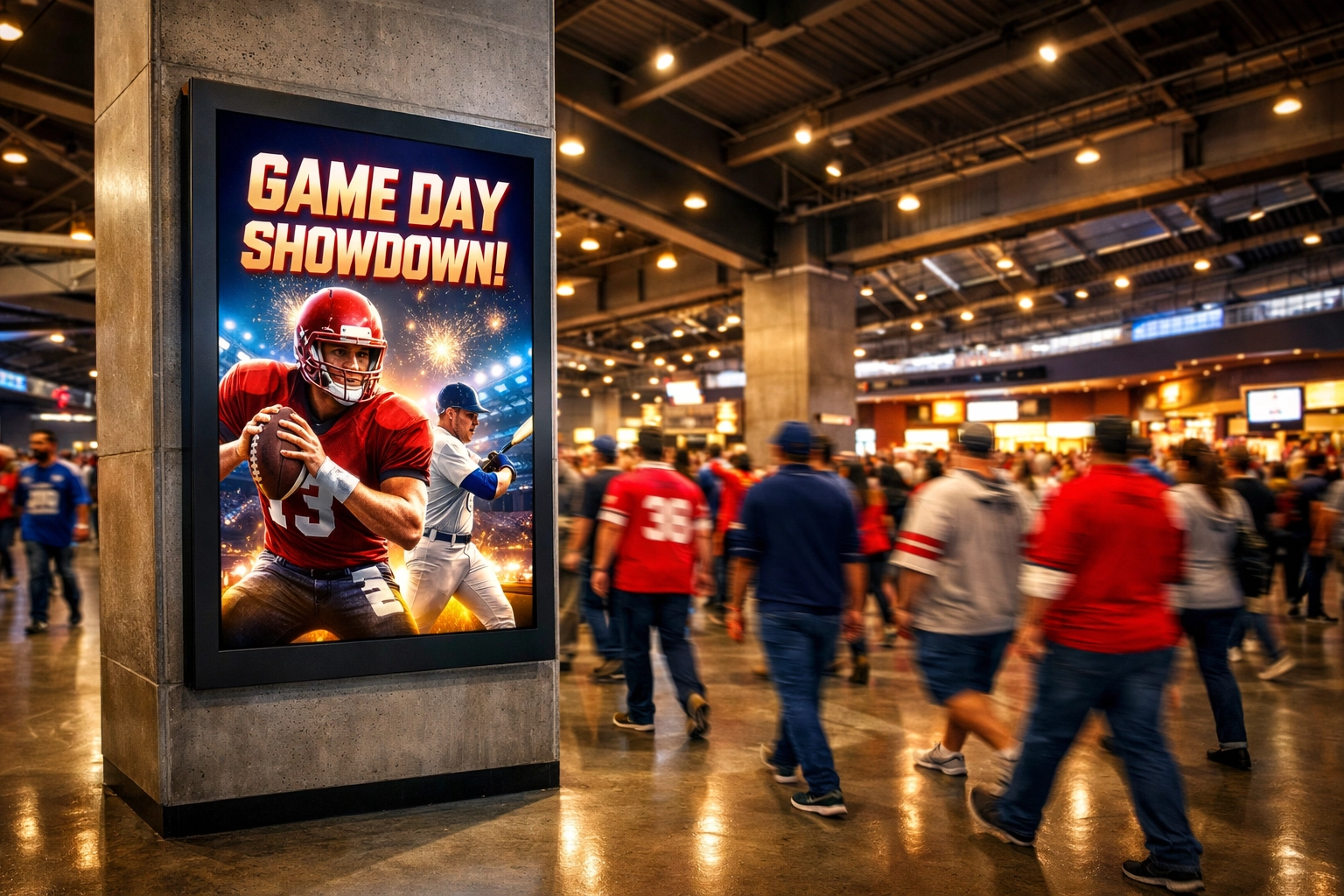
Technological Integration and Programmatic Capabilities
The shift from manual to programmatic buying represents the most significant update to the OOH Sports infrastructure. By integrating with leading demand-side platforms (DSPs) such as StackAdapt, the network allows media buyers to purchase OOH inventory with the same flexibility as social media or search ads.
The adoption of programmatic DOOH is accelerating, with reports indicating that a large percentage of media planners intend to shift significant portions of their budgets to these channels. The OOH Sports network update includes enhanced API integrations that support real-time bidding, allowing campaigns to be activated or paused based on live sports events, weather conditions, or local triggers.
Key Technology Partners and Infrastructure
The modernization of the OOH Sports platform involves several key technical components:
- Ad Exchange Integration: Seamless connection to global ad exchanges ensures that inventory is available to international buyers.
- Real-Time Data Feeds: Integration of live scoreboards and sports data allows creative content to change dynamically based on the outcome of a game.
- Audience Analytics: Use of anonymized mobile location data to provide heat maps of fan movement and dwell times.
For a deeper look at how these technical integrations drive results, the platform’s collaboration with StackAdapt serves as a prime example of how programmatic DOOH is driving adoption in omnichannel campaigns. More details can be found in the spotlight on StackAdapt DSP.
Measured Results and Brand Efficacy
The success of the OOH Sports network updates is validated by recent campaign data. The move toward digital-first OOH has proven to deliver a higher return on investment (ROI) compared to traditional, static billboards.
Recent studies indicate that fans exposed to sports-related OOH advertisements are 23% more likely to tune into live games. Furthermore, programmatic DOOH has been shown to drive a 300% increase in purchase intent compared to classic OOH formats. This efficacy is attributed to the "unskippable" nature of the medium and its ability to establish a high level of brand trust.
Quantifiable Success Stories
Several major brands have utilized the OOH Sports network to achieve record-breaking metrics. These campaigns highlight the power of the network’s targeting capabilities:
- Beverage Industry Impact: A major campaign for White Claw’s vodka launch utilized the network to achieve a 74% lift in purchase consideration. The execution involved targeting high-density nightlife and sports areas, ensuring the product was top-of-mind during consumption hours. Detailed metrics on this campaign are available in the White Claw case study.
- Brand Image Elevation: Mike’s Hard Iced Tea saw a 119% lift in positive brand image through a programmatic DOOH campaign. The strategy focused on the flexibility of digital screens to display vibrant, high-energy creative that resonated with younger demographics. The full breakdown of this strategy can be found in the AB InBev’s Mike’s Hard Iced Tea report.
- Automotive and Leisure: Sea-Doo’s first digital OOH campaign resulted in a 144% increase in purchase consideration. By targeting sports enthusiasts in transit and leisure environments, the brand successfully moved consumers through the sales funnel. Read more on how Sea-Doo’s campaign increased consideration.

Real-Time Strategies for Sports Betting and Retail
The OOH Sports network updates have specifically catered to the burgeoning sports betting market. Real-time updates allow betting platforms to display live odds and "bet now" prompts directly on digital screens. This capability is crucial for an industry where timing is the primary driver of conversion.
Recent updates to the OOH Sports backend allow for the launch of real-time sports betting campaigns in under 24 hours. This speed is a significant advantage over traditional print or television advertising, where lead times can span weeks. The ability to react to a sudden injury or a major upset gives sportsbooks a tactical edge. For more on this, explore how to launch real-time sports betting campaigns.
Retail Integration in Major Hubs
The network also plays a vital role in retail driving. In shopping destinations like New York City, the integration of OOH Sports screens within the urban landscape helps direct fans to flagship stores. During holiday seasons or major sporting events, these screens serve as digital signposts, bridging the gap between digital discovery and physical purchase. Insights into this retail synergy are detailed in the New York City shopping destination guide.
Addressing Measurement and Attribution Challenges
Historically, OOH was criticized for a lack of precise measurement. The OOH Sports network updates address this through AI-powered analytics and device ID tracking. By correlating screen exposure with mobile device movement, the network can now track foot traffic to retail locations or lift in website visits post-exposure.
Common mistakes in OOH measurement, such as relying solely on estimated traffic counts, are being replaced by rigorous data sets. This transition allows media buyers to justify their spend with hard data, similar to the metrics provided by digital giants like Google or Meta. Information on how AI-powered analytics fix these issues can be found in the 7 mistakes in sports DOOH measurement.
The Path to 2030: Projected Industry Dominance
The trajectory of sports-related DOOH is set for exponential growth. Projections suggest that sports advertising in the DOOH space will hit $50 billion by 2030. The OOH Sports network updates are designed to prepare the platform for this massive influx of capital.
As more brands move away from traditional stadium sponsorships, which can sometimes be seen as static or unmeasurable, the flexibility of 25,000 digital screens becomes the preferred choice. The question for many media planners is no longer if they should use OOH, but how quickly they can adapt to these programmatic updates. The shift is well-documented in the analysis of why 67% of media planners are shifting budgets.

Conclusion
The updates to the OOH Sports network represent a milestone for the advertising industry. By combining the emotional power of sports with the precision of programmatic technology, the network provides a unique value proposition for media buyers and brands. With expanded reach, real-time capabilities, and proven ROI, the platform is setting a new standard for how brands interact with the modern sports fan.
For brands looking to capture their share of the growing sports market, the time to leverage these updates is now. The infrastructure is in place, the data is clear, and the audience is waiting. Explore the full range of opportunities at the OOH Sports website.