
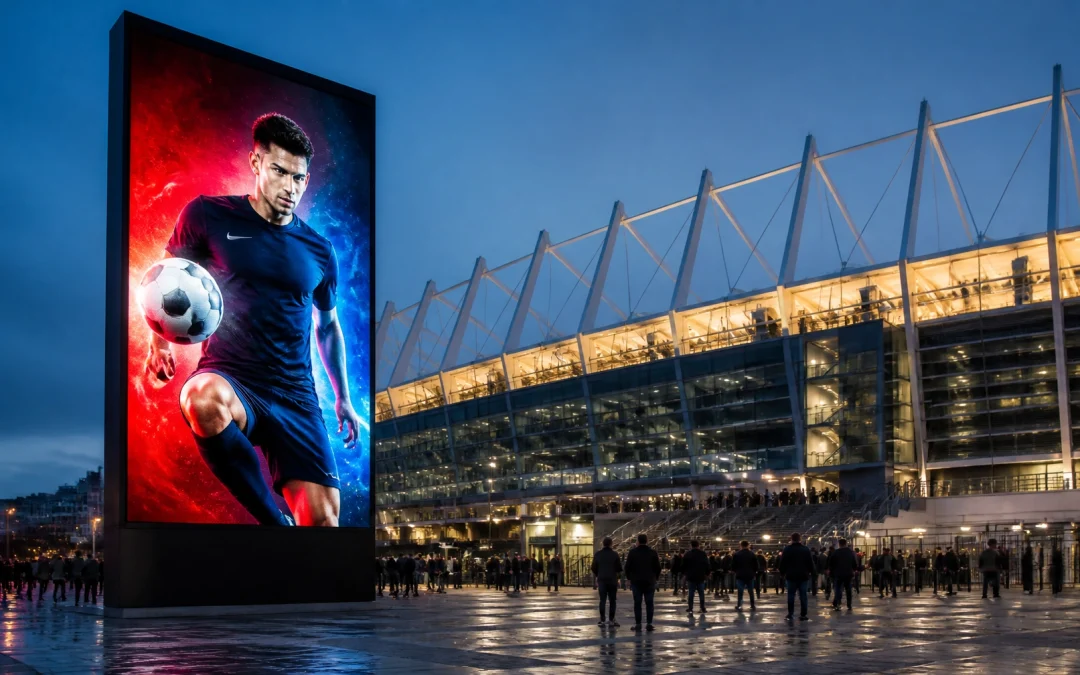
The landscape of out-of-home advertising has undergone a fundamental transformation. What was once a medium defined by static billboards and broad, unmeasurable reach has evolved into a sophisticated, data-driven ecosystem. For media buyers and brand managers seeking to maximize return on investment (ROI), the intersection of digital out-of-home (DOOH) technology and the high-engagement world of sports provides a powerful platform for growth.
As the industry moves deeper into an era of programmatic execution and advanced attribution, understanding the nuances of this medium is essential. This analysis explores ten critical insights into the DOOH industry that are currently shaping successful marketing strategies.
1. The Programmatic Pivot Enhances Flexibility
Programmatic digital out-of-home (pDOOH) has transitioned from a niche buying method to a dominant market force. Industry forecasts indicate that pDOOH will account for approximately 65.5% of total DOOH spend in the near future. This shift is driven by the demand for flexibility. Unlike traditional OOH buys that require long-term commitments and static creative, programmatic platforms allow brands to pause, adjust, or scale campaigns in real-time. This agility is particularly valuable in the sports sector, where game schedules and team performances can change rapidly.
2. Sports Fans Are High-Action Consumers
Research into consumer behavior reveals that sports fans are among the most responsive audiences for DOOH advertising. Data shows that nearly 90% of adults who see an OOH ad promoting a major sporting event take a real-world action. These actions include searching for a brand online, visiting a website, or discussing the advertisement with peers. This high rate of recall and subsequent engagement makes sports-centric DOOH a reliable driver of performance metrics.
3. Hyper-Local Perimeter Targeting Drives Precision
One of the most effective strategies for increasing ROI is the implementation of perimeter targeting. By focusing on digital displays within a ten-mile radius of major sports venues, brands can capture the attention of fans as they move through the "fan journey" from transit hubs to entertainment districts and finally to the stadium itself. This geographically targeted DOOH approach ensures that marketing spend is concentrated where the audience density and intent are highest.

4. Dynamic Creative Triggers Maximize Relevance
The ability to utilize dynamic creative optimization (DCO) is a hallmark of modern DOOH. Campaigns can now be programmed to trigger specific creative assets based on external data points such as weather conditions, live game scores, or even the time of day. For example, a beverage brand might trigger a specific creative when the local temperature exceeds a certain threshold or when a home team scores a goal. This level of contextual relevance significantly improves brand preference ratings and purchase consideration.
5. Cross-Device Retargeting Bridges the Gap
DOOH is no longer an isolated channel. Advanced technology partners now enable brands to retarget audiences who have been exposed to a DOOH display. By capturing anonymized device IDs within the vicinity of a digital board, marketers can serve follow-up ads on mobile devices or through social media platforms. This omnichannel approach creates a cohesive brand experience and reinforces the initial message, leading to higher conversion rates over time.
6. Mobile Footfall Attribution Proves Impact
A common challenge in traditional advertising has been the difficulty of measuring physical store visits. However, DOOH now offers robust footfall attribution models. By utilizing mobile location signals, advertisers can track whether individuals exposed to a DOOH ad subsequently visited a retail location or a specific venue. This data provides a clear before-and-after comparison of consumer behavior, allowing for a precise calculation of incremental reach and ROI.
7. Cost Efficiency Compared to Traditional Sponsorships
The financial entry point for reaching sports fans has historically been high, often requiring multi-million dollar stadium naming rights or official sponsorships. Current industry trends suggest that brands can achieve comparable or even superior reach by utilizing perimeter DOOH networks. By scaling across 25,000 digital screens rather than a single venue sponsorship, brands can reduce costs by up to 80% while maintaining high visibility during key sports moments.

8. 3D and Anamorphic Creative Captures Attention
As digital screen technology advances, 3D and anamorphic creative formats are becoming more prevalent. These visually stunning displays create an illusion of depth, making content appear as if it is "popping out" of the screen. While these executions require specialized creative planning, the impact on audience engagement is substantial. Brands utilizing these high-impact visuals often report significant lifts in brand awareness and social media "amplification" as fans record and share the displays on their personal profiles.
9. Real-Time Sports Betting Integration
The legalization of sports betting in many regions has created a new vertical for DOOH growth. Real-time data feeds allow sportsbooks to display live odds and betting lines directly on digital screens. Launching real-time sports betting DOOH campaigns that convert in under 24 hours is now a reality. This immediacy taps into the "in-the-moment" nature of sports fandom, driving app downloads and betting activity during peak game hours.
10. AI-Powered Optimization and Analytics
Artificial intelligence is playing an increasingly important role in optimizing DOOH performance. AI algorithms can analyze vast datasets to determine the optimal times and locations for ad delivery based on historical traffic patterns and audience demographics. Furthermore, AI-powered analytics can provide deeper insights into campaign success by identifying patterns in consumer movement and engagement that were previously undetectable.
Strategy and Execution
To implement these insights effectively, a structured approach to campaign execution is required. The process typically begins with the identification of key sports venues and the surrounding high-traffic areas. Technology partners are then selected to handle the programmatic buying and data integration.
Objective & Strategy:
- Define specific KPIs, such as brand lift, footfall increase, or online conversion.
- Select target geofences around sports arenas and transit corridors.
- Develop dynamic creative assets that respond to real-time triggers.
Technology Partners:
- Utilize Demand-Side Platforms (DSPs) with specific DOOH capabilities.
- Integrate location-intelligence providers for audience measurement.
- Employ attribution platforms to link exposure to real-world outcomes.
Measurable Results
The effectiveness of these strategies is supported by numerous case studies. For instance, campaigns utilizing programmatic DOOH for beverage launches have seen purchase consideration lifts as high as 74%. In the sports apparel sector, geographically targeted campaigns have resulted in significant increases in positive brand image and local retail traffic. By moving away from guesswork and toward data-driven execution, brands are seeing a clear path to better ROI in the DOOH space.

The DOOH industry continues to evolve, offering more precision and accountability than ever before. For those involved in the buying and planning of sports advertising, staying informed on these trends is not just an advantage. It is a necessity for long-term success. By leveraging the power of programmatic flexibility, hyper-local targeting, and advanced measurement, brands can ensure their message is heard exactly when and where it matters most.
For more information on how the digital out-of-home landscape is changing the future of sports marketing, explore the latest strategies for capturing market share.