
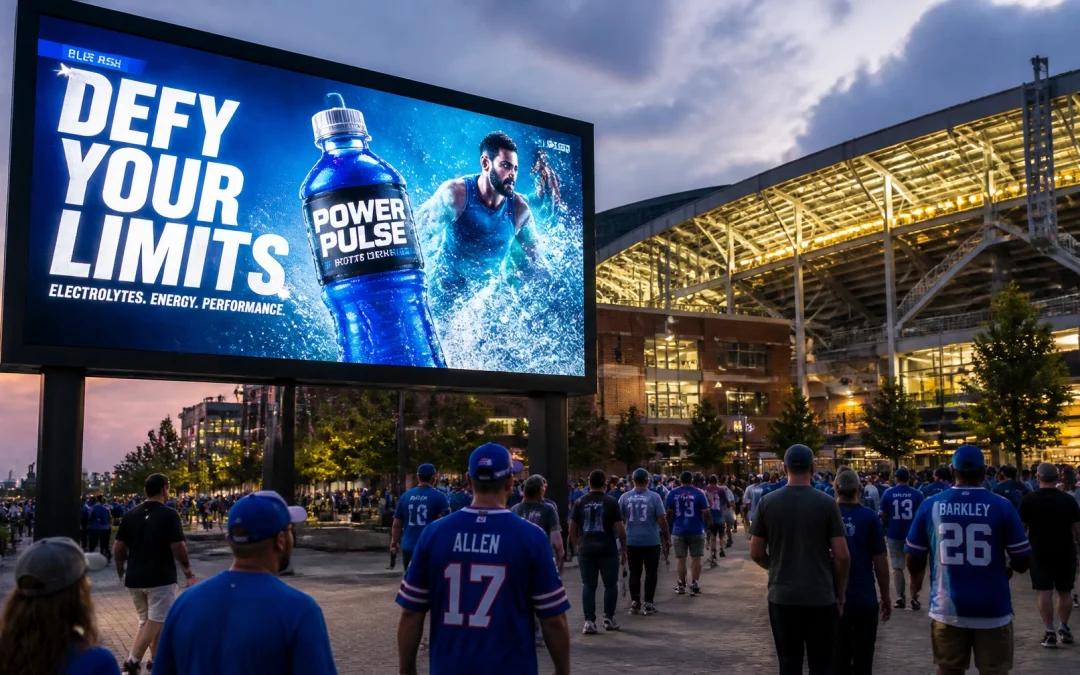
The landscape of sports marketing is undergoing a significant transformation. Traditionally, brands associated with major sporting events relied heavily on broadcast television commercials or static stadium signage to reach their audience. While these methods remain relevant, the emergence of Digital Out-of-Home (DOOH) advertising within the sports ecosystem is redefining how media buyers and brand managers engage with fans. By leveraging technology and data, sports DOOH allows brands to move beyond the confines of the arena and into the daily lives of consumers.
This evolution is driven by the ability to target fans not just during the three hours of a game, but throughout their entire journey. From the morning commute to the gym, the grocery store, and the sports bar, digital screens are becoming the connective tissue between a brand and a passionate sports audience. This shift represents a move toward more agile, measurable, and impactful advertising strategies that align with the sophisticated needs of modern marketing departments.
Strategy: The 10-Mile Perimeter Advantage
A cornerstone of the sports DOOH strategy is the implementation of a perimeter-based approach. By establishing a digital presence within a 10-mile radius of sports venues, brands can effectively "own" the environment where fans congregate. This strategy recognizes that the fan experience is not localized to a single seat in a stadium. It extends to the surrounding neighborhoods, transit hubs, and retail centers.
The 10-mile radius serves as a strategic filter. It captures individuals who are geographically and emotionally primed for sports-related content. Whether they are heading to the venue, attending a watch party at a local venue, or simply living in a city electrified by a playoff run, these consumers are in a high-intent mindset. Digital screens in these areas, including roadside billboards, mall kiosks, and gas station displays, provide a continuous loop of brand exposure that reinforces larger sponsorship efforts.
This geographic targeting is not merely about proximity. It is about context. A fan seeing a digital ad for a sports beverage while walking toward the stadium entrance experiences a much higher level of relevance than a generic consumer seeing the same ad in a different city. By focusing on these high-density fan zones, media buyers can reduce wasted impressions and increase the efficiency of their media spend.

Objective and Strategy: Integrating Into the Fan Journey
The primary objective of sports DOOH is to integrate a brand into the daily routine of the sports fan. Research indicates that fans spend the vast majority of their time outside the stadium. Therefore, a successful campaign must address the "everyday fan routine" rather than just the "game day experience." This involves placing advertisements in diverse environments such as gyms, grocery stores, and transit shelters.
For brand managers, this approach builds long-term relationships by turning the brand into a fixture in the lives of fans. It moves the brand from being a temporary visitor during a commercial break to being a constant companion. The strategy involves several key tactics:
- Consistency Across Channels: Repurposing creative assets from TV, Connected TV (CTV), and social media for DOOH formats ensures a unified brand voice. When a fan sees a consistent message on a gym screen and later on a large-format billboard, the brand memory structure is significantly strengthened.
- Emotional Alignment: Sports environments are inherently emotional. By placing ads in sports bars or near arenas during key matchups, brands can capitalize on the heightened state of engagement and readiness to spend that characterizes sports fandom.
- Democratizing Access: Sports DOOH allows emerging or regional brands to participate in the sports conversation without the prohibitive costs of naming rights or league-level sponsorships. A brand can effectively "sponsor" a specific neighborhood or a set of local fan hubs.
By focusing on these objectives, brands can bridge the gap between high-level awareness and tangible consumer action. The physical presence of DOOH build trust and legitimacy, qualities that are increasingly difficult to achieve in crowded digital environments where ads can be easily skipped or blocked.
Technology Partners and Programmatic Execution
The move toward DOOH in sports is underpinned by the rise of programmatic technology. Unlike traditional out-of-home advertising, which often required long-term contracts and static creative, programmatic DOOH offers the same level of flexibility as online display or video advertising. Media buyers can now purchase sports DOOH inventory through Demand-Side Platforms (DSPs) such as StackAdapt, allowing for seamless integration into omnichannel campaigns.
The technology enables several advanced execution tactics:
- Real-Time Triggers: Campaigns can be activated or adjusted based on specific events. This includes weather conditions, time of day, or the start of a specific playoff series. For example, a sports betting brand can trigger ads to appear on screens 30 minutes before kickoff to capture last-minute interest.
- Agile Budgeting: Programmatic execution allows media buyers to shift spend in real time based on performance or changing game schedules. If a specific region is showing high engagement, resources can be reallocated instantly to maximize impact.
- Dynamic Creative Optimization: The content on digital screens can change based on live data feeds. This allows brands to display real-time scores, countdowns to big games, or localized messaging that resonates with specific communities.
These technological capabilities transform DOOH from a passive medium into a dynamic, performance-oriented channel. It allows for the precision targeting of specific audience segments, such as "frequent stadium attendees" or "gym enthusiasts," using the same data-driven logic applied to digital web campaigns.

Results: Quantifying Impact and Attribution
The success of sports DOOH is no longer a matter of anecdotal evidence. Robust measurement and attribution models now provide clear data on how these campaigns drive business outcomes. By using unique device IDs and location data, technology partners can track the consumer journey from exposure to action.
Data from recent campaigns highlights the significant lift that sports DOOH can provide. For instance, a campaign for White Claw’s vodka launch utilized programmatic DOOH to drive a 74 percent lift in purchase consideration. Similarly, Sea-Doo’s first digital OOH campaign resulted in a 144 percent increase in purchase consideration by targeting relevant outdoor and sports-oriented environments.
Further examples include AB InBev’s Mike’s Hard Iced Tea, which saw a 119 percent lift in positive brand image. These results demonstrate that the emotional context of sports, combined with the high-impact nature of digital screens, creates a powerful environment for brand building.
Measurement strategies typically focus on three key areas:
- Brand Lift Studies: Measuring changes in awareness, favorability, and purchase intent among exposed audiences compared to a control group.
- Foot Traffic Attribution: Using location data to determine if individuals exposed to a DOOH ad subsequently visited a retail location or a sports venue.
- Digital Conversions: Tracking online actions, such as website visits or app downloads, that occur after exposure to a digital screen.
This level of data-driven insight allows media buyers to justify their investments and refine their strategies for future campaigns. It places DOOH on par with other digital channels in terms of accountability and performance.

The Future of Sports Engagement
As the advertising industry continues to move away from third-party cookies and faces increasing fragmentation in digital media, the value of physical, high-impact advertising becomes even more apparent. Sports DOOH offers a way to reach a massive, engaged audience in a brand-safe and non-intrusive manner.
For media buyers and brand managers, the opportunity lies in treating DOOH as a central component of a modern media mix. It is not just an "add-on" to a TV buy, but a strategic tool that can drive both top-of-funnel awareness and bottom-of-funnel conversions. By focusing on the fan journey, leveraging programmatic technology, and measuring outcomes with precision, brands can ensure they are not just seen by fans, but are remembered and acted upon.
The evolution of the "sportron" and other specialized sports digital assets indicates a future where every part of the fan environment is a potential touchpoint for meaningful brand engagement. Whether it is through stadium perimeter campaigns or real-time sports betting integrations, the ability to connect with the sports community has never been more sophisticated.
In summary, sports DOOH is changing the game by offering:
- Precision Targeting: Reaching fans within a critical 10-mile radius of the action.
- Agile Execution: Using programmatic platforms to adjust campaigns in real time.
- Proven Results: Delivering measurable lifts in brand consideration and image.
- Contextual Relevance: Aligning brand messages with the passion and excitement of sports fandom.
For those looking to stay ahead in the competitive world of sports marketing, the adoption of these innovative DOOH strategies is no longer optional. It is the key to capturing the attention and loyalty of the modern fan.