
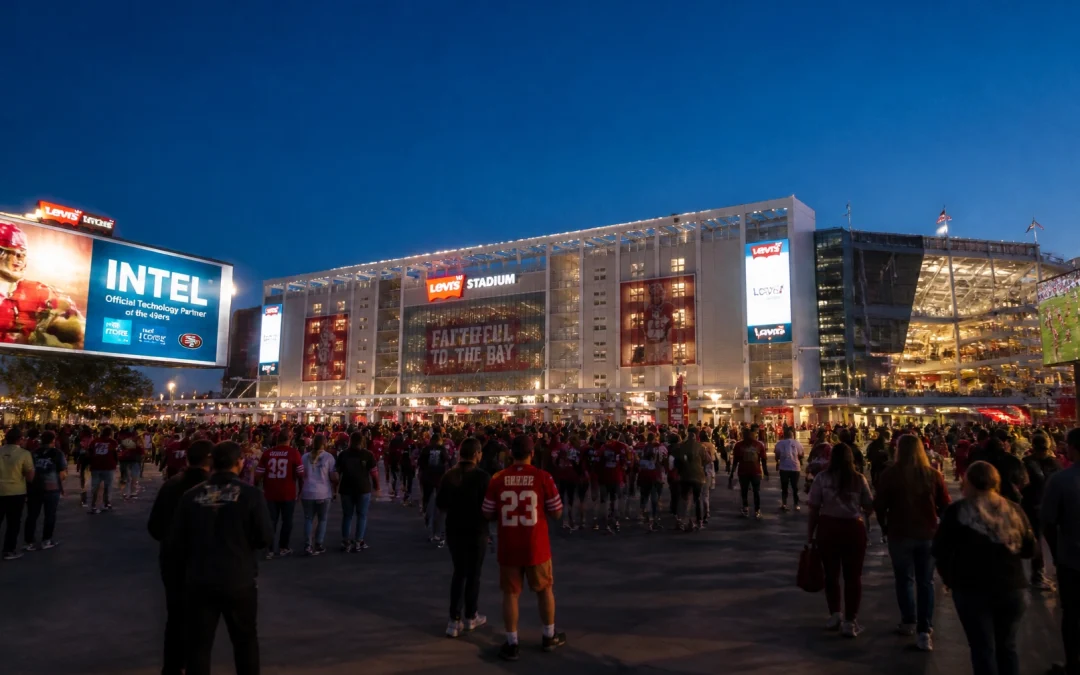
The countdown to Super Bowl 2026 at Levi’s Stadium in Santa Clara has officially begun. For brand managers, this is not just a game. It is the ultimate stage for marketing innovation. As the industry evolves, the old ways of buying a single 30-second TV spot are being replaced by a total venue takeover strategy.
With 40 years of advertising leadership, the Sports Media Inc. family has perfected the art of stadium saturation. This expertise allows brands to move beyond the screen and into the physical space where fans live, breathe, and celebrate. OOH Sports provides the tools to own every inch of the venue, from the floors fans walk on to the massive digital billboards they see from miles away.
This guide outlines the specific steps required to master the 2026 landscape and ensure a brand message is unavoidable during the biggest event in sports.
Strategy: The Perimeter and Beyond
The core strategy for Super Bowl 2026 revolves around the "10-mile rule." By securing digital out of home (DOOH) assets within a 10-mile perimeter of Levi’s Stadium, brands can capture the attention of high-value audiences before they even enter the gates. This includes transit hubs, parking structures, and local social centers where the Bay Area community gathers.
The objective is to create a seamless brand journey. A fan might see a digital ad at a Caltrain station, encounter floor graphics in the concourse, and then see the same campaign messaging on a massive billboard as they exit the stadium. This repetitive, high-impact exposure is what builds lasting brand recall.
https://www.youtube.com/watch?v=l6J-0zileKE
5 Steps to Venue Mastery
1. Map the 10-Mile High-Impact Zone
Success starts with geography. Brands must identify the key transit corridors and social hubs within the 10-mile radius of Levi’s Stadium. This area is a high-value geofencing zone that captures fans, tourists, and locals. By prioritizing large-format DOOH units on the main pedestrian routes and nearby parking zones, a brand can own the "arrival" and "departure" moments of the game day experience.
For more details on rapid deployment in these zones, brand managers can review how to launch stadium perimeter DOOH campaigns in under 24 hours.
2. Implement "Floors to Billboards" Coverage
To truly own every inch of the venue, a brand must look at unconventional surfaces. Floor graphics in stadium concourses are highly effective because they intercept fans in high-dwell areas like concession lines and restrooms. When these are paired with stadium-side digital billboards, the brand message becomes part of the physical environment. This multi-level approach ensures that whether a fan is looking down at their feet or up at the sky, the brand is present.

3. Leverage Programmatic Agility
The Super Bowl environment is dynamic. Scores change, momentum shifts, and social media trends explode in real time. Using programmatic DOOH allows brands to update creative assets instantly. If a specific player has a breakout performance or a key moment occurs, the advertising can reflect that within minutes. This level of innovation was highlighted in the StackAdapt DSP partnership, which demonstrated how programmatic buying drives adoption in omnichannel campaigns.
4. Bridge the Gap with Omnichannel Integration
A venue takeover should not exist in a vacuum. The most successful 2026 campaigns will treat DOOH as a gateway to social and mobile content. By including scannable cues or simple visual taglines, brands can encourage fans to engage with short-form video on platforms like TikTok or Instagram. This strategy leverages the fact that a large portion of the audience interacts with the game through a second screen.

5. Utilize AI-Driven Creative Production
For Super Bowl 2026, AI is no longer a technical novelty; it is a production partner. Brands can use modular, AI-assisted workflows to create hundreds of localized variants of their ads. This means a single campaign can be tailored for different transit hubs or specific neighborhoods in San Francisco and San Jose without the high costs of traditional creative production. This allows for a more personalized and relevant message for different segments of the audience.
Technology Partners
Execution at this scale requires a robust network of technology partners. OOH Sports collaborates with leading Demand Side Platforms (DSPs) to ensure that every digital board is accessible and measurable. By using specialized platforms, brand managers can target specific device IDs exposed to their ads, allowing for accurate retargeting and attribution.
The partnership with Sports Media Inc. provides the infrastructure needed to manage these complex deployments across the country. Whether it is a single stadium or a nationwide network, the technology ensures that the right message reaches the right fan at the right time.

Objective & Strategy: Focus on the Fan Experience
The ultimate objective of any Super Bowl campaign is to become part of the cultural conversation. In 2026, this means focusing on inclusivity and emotional storytelling. With women representing nearly half of the Super Bowl audience, the strategy must include creative that authentically engages diverse segments.
OOH Sports assists brands in deploying creative that resonates with this changing demographic. By placing ads in "social centers" like restaurants and bars near the stadium, brands can reach fans who are celebrating the game outside the arena walls. This approach expands the venue's footprint far beyond the literal seats of Levi's Stadium.
Results: Data-Driven Success Stories
The impact of this venue-wide strategy is backed by significant data from previous high-profile campaigns.
- White Claw Vodka Launch: By using programmatic DOOH to target high-traffic zones, White Claw achieved a 74 percent lift in purchase consideration. Detailed results can be found in the White Claw case study.
- AB InBev’s Mike’s Hard Iced Tea: This campaign saw a 119 percent lift in positive brand image by utilizing programmatic DOOH to reach fans in specific entertainment districts. Read more about the AB InBev results.
- Sea-Doo: The brand's first digital OOH campaign resulted in a 144 percent increase in purchase consideration by strategically placing ads near water-adjacent recreation areas and sports hubs. The Sea-Doo success story highlights the power of contextual targeting.
These results demonstrate that when a brand owns the physical space surrounding a major event, the measurable impact on consumer behavior is substantial.
Final Tactics for 2026
To master Super Bowl 2026, brand managers should move quickly. The availability of high-impact DOOH units near Levi’s Stadium is limited. By following the five steps outlined above, brands can ensure they are not just watching the game from the sidelines but are active participants in the fan journey.
The combination of 40 years of leadership and cutting-edge technology makes it possible to own every inch of the venue and create a campaign that is as dynamic as the game itself.