
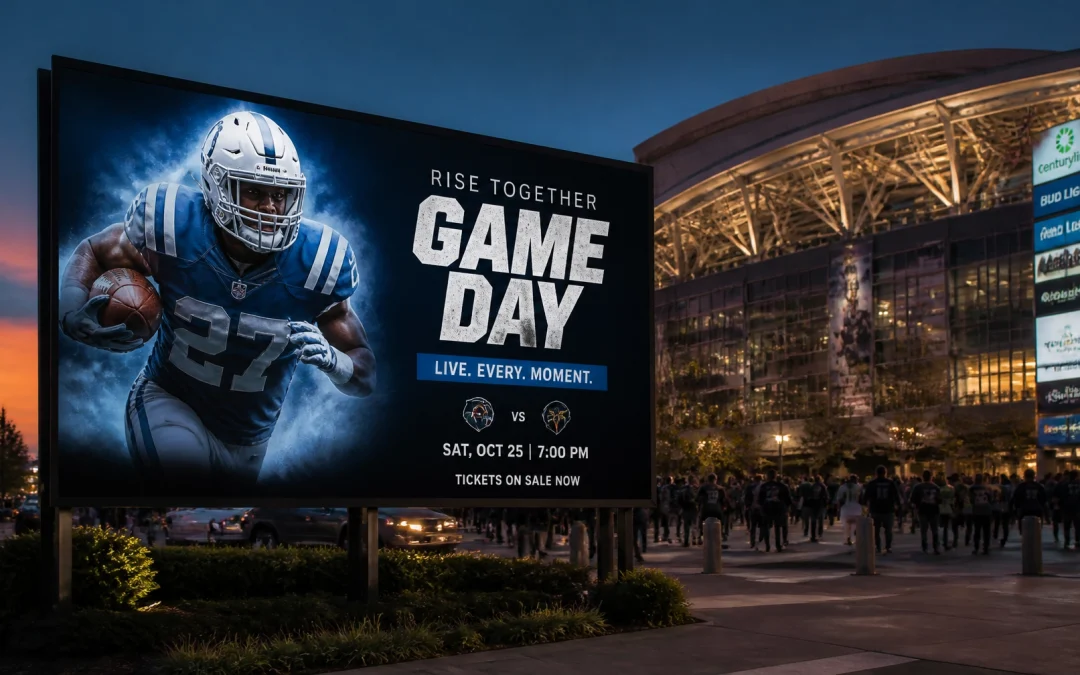
The landscape of sports marketing is no longer confined to the four walls of a stadium. As fans move through cities, commute to venues, and gather in local hubs, the opportunity for brand engagement has expanded into the physical world through Digital Out-of-Home (DOOH) advertising. This evolution represents a shift from static signage to dynamic, data-driven storytelling that captures attention when fan passion is at its peak.
Innovation in the sports DOOH sector is driven by the ability to merge the physical presence of outdoor media with the precision of digital targeting. For media buyers and brand managers, this creates a powerful channel to influence consumer behavior in the hours leading up to and following a major event. By leveraging the perimeter around sports venues, brands can establish a dominant presence that resonates with a highly captive audience.
Strategy: The 10-Mile Perimeter
The core of a modern sports DOOH strategy lies in proximity. Concentrating media placement within a 10-mile radius of a sports arena ensures that a brand remains top-of-mind throughout the entire game-day journey. This geographic focus targets fans as they transition from their homes to transit hubs, and finally to the stadium gates.
The use of stadium perimeter advertising allows for a "surround sound" effect. When a brand appears on digital billboards, urban panels, and transit displays within this specific radius, it creates a sense of ubiquity. This strategy is not merely about visibility; it is about local dominance. By saturating the areas where fans eat, drink, and travel, a brand becomes an integral part of the event atmosphere.
Objective & Strategy: Behavioral Targeting and Timing
The objective of innovative DOOH is to align brand messaging with the emotional state of the fan. Unlike traditional television ads that might be skipped or ignored, DOOH in a sports context is unskippable and highly contextual. The strategy involves three distinct phases of the fan journey:
- The Arrival Phase: During this period, fans are filled with anticipation. Messaging should focus on brand awareness and "hype" content. Digital screens in metro stations and along highways serve as the first touchpoint.
- The Participation Phase: As fans gather near the stadium or in fan zones, the focus shifts to engagement. This is the optimal time for interactive elements, such as QR codes leading to exclusive content or mobile-integrated promotions.
- The Aftermath Phase: Post-game, the emotional state is either celebratory or reflective. DOOH creative can be updated in real-time to reflect the game outcome, offering congratulatory messages or post-game deals at nearby retail locations.
By segmenting the day into these phases, brand managers can ensure that their creative remains relevant. This level of contextual relevance is what differentiates a standard outdoor campaign from a high-performance sports marketing initiative.

Technology Partners and Programmatic Execution
The transition from manual bookings to programmatic DOOH (pDOOH) has revolutionized how sports campaigns are executed. Programmatic platforms allow media buyers to purchase inventory based on specific triggers, such as time of day, weather conditions, or even live game scores.
Through collaboration with specialized technology partners, brands can utilize programmatic DOOH to automate their presence. For example, a campaign can be set to only activate when foot traffic near a stadium exceeds a certain threshold. This ensures maximum efficiency of the advertising spend, as impressions are only delivered when the target audience is present.
Furthermore, the integration of live sports APIs enables Dynamic Creative Optimization (DCO). When a goal is scored or a significant play occurs, the digital creative can update within seconds across the entire 10-mile network. This real-time synchronization between the field of play and the street-level advertising creates a seamless experience for the fan, making the brand appear as a live participant in the event.
Engagement Tactics: Beyond the Screen
Innovation in DOOH is also found in how the medium interacts with other digital channels. A successful campaign often uses DOOH as a "lead" to drive mobile engagement.
One effective tactic involves the use of geofencing. When a fan is exposed to a digital billboard near the stadium, their mobile device ID can be captured within a privacy-compliant framework. This allows the brand to retarget that specific fan with a follow-up mobile advertisement later in the day. This omnichannel approach has been shown to increase mobile click-through rates by as much as 40 percent.
Interactive displays are another growing trend. Screens equipped with touch capabilities or mobile-syncing technology allow fans to vote in polls, enter sweepstakes, or access real-time sports betting platforms directly from the sidewalk. These tactics transform a passive viewing experience into an active brand interaction.

Results: Measuring Impact and Brand Lift
The effectiveness of sports-centric DOOH is supported by significant data. Industry studies indicate that fans are six to eight times more engaged than typical internet audiences when in a sports-venue environment. This heightened state of attention leads to impressive performance metrics.
Key Performance Indicators (KPIs)
- Ad Recall: Research shows that ad recall for sports-venue DOOH reaches approximately 86 percent. This is significantly higher than the 60 percent recall typically associated with television advertising in similar contexts.
- Follow-up Action: Approximately 90 percent of fans who notice an OOH ad related to a major sporting event take a follow-up action. This includes searching for the brand online, discussing the product with friends, or visiting a retail location.
- Brand Lift: Campaigns focusing on the stadium perimeter have demonstrated a 15 to 25 percent increase in aided brand awareness among the target demographic.
- Conversion: In categories like sports betting and retail, DOOH has been found to deliver an acquisition cost that is three to five times lower than traditional in-stadium sponsorships, providing a more cost-effective alternative for brand growth.
These results are quantified through the use of mobile location data and post-campaign brand lift studies. By tracking the movement of exposed devices, advertisers can attribute store visits and web conversions directly to specific DOOH locations, providing a clear return on investment (ROI).

Conclusion: The Road Ahead for Brand Managers
Innovation in sports DOOH has turned the "city as a living arena" into a reality. For brand managers and media planners, the opportunity lies in moving beyond simple impressions and toward meaningful, moment-based engagement. By focusing on a 10-mile radius, utilizing programmatic triggers, and integrating real-time data, brands can capture the attention of fans when it matters most.
The data is clear: DOOH is a high-impact, high-recall medium that complements the excitement of live sports. As technology continues to evolve, the brands that succeed will be those that view the fan journey as a continuous narrative, using digital screens to tell a story that begins long before the first whistle and lasts long after the final score.