
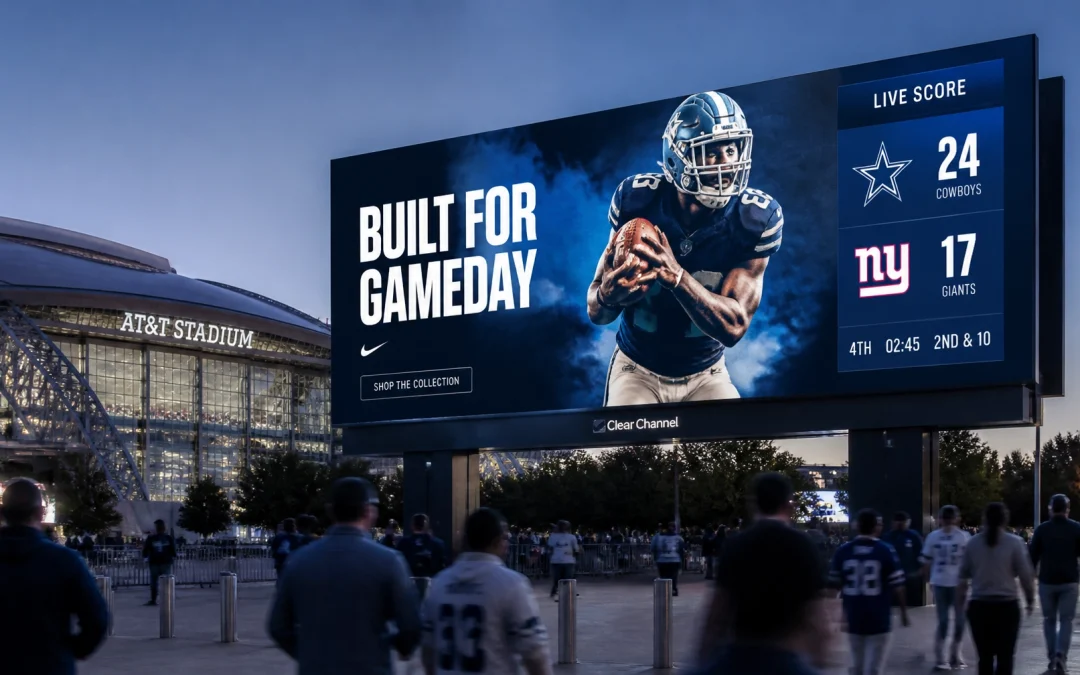
The landscape of sports marketing has shifted from static placements to dynamic, data-driven experiences. Digital Out-of-Home (DOOH) technology now allows brand managers and media buyers to synchronize their messaging with the high-stakes environment of live sports. This evolution is not merely about visibility. It is about strategic integration into the fan experience through precision targeting and real-time execution.
By leveraging programmatic platforms and advanced geospatial data, advertisers can move beyond the stadium walls. The following six tactical moves outline how modern brands utilize sports DOOH to capture attention, drive mobile engagement, and deliver measurable return on investment.
1. Implement the Ten Mile Perimeter Strategy
The influence of a sporting event extends far beyond the physical seats of the arena. Media buyers often focus solely on in-stadium assets, but the most significant opportunities for fan engagement exist within a 10-mile radius of the venue. This area, known as the stadium perimeter, captures fans as they commute, tailgate, and gather in local entertainment districts.
Strategic execution involves saturating digital inventory across transit hubs, roadside billboards, and residential lobbies within this radius. This approach ensures the brand is the primary visual narrative in the hours leading up to and following the game. Research indicates that high-frequency exposure in these high-intent zones increases brand recall by up to 25 percent compared to isolated placements.
Targeting parameters should include:
- Primary transit arteries leading to the stadium.
- Bars and restaurants within a 5-mile radius with high footfall.
- Digital screens in rideshare vehicles operating in the district.
- Strategic stadium ads that fix common engagement gaps.
2. Leverage Live Data Triggers for Real-Time Relevance
Static creative is no longer sufficient in the fast-paced world of sports. Innovation in DOOH now allows for the use of live data feeds to trigger specific creative assets. By integrating sports APIs, brand managers can automate messaging based on game states, scores, or even weather conditions.
For example, a beverage brand might trigger a "Victory Round" advertisement the moment a home team clinches a win. Conversely, if a game is tied in the final minutes, the creative can swap to high-tension, "don't miss a second" messaging that encourages fans to tune in via a streaming app. This level of contextual relevance transforms a standard billboard into a dynamic participant in the sporting event.
Common data triggers used in modern campaigns include:
- Real-time score updates and play-by-play summaries.
- Live betting odds provided by technology partners.
- Player-specific milestones or record-breaking moments.
- Post-game outcomes (Win/Loss variants) to match fan sentiment.

3. Sequence the Fan Journey Across Multiple Environments
Fans do not exist in a vacuum; they follow a predictable journey from their homes to the stadium and back again. Media planners who map this journey can deliver a sequenced narrative that builds brand equity over several hours. This strategy involves selecting inventory based on the fan’s physical movement throughout the day.
The journey typically begins in residential environments or gyms during the pre-game window. As fans move toward the venue, the messaging shifts to roadside and transit screens. Once they reach the immediate vicinity of the stadium, the focus turns to high-impact, short-form content. Post-game, the strategy pivots to loyalty-based messaging or ride-sharing promotions.
By coordinating these touchpoints, brands can achieve an omnichannel presence that feels organic rather than intrusive. Proper media planning ensures that the message evolves alongside the fan's emotional state, from anticipation to excitement to reflection.
4. Utilize Mobile Retargeting and Device ID Capture
One of the most powerful innovations in sports DOOH is the ability to bridge the gap between physical exposure and digital conversion. Modern DOOH technology allows for the anonymous capture of mobile device IDs (MAIDs) within the line of sight of a digital screen. This creates a retargetable audience cohort of fans who have been exposed to the brand’s outdoor creative.
Once these device IDs are collected, media buyers can serve follow-up advertisements on mobile devices, social media platforms, or Connected TV (CTV). This reinforces the OOH message and provides a direct path to action, such as app downloads or e-commerce purchases. Campaigns using this retargeting loop often see a 30 percent increase in mobile click-through rates compared to non-retargeted segments.
Tactical steps for this move include:
- Geofencing the DOOH screen locations to define the exposure zone.
- Filtering device IDs based on dwell time to ensure quality exposure.
- Deploying sequenced mobile ads that offer a clear call to action.
- Analyzing the case study data to refine the retargeting window.
5. Deploy High-Impact Anamorphic and 3D Creative
In a crowded media environment, visual disruption is essential for brand differentiation. The rise of large-format anamorphic 3D displays has provided a new tool for brand managers seeking to create "shareable" moments. These displays use forced perspective to make images appear as though they are leaping out of the screen toward the audience.
In a sports context, this might involve a life-sized athlete performing a signature move or a 3D rendering of a team trophy. While the primary goal is high-impact awareness, these executions often generate significant secondary reach through social media amplification. Fans who encounter these displays frequently capture video content and share it on platforms like Instagram and TikTok, providing the brand with earned media value that far exceeds the initial buy.
When planning 3D creative, it is critical to focus on:
- High-contrast visuals that maintain clarity in different lighting.
- Minimal text to ensure the 3D effect remains the focal point.
- Placement in high-traffic pedestrian zones where fans can stop to record video.
- Exploring creative sports DOOH ideas that push the boundaries of standard animation.

6. Measure Success Through Full-Funnel Attribution
The final move for any media buyer is the implementation of rigorous measurement frameworks. Innovation in DOOH has moved the industry past basic impressions and into the realm of concrete attribution. By using footfall studies, brands can measure the "lift" in store or venue visits directly attributable to DOOH exposure.
For digital-first brands, success is measured through conversion lift. This involves comparing the behavior of fans exposed to the DOOH screens against a control group of unexposed fans. Key performance indicators (KPIs) often include app install rates, website visitation, and brand sentiment scores.
A comprehensive measurement strategy should quantify:
- Footfall lift: The percentage increase in physical visits to a retail location or fan zone.
- Brand preference rating: The shift in how fans perceive the brand post-exposure.
- Conversion attribution: The number of digital actions taken by the retargeted device ID cohort.
- ROI: The total value generated relative to the media spend.

Conclusion
Innovation in sports DOOH is driven by the intersection of high-quality creative and advanced data logistics. For media buyers and brand managers, the strategy is no longer about simply buying a screen; it is about buying an audience at the most opportune moment. By implementing the perimeter strategy, utilizing live triggers, and mastering mobile retargeting, brands can achieve a level of fan engagement that was previously impossible.
As the industry continues to evolve, those who adopt a programmatic and data-centric approach will be best positioned to capitalize on the passion and loyalty inherent in the world of sports.