
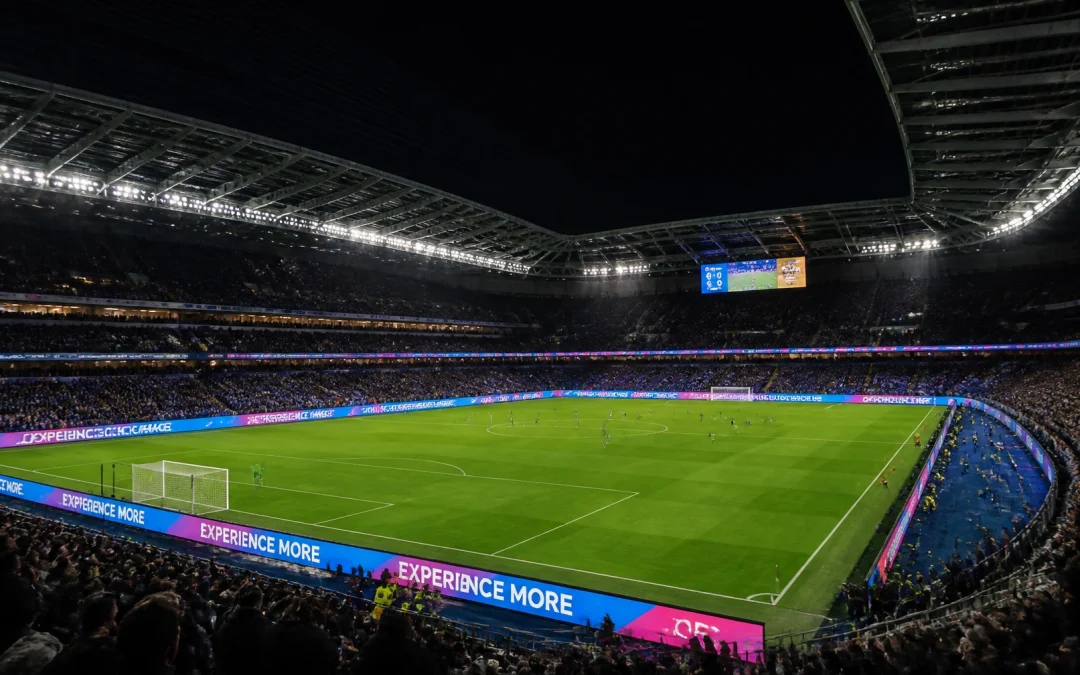
The roar of the crowd, the tension of a tie-breaking play, and the collective gasp of thousands of fans create an environment of heightened emotion and focused attention. For brand managers and chief marketing officers, this environment represents more than just a game. It is a unique window of opportunity to connect with a captive audience in a way that traditional digital or television advertising rarely achieves. Stadium perimeter advertising, particularly through high-definition digital out-of-home (DOOH) technology, has emerged as a cornerstone of modern sports marketing. This strategy places brands at the center of the action, driving engagement that extends far beyond the final whistle.
The Objective and Strategy of Perimeter Advertising
The primary objective of stadium perimeter advertising is to leverage the intense emotional investment of sports fans to build brand equity and drive measurable action. Unlike a standard billboard or a social media ad that can be scrolled past, perimeter boards are integrated into the field of play. They are physically present where every eye is trained, making them virtually unskippable.
The strategy hinges on several key psychological and logistical factors. First, the fan mindset is one of high receptivity. Research indicates that sports fans are six to eight times more engaged than average internet users during a live event. This heightened state of awareness means that messaging delivered on the field is processed more deeply. Second, the strategy utilizes a 10 mile radius approach. By coordinating perimeter ads inside the venue with digital video boards in the immediate surrounding area, a brand can saturate the fan's journey from the parking lot to the front row.
Strategy: Tapping into the Fan Mindset
Effective fan engagement strategies focus on the concept of "trust transfer." Fans view the brands displayed on the stadium perimeter as supporters of their favorite team. This association fosters a halo effect, where the positive emotions associated with the sport are transferred to the brand.
Strategic placement involves more than just logo visibility. It requires a deep understanding of the match rhythm. Brands that synchronize their creative messaging with key moments, such as a goal celebration or a halftime break, see significantly higher impact. The goal is to move from being a passive observer to an active participant in the sporting narrative.
Implementation and Technology Partners
The transition from static signage to dynamic LED perimeter boards has revolutionized the capabilities of sports advertising. Implementing these campaigns requires sophisticated technology partners capable of managing programmatic DOOH (pDOOH) feeds and real-time content updates.
Modern perimeter systems allow for high-resolution video and animated graphics that maintain clarity under intense stadium lighting and through the lens of a television broadcast. By using programmatic platforms, media buyers can automate the delivery of content based on specific triggers. These triggers might include the time of day, weather conditions, or even real-time game data. This technical fluency ensures that the right message reaches the fan at the most relevant moment.

Driving Interaction with Dynamic Creative
A significant component of driving fan engagement is the use of interactive elements. Today’s creative directors are moving beyond static images to include calls to action that bridge the physical and digital worlds.
- QR Code Integration: By displaying high-contrast QR codes on perimeter boards during breaks in play, brands can drive fans to exclusive content, merchandise discounts, or contest entries.
- Real-Time Social Feeds: Integrating live fan posts or poll results onto the boards encourages audience participation and makes the brand part of the social conversation.
- Second-Screen Synchronization: Technology now allows for the coordination of stadium ads with mobile notifications. A fan seeing a perimeter ad may simultaneously receive a related offer on their smartphone via geofencing.
These tactics transform a one-way broadcast into a two-way dialogue, significantly increasing the time a fan spends interacting with the brand.
Results: Quantifying the Impact of Perimeter DOOH
The success of stadium perimeter advertising is not merely anecdotal. Data collected across various major sporting events highlights the substantial return on investment (ROI) that these campaigns deliver.
- Exceptional Brand Recall: Studies show that sports venue DOOH achieves an average of 86 percent ad recall. In comparison, traditional television spots often hover around 60 percent. When interactive elements are added, brand recall can increase by an additional 75 percent.
- Action-Oriented Response: Approximately 74 percent of fans take a follow-up action after being exposed to sports-related DOOH. This includes searching for a product, visiting a website, or making a purchase.
- Higher Engagement Rates: Well-executed perimeter campaigns frequently report engagement rates between 15 and 20 percent. These figures far exceed the standard click-through rates seen in traditional digital display advertising.
- Increased Brand Awareness: Campaigns utilizing premium stadium placements have demonstrated a 15 to 25 percent increase in aided brand awareness among attendees.
By tracking device IDs exposed to the perimeter boards, planners can also measure store visitation and online conversion, providing a clear picture of the full fan journey.

Enhancing Broadcast and Social Reach
While the in-stadium audience is the immediate target, the impact of perimeter advertising is amplified through broadcast and digital highlights. Perimeter boards are strategically placed to ensure they appear in the frame during the most critical moments of a game. This provides brands with massive "earned" exposure as highlight reels are shared across social media and news platforms.
The visibility of these boards in television broadcasts adds a layer of authority and scale to a brand. It positions the company as a major player in the industry, capable of securing prime real estate at the nation’s most-watched events. This multi-channel visibility is a key reason why CMOs prioritize perimeter placements in their fan engagement strategies.
Strategic Alignment: The 10-Mile Perimeter
To maximize the effectiveness of a stadium campaign, leading media planners often extend the reach beyond the venue walls. By utilizing a network of digital video boards within a 10-mile radius of the stadium, brands can maintain a continuous presence.
This approach targets fans as they commute to the game, visit local restaurants, and navigate the surrounding area. It reinforces the message seen on the perimeter boards and ensures the brand remains top-of-mind throughout the entire day. This omnichannel strategy is discussed in detail in recent industry insights regarding DOOH.

Actionable Insights for Creative Directors and CMOs
For those looking to implement or optimize stadium perimeter advertising, several best practices emerge from successful campaigns:
- Prioritize Visual Contrast: Given the speed of sports and the variety of stadium lighting, high-contrast visuals and bold typography are essential for legibility.
- Simplify the Message: Fans have limited time to digest information while following the action. A single, clear message or a powerful visual is more effective than cluttered text.
- Leverage Seasonality and Context: Tailor the creative to the specific event or local culture. A brand that speaks the "language" of the local fan base is more likely to achieve the trust transfer mentioned earlier.
- Measure and Optimize: Use advanced analytics to track the performance of different creatives. Programmatic DOOH allows for the rotation of assets, enabling brands to double down on the visuals that drive the highest engagement.
The evolution of sports DOOH innovation continues to provide new ways for brands to embed themselves in the sports experience.
Conclusion
Stadium perimeter advertising is a sophisticated tool that goes beyond simple visibility. It is a high-performance channel that taps into the passion of sports fans to drive deep engagement and measurable results. By combining the emotional power of live events with the precision of programmatic technology, brands can create lasting impressions that resonate long after the game ends. In a crowded advertising landscape, the ability to be present in the moments that matter most to consumers is an advantage that few other mediums can match.