
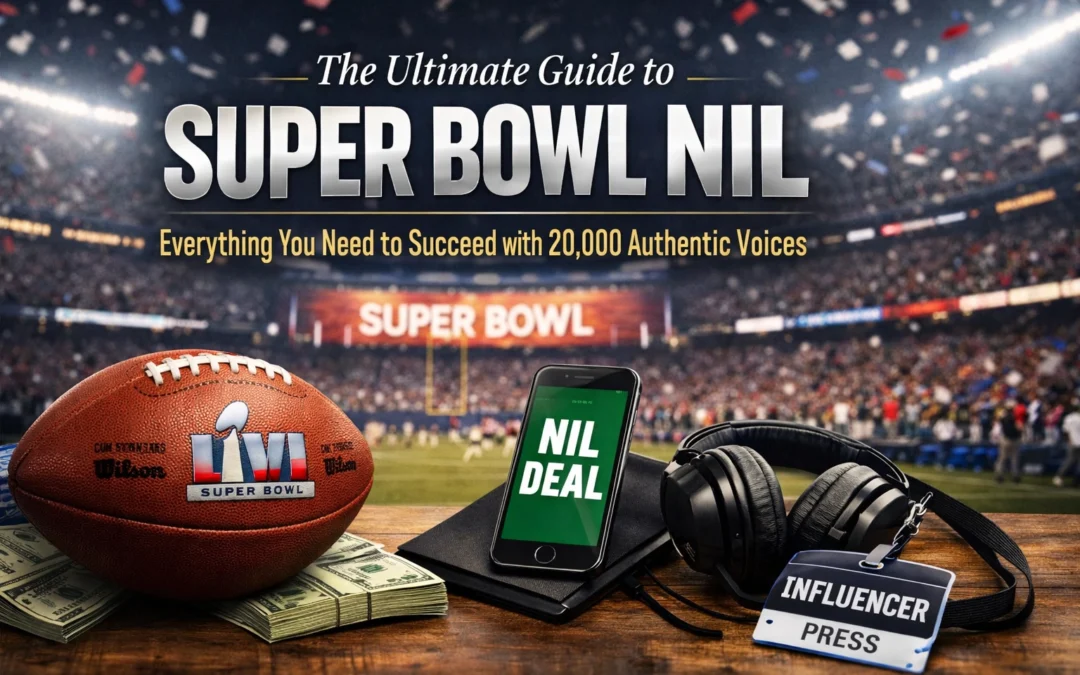
The landscape of Super Bowl advertising has undergone a massive transformation. As of March 2026, the era where a single 30 second television spot defined a brand's success is officially over. For media buyers and marketing executives, the focus has shifted toward high impact, authentic connections. The key to this shift lies in Name, Image, and Likeness (NIL) partnerships. By leveraging a massive network of over 20,000 student athlete voices, brands are now creating decentralized marketing engines that outpace traditional media in reach, engagement, and cost efficiency.
Traditional Super Bowl commercials now command price tags near $8 million for mere seconds of airtime. In contrast, the same budget can activate a distributed army of hundreds or even thousands of athletes. This approach does not just reach an audience. It builds a community.
The Power of the 20,000 Athlete Network
Modern sports marketing relies on scale and authenticity. There are currently over 20,000 college athletes available for brand partnerships across various NIL platforms. These athletes represent a diverse cross section of geography, sport, and personal interest. When a brand connects with 200 or more of these voices simultaneously, it creates a "surround sound" effect that national television cannot replicate.
Fans no longer look at the big screen during every break. They look at their phones. They check stats on social media, engage in group chats, and watch live reactions from their favorite college stars. This second screen behavior is where the battle for attention is won. By placing brand messaging in the hands of athletes who already have the trust of their followers, a brand moves from being an interruption to being part of the conversation.
A Five Step Framework for NIL Success
To maximize the impact of an NIL campaign during the Super Bowl cycle, a structured approach is necessary. This framework ensures that every dollar spent contributes to measurable growth and brand equity.
1. Pre Game Content Testing
The activation window should begin at least three to four weeks before the big game. Brands use this period to partner with a diverse group of athletes to A/B test different messaging styles. Behind the scenes snippets, "leaked" campaign hints, and interactive polls allow brands to validate their core narrative in real time. This iterative process ensures that by the time game day arrives, the content has already been proven to resonate with the target demographic.
2. Building the Distributed Marketing Army
Rather than putting all resources into one celebrity, successful campaigns coordinate with a large volume of athletes. Activating 200 or more athletes at once generates tens of millions of impressions across platforms like TikTok, Instagram, and X. This scale is what allows a brand to dominate the digital conversation without the heavy lifting of a single, high risk creative execution.
3. Executing the Second Screen Strategy
During the Super Bowl, the audience is highly distracted. NIL ambassadors are positioned to dominate the second screen through specific tactics:
- Real time reaction videos to big plays or halftime shows.
- Live commentary that feels personal and unscripted.
- Branded interjections that coincide with peak emotional moments of the game.
When viewers look away from the TV during a commercial break, they should see a trusted athlete interacting with your brand. This creates a seamless transition between the broadcast and the social experience.
4. Physical "NIL House" Activations
Digital reach is enhanced when paired with physical presence. Establishing branded hubs or "NIL Houses" near the Super Bowl venue provides a space for student athletes to meet fans and create high quality content. These spaces serve as content factories where interviews, product launches, and fan experiences are live streamed to global audiences. It moves the brand relationship from a digital transaction to a tangible, real world connection.
5. Extending the Campaign Life
The biggest mistake in Super Bowl marketing is the post game drop off. Successful NIL strategies leverage ongoing relationships to extend the ROI for weeks after the trophy is hoisted. Athletes continue to post recap videos, respond to fan comments, and share follow up content. This creates a long tail of engagement that keeps the brand relevant well into the spring season.

Why Authentic Voices Beat Polished Production
In 2026, audiences are experts at filtering out scripted advertising. They recognize when a celebrity is simply reading a teleprompter. Student athletes offer something different: raw, organic, and relatable content. A video of a linebacker using a product in his dorm room often generates more trust than a multimillion dollar studio production.
This authenticity is the primary driver of brand lift. Studies have shown that when athletes genuinely use and endorse a product, purchase consideration can increase significantly. For example, programmatic campaigns in the digital out of home space have seen lifts as high as 144 percent when combined with authentic messaging. Brands can learn more about these metrics by reviewing how Sea Doo increased purchase consideration using targeted digital strategies.
Integrating NIL with Digital Out of Home (DOOH)
The most effective Super Bowl campaigns in 2026 do not live solely on social media. They are omnichannel. By integrating NIL content with Digital Out of Home (DOOH) advertising, brands can follow fans from their phones to the streets.
Imagine an athlete posting a TikTok in the morning, and that same content appearing on a digital billboard near the stadium or in high traffic sports bars that afternoon. This level of coordination ensures the brand is omnipresent. The use of specialized platforms like Sporttron allows media buyers to manage these complex schedules, athlete contracts, and performance tracking at scale.
https://www.youtube.com/watch?v=l6J-0zileKE
The Cost Efficiency Revolution
The math for NIL is simple. For the price of one traditional stadium sponsorship or a national TV spot, a brand can achieve geographic precision that was previously impossible. Media buyers can now target specific regions by partnering with athletes from powerhouse universities in those areas. This "hyper local" approach at a national scale is the hallmark of modern advertising.
Research into the sports marketing gold rush suggests that 67 percent of media planners are shifting budgets toward these more flexible, high ROI channels. The ability to scale with perimeter DOOH and NIL partnerships for 80 percent less than traditional sponsorships is a major factor in this shift. Brands are increasingly asking whether 2 million dollar stadium sponsorships are dead when smarter, more scalable options exist.

Measuring Success in Real Time
In the high stakes environment of the Super Bowl, waiting for a post campaign report is not an option. AI powered analytics now allow brands to track engagement, sentiment, and conversion in real time. This data allows for mid game pivots. If a particular athlete's content is overperforming, the budget can be instantly reallocated to boost that specific post or run it on more digital screens in the area.
This level of agility is what separates the winners from the losers in 2026. Using real time strategies, brands have seen fan engagement boost by as much as 90 percent. Detailed insights on these geographically targeted strategies show that relevance is the new currency of sports marketing.
Looking Ahead to 2027
The success of NIL during the 2026 Super Bowl has set a new standard. For brands and media buyers, the message is clear: the future is authentic, distributed, and data driven. By embracing the power of 20,000 voices and integrating them with advanced advertising technology, brands can achieve a level of impact that was once reserved for the few with the largest budgets.

As the sports advertising market continues its march toward a projected $50 billion by 2030, those who master the NIL landscape today will be the leaders of tomorrow. The technology exists, the athletes are ready, and the audience is waiting. The only question remains: is your brand ready to join the conversation?